The Benefits of Thermography
Thermography is a painless, radiation-free way to catch potential health issues before they become bigger problems. Here's how it works and why it's part of a preventative approach to care.




Don’t let anyone tell you differently – preventative medicine is the key to optimal health and well-being. By catching problems and identifying diseases in their earliest stages, you can eliminate them before they cause other issues or become more difficult to treat.
Now, thermography is one of the best available tools in the realm of preventative medicine. And we’re lucky enough to have it under our roof!
Today’s blog post reveals everything you need to know about thermography in Fort Worth – the benefits, how it works, and whether or not it’s for you. Stay tuned!
(Well, aren’t we glad you asked!)
Instead of waiting for disease to be diagnosed, thermography uses thermal imaging technology to identify potentially disease-causing inflammation in its earliest stages. That way, you can make proactive changes for your health.
Essentially, thermography Fort Worth is a painless, non-invasive way to detect various health conditions and monitor disease progression.
Wondering what to expect during your Thermography Fort Worth appointment?
Thermography helps monitor the progression of a variety of medical conditions including (but not limited to):
The benefits of thermography Fort Worth truly are endless. Not only is this non-invasive procedure safe for people of all ages, but it’s an incredibly effective way to detect inflammation and injury. As we mentioned, thermography helps identify a wide variety of conditions (see above), and it can be used to monitor disease progression.
Put simply, thermography Fort Worth is for anyone interested in identifying health challenges early on. It’s especially beneficial to anyone who has…
It’s also ideal for anyone with breast disease risk factors:
If you’re looking for Thermography in Fort Worth, look no further than Restore + Revive. Our experienced and compassionate professionals will guide you through every step of the thermography process and answer any questions you might have.
Our goal is to make you feel as comfortable and confident as possible as you take charge of your health journey. Call (817) 720-6220 ext 1 to schedule an appointment with our team.
If you’ve been following us on social media, you’ve probably heard about Mild Hyperbaric Oxygen Therapy (mHBOT). (We’re currently obsessed.) But what exactly is it? And how on earth can it help you?
Excellent question, friend! And lucky for you, we’re revealing everything you need to know down below.
Before we delve into the greatness that is Mild Hyperbaric Oxygen Therapy, let’s cover the basics. Essentially, this medical treatment enhances the body’s natural healing process by administering an increased oxygen dose in a total body chamber where atmospheric pressure is enhanced and controlled. (Try to say that ten times fast.)
The oxygen pressure inside the hyperbaric chamber is roughly two and a half times higher than normal air pressure – allowing your body to carry more oxygen to your organs and tissues. While oxygen is normally delivered through the bloodstream, your entire body receives the treatment during mHBOT, extending the healing benefits far beyond your arteries.
So, does a little extra oxygen really make that much of a difference? (Spoiler: the answer is yes.) Oxygen fuels every single cell in the body. And whenever we face an injury, combat illness, complete a tiresome athletic performance, or simply confront the natural aging process, our bodies sometimes need a little help getting oxygen to the cells that need it most.
Thankfully, that’s where mHBOT comes in. By increasing our cells’ oxygen levels, this medical treatment facilitates healing, reduces inflammation, and stimulates the growth of new blood vessels.
Here’s how we recommend utilizing it:
Mild Hyperbaric Oxygen Therapy in Fort Worth is best known for healing wounds. By increasing oxygen levels in the bloodstream, it helps stimulate the growth of new blood vessels and increases the production of collagen. Therefore, mHBOT is a fantastic treatment for anyone with chronic wounds – like diabetic ulcers or non-healing surgical wounds.
Many athletes and fitness junkies are using Mild Hyperbaric Oxygen Therapy as a way of enhancing their athletic performance. Increasing oxygen levels in the bloodstream helps improve endurance, reduce muscle fatigue, and accelerate recovery after an intense workout.
Another benefit of mild Hyperbaric Oxygen Therapy in Fort Worth is enhanced brain function and cognition. Again, the increased oxygen reduces inflammation and promotes the growth of new brain cells. This leads to improvements in cognitive function, memory, and overall brain health. It’s also a great tool for people navigating traumatic brain injuries, strokes, or conditions like cerebral palsy.
Mild Hyperbaric Oxygen Therapy can help treat infections by increasing the oxygen levels of the tissues. As a result, it combats harmful bacteria and strengthens the body’s immune system. Therefore, mHBOT is a great way to naturally treat acute infections.
Last but certainly not least, mHBOT has been proven to reduce symptoms of a variety of chronic illnesses like fibromyalgia, multiple sclerosis, cancer, chronic fatigue syndrome, and more. Essentially, the increased oxygen levels reduce inflammation and improve cellular function – reducing uncomfortable symptoms and improving individuals’ overall quality of life.
As you can see, Mild Hyperbaric Oxygen Therapy is somewhat of a holy grail when it comes to healing and recovery. Call (817) 720-6220 ext 1 to learn more about how it can help you or to book your first session.
Our team is constantly searching for new and improved ways to enhance your experience at Restore + Revive. So when a few of y’all reached out with requests for a custom experience, access to more wellness therapies, and even greater discounts on our offerings, we couldn’t resist.
As many of you already know, we’ve completely revamped our memberships for 2025. And instead of having just two options, we’re now letting y’all customize your membership to suit your needs and preferences!
Today’s blog post reveals how to make the most of these *brand-spankin’ new* memberships. Keep scrolling for all the details.
Primarily focused on vitamin shots and IV drips, the Revive Membership is a terrific option for the self-proclaimed supplement savant. It offers members-only pricing on our favorite drips, boosters, and shots.
It includes…
… for just $149 per month! (And in January, we’re running a special to take 10% off that monthly rate, bringing the price to just $134 per month.) Become a Revive Member today.
A typical IV costs $190 and vitamin shots are $30 each – to put things into perspective.
Our balance membership is our first of two customizable memberships. Ideal for any and all wellness junkies, it allows you to tailor your R+R experience to your unique needs and preferences.
Choose one per month:
Choose three per month:
Plus, it also includes…
All of this (^^) equates to more than $575 in value. But you get it for just $289 per month! (And only $260 per month if you enroll in January.)
Call (817) 720-6220 ext 1 or email RRmemberships@restoreandrevivefw.com to become a Balance Member.
Our final membership, the Elevate Membership, maximizes our wellness offerings for a vast discount. It’s a fantastic option for anyone looking to put their health and wellness first – whether you’re navigating a chronic health condition, training for an athletic event, or simply looking to operate at your best.
Choose two per month:
Choose six per month:
Plus, it also includes…
A month’s worth of the above services is valued at more than $1,275. But as an Elevate member, you get them all for just $519 per month. ($467 per month if you enroll in January.)
Call (817) 720-6220 ext 1 or email RRmemberships@restoreandrevivefw.com to become an Elevate Member.
Regardless of which membership you choose, all R+R members receive…
Becoming a member is — hands down — the best way to make the most of our holistic wellness offerings. However, here are some additional benefits:
Here’s why we recommend becoming a Revive member:
In addition to the benefits of IV therapy and vitamin shots (see above), here’s why you should consider becoming a Balance Member:
The Elevate Membership offers all the services in the Balance Membership, plus…
Here’s how to make the most of your R+R membership:
This will maximize your body’s ability to detox and/or to receive and metabolize vitamins and minerals. We recommend half your body weight in ounces of filtered water each day.
Every R+R member gets two FREE vitamin shots per month. These are a great option when you’re on the run and a fantastic supplementary boost to your vitamin IV drips.
Make sure you’re selecting services that align with your body’s needs. Regarding IV therapy specifically, you can select an IV specifically created for immunity, hangovers, weight management, detoxing, energy, athletic performance, happy hormones, or a healthy liver. Or, you can opt for an IV that supports general wellness including our Myers Drip Plus, Vitamin C, Glutathione, and more. These drips all have immune-boosting, detoxifying, and energizing properties.
Make sure to check out our complete list of our Vitamin IV offerings.
To get the most out of your membership — and your health! — consistency is key. Services don’t roll over, so try to utilize all aspects of your membership each month. We also recommend scheduling all of your membership services at the beginning of your membership cycle to help keep you on track and organized.
On average, we recommend vitamin IVs every two to four weeks, but it depends upon your unique make-up whether more or less frequent is ideal for you.
Doing multiple services at once (or on the same day) can save time and convenience. For example, you can ask the nurse to administer Ozone while receiving your IV.
When receiving a detox foot soak, try not to focus on how the water looks, but on how you feel after the treatment. It’s what’s happening on the inside of your body, not on the outside!
Our Registered Nurses and staff can help you decide which Vitamin IVs or services are best for you based on your needs. You can also customize services to suit your needs – just ask! Our Member Liaison is here for any and all questions, needs, or concerns.
Don’t forget to take advantage of 20% select R+R services including vitamin IVs, vitamin shots, detox foot soaks, infrared sauna, cold plunge, ozone, revive room with red light therapy, nutrition consults, pelvic floor physical therapy, dermashape, massage therapy, Neubie, In-body and thermography.
All memberships require a 3-month commitment. Then, you can cancel or pause any time after 3 months.
Please note that the 20% off of additional IVs applies to both Premium and Standard IVs. And the free birthday IV includes IVs up to a $190 value.
Lastly, the NAD vitamin shot is excluded from the two free monthly vitamin shots.
Visit our Membership Page to learn more and enroll today. You can also call (817) 720-6220 ext 1 or email RRmemberships@restoreandrevivefw.com to become a member.
Red light therapy (RLT) is all the rage in holistic health right now – and for good reason! From supporting skin health and accelerating athletic recovery to reducing inflammation and improving mood, this emerging treatment supports a wide variety of health issues and conditions.
Therefore, we’re thrilled to announce that we’ve added Platinum LED’s Biomax 600 Full Body Red Light to our Revive Room. Read on to discover what it is, how it works, and the many benefits of red light therapy.
Red light therapy uses low levels of red and near-infrared light to penetrate the skin and stimulate cellular repair. By interacting with our cells’ mitochondria (aka the power plants), red light stimulates the production of Adenosine Triphosphate (ATP), which is our bodies’ primary energy currency. And with more energy, our cells are better equipped to perform their specialized functions, repair themselves, and replicate. Additionally, enhanced ATP production helps reduce inflammation, improve circulation, and accelerate tissue repair.
Wondering if RLT is for you? Here’s a quick overview of the benefits of red light therapy:
Red light therapy rejuvenates the skin and supports healthy aging by boosting collagen and elastin production, repairing damage caused by UV rays, and reducing inflammation and bacteria. Additionally, it improves skin conditions like acne, age spots, and wrinkles. Early clinical trials have also found that red light therapy can relieve painful skin conditions like psoriasis.
Another benefit of red light therapy is its ability to reduce joint pain and inflammation in people with arthritis. Researchers believe this is because red light releases nitric oxide, which enhances blood circulation, delivers nutrients and oxygen to damaged tissues, and promotes tissue repair and regeneration.
Red light therapy has been found to accelerate injury recovery and reduce the return-to-play period in athletes. It also enhances muscle recovery and overall athletic performance.
Researchers have linked red light therapy to better mental well-being. More specifically, it’s been shown to improve mood while alleviating symptoms of depression and anxiety. It also improves sleep quality by regulating serotonin levels and balancing circadian rhythm.
RLT stimulates various physiological processes that aid in cellular regeneration. As a result, it contributes to faster healing times and better injury recovery.
Interested in red light therapy Fort Worth? As we mentioned, we recently added it to our Revive Room, which features a variety of innovative ways to biohack your biology and achieve emotional and physical well-being.
In addition to red light therapy, the Revive Room has a zero-gravity relaxation lounge chair, an infrared PEMF mat, NuCalm technology, and aromatherapy. Therefore, it’s a fantastic way to reset your nervous system, accelerate recovery, and improve mental well-being.
You can book a session in the Revive Room online for just $50. Or, you can purchase four sessions for $180 ($45 per session) or eight sessions for $320 ($40 per session).
Symptoms like chronic bloating, headaches, unexplained fatigue, insomnia, and body aches are all incredibly common. However, they often indicate an underlying disease or chronic condition. Because most health problems are multifactorial — stemming from various systemic imbalances and dysfunctions — functional lab testing can help you uncover the root cause(s).
At Restore + Revive, lab testing is one of our integrative medicine Fort Worth services offered to both adults and children. Read on to discover why lab tests are an essential component of preventative medicine. (Plus, we’ll overview our most popular ones!)
As an integrative medicine practice in Fort Worth, we use functional lab testing to get a full picture of a patient’s health. Doing so allows us to detect any changes, protect against chronic diseases and conditions, and create personalized plans for health and healing.
Wondering which lab tests are right for you? Here’s a quick overview of our most popular ones:
The GI-Map is a comprehensive stool test that detects parasites, bacteria, H. pylori, fungi, and more. Essentially, it assesses the health of your gut microbiome and unearths any underlying causes of irritable bowel syndrome (IBS), autoimmune diseases, skin conditions, and more.
The Dutch Test takes hormone testing to a whole other level. Specifically, it looks at sex hormones and their metabolites, cortisol patterns produced by your adrenal glands, and an organic acids test (OAT). In other words, it offers valuable insights into hormone imbalances, oxidative stress, gut dysbiosis, melatonin, neuroinflammation, nutritional deficiencies, and more. As integrative medicine Fort Worth providers, we use this test to optimize hormone health and correct hormone-related symptoms like fatigue, weight gain, hair loss, and mood swings.
This integrative lab test measures the mineral content of your hair. Believe it or not, just a small hair sample can help us understand your entire body’s mineral status. This test is especially great for assessing intracellular activity (inside the cells) – which is hard to do via blood work alone.
At Restore + Revive, we use this test to uncover mineral imbalances, deficiencies, and excesses. And it reveals a multitude of information regarding your…
Below are some other integrative lab tests we offer at Restore + Revive:
As a center for integrative medicine in Fort Worth, we use functional lab testing to identify hormone imbalances, metabolic problems, thyroid dysfunction, autoimmune issues, and more. Then, we use your results to create a personalized plan for healing.
In addition to standalone lab testing, we offer a Lab Testing Appointment Package (that costs $575 + lab fees) for both adults and children. It includes a discovery appointment, custom lab selections, an appointment to review your results, and a personalized healing protocol.
Want to learn more? Call (817) 720-6220 (extension 2), email integrative@restoreandrevivefw.com, or visit the integrative medicine section on our website.
As hormones rise and fall during their menstrual cycle, women can experience a variety of emotional and physical symptoms. But while mild premenstrual symptoms vary from woman to woman, severe PMS symptoms are not normal. If you’re experiencing extreme bloating, breast tenderness, heavy periods, digestive issues, irritability, appetite changes, and mood swings, there’s most likely an underlying cause.
Instead of relying on over-the-counter medications and hormonal birth control methods to curb your symptoms, our integrative medicine practitioners can help you determine the root cause(s). Then, we’ll show you how to reduce PMS symptoms naturally.
Wondering how to reduce PMS symptoms naturally? We’d recommend starting here:
We say this all the time, but food truly is medicine. If you’re struggling with PMS symptoms, try increasing your calcium consumption. However, because dairy products are inflammatory to most, we recommend opting for calcium-rich alternatives like:
People with PMS symptoms will also want to ensure they get enough vitamin D through sunlight, fatty fish like salmon, and/or supplements (dosage differs based on the individual).
Another way to combat PMS symptoms is to eat less, more often. Not only does this reduce premenstrual bloating, but it stabilizes your blood sugar. This keeps you energized and calm(er) throughout the day.
Be wary that salty foods can increase bloating. And foods high in sugar can cause drastic blood sugar fluctuations, which worsen fatigue and mood swings. Additionally, high-fat foods increase prostaglandin levels, which can increase the severity of menstrual cramps.
Research confirms that regularly engaging in 20 to 30 minutes of light exercise can alleviate PMS symptoms. Plus, the endorphins released throughout will boost your mood and energy levels, support healthy sleep, reduce stress, and minimize any pain you’re experiencing.
To reap the most benefit, try to exercise regularly throughout your cycle (instead of just before your period). We recommend cycle syncing to align your exercise routine with your fluctuating hormones:
Many of us reach for caffeinated drinks when PMS fatigue starts to hit. However, caffeine elevates heart rate and adrenaline levels, increasing stress and anxiety. Some people also find that caffeine upsets their digestion, furthering abdominal discomfort.
Similarly, alcohol increases fluctuations in blood sugar levels, worsening PMS symptoms. Alcohol is also dehydrating and prevents you from getting a good night’s sleep – both of which are essential during menstruation.
Maintaining a varied diet of unprocessed, nutrient-dense foods can help prevent nutrient imbalances. And some studies have linked PMS symptoms to low nutrient levels. Those include:
Of course, your supplement needs depend on your specific body and circumstances. Make sure to check with your healthcare provider before embarking on a supplement routine, as some supplements interfere with existing medications.
While there is limited research on herbal remedies for PMS, some women swear by them. We recommend trying:
If you were wondering how to reduce PMS symptoms naturally, we hope today’s article offered some clarity. As an integrative Fort Worth primary care practice, R+R Integrative Medicine takes a whole-person approach to healthcare, addressing the physical, emotional, and mental well-being of patients.
Because we focus on the root cause, we’ll strive to improve your overall quality of life – instead of merely slapping a bandaid on symptoms. If you’re experiencing severe PMS symptoms, we’ll help determine (and treat!) the underlying cause. Contact us to get started.
Peptide therapy is gaining immense popularity in regenerative medicine – and for good reason! Peptides are responsible for a variety of bodily functions, but as we age, our natural peptide levels decline. This weakens our bones and immune system, slows our metabolism, amplifies fatigue, disrupts mental clarity, and much more.
Peptide therapy is a revolutionary treatment that replenishes our peptide stores. By doing so, it offers a multitude of health benefits ranging from muscle and joint recovery to sleep and cognitive improvements.
So, if you’re struggling with age-related weight gain, brain fog, immune deficiency, or sexual dysfunction, keep scrolling. Today’s article covers everything you need to know about peptide therapy, as well as which peptides are right for you.
As you probably already know, proteins are long chains of amino acids. Peptides, on the other hand, are shorter chains of amino acids. Therefore, you can think of peptides as small fragments of protein.
Peptides support a variety of bodily functions that include building muscle, burning fat, and losing weight. Some peptides are designed to stimulate human growth hormone (HGH) and are called growth hormone-releasing peptides (GHRP). And other peptides are designed to support specific goals like weight loss or the reduction of joint pain.
As we mentioned, our natural peptide stores decline with age – that’s where peptide therapy comes in. By replenishing our peptide levels, this treatment supports bone and muscle strength, heals damaged tissues, wards off diseases, boosts energy levels, improves skin elasticity, and optimizes mental clarity.
At R+R Integrative Medicine, we prescribe peptides for weight loss, athletic performance, sleep, hair growth, and more.
Peptide therapy offers a variety of health benefits that improve one’s quality of life:
If you’re struggling with fatigue or lack of energy, peptide therapy revitalizes your body by optimizing energy production.
Peptides strengthen the body’s immune response, making you less susceptible to — and better equipped to ward off — diseases.
Peptide therapy regulates your sleep patterns, ensuring you get a restful night’s sleep.
The cognitive-enhancing effects of peptide therapy are ideal for improving memory, mental focus, and clarity.
Peptide therapy also addresses specific health concerns:
As we mentioned, we prescribe different peptides for different reasons. Here’s a glimpse of the most popular peptides and their benefits:
BPC-157 is a peptide that treats diseases of the GI tract and musculoskeletal injuries. It stands for “body protective compound”, and it’s often used for stomach and intestinal conditions like leaky gut and inflammatory bowel disease (IBS). It also accelerates the healing of soft tissues after injury.
This powerful peptide is produced by the thymus gland, which is a critical part of the immune system. It’s most often used to treat chronic viral diseases. However, it also boosts immunity and controls inflammation associated with chronic diseases.
This combination of peptides stimulates muscle development by increasing the blood level of hormones associated with growth. We prescribe it to increase muscle mass and strength, decrease body fat, accelerate recovery, improve sleep, and enhance cognitive function.
PT-141 treats sexual dysfunction and related issues. Essentially, this peptide enhances sexual desire and increases sexual satisfaction in both men and women. It works by stimulating the melanocortin system, which regulates sexual arousal.
This injectable drug was initially used as diabetes medication. It prompts the body to produce more insulin, which lowers blood sugar (glucose). When used in combination with diet and exercise, it supports weight loss. It can also reduce the risk of heart disease, diabetes, and cancer in people who are overweight or obese.
Interested in peptide therapy in Fort Worth? Our Integrative Medicine team would love to help you explore your options and determine the best peptide(s) for your medical needs. Contact our team to schedule an appointment today.
With the packing of suitcases and booking of reservations, family travel is an adventure in itself. However, breastfeeding while traveling poses a unique set of challenges. Not only do breastfeeding moms need to pack extra bags and supplies, but they have to navigate logistical details like where to pump, TSA regulations, and more.
The key to successfully breastfeeding while traveling is planning ahead. That’s why our Integrative Lactation Consultant, Marisa Baker, is revealing what you need to know about traveling as a pumping mom. Keep scrolling for guidance on where to pump, what to pack, and everything in between.
Our Fort Worth lactation consultant shares her tips for traveling as a pumping mom:
Whether you’re traveling by car, train, or airplane, the best way to preserve your milk supply is to stick to your regular breastfeeding or pumping schedule. Resist the temptation to skip sessions, as even short(er) sessions are better than nothing.
Here’s what you’ll need to pack when breastfeeding while traveling:
*If you don’t have an insulated travel breastmilk tumbler, you’ll need translucent storage bottles and ice packs. Note that you can bring breast milk and/or formula cooling accessories (aka ice packs) through airport security – regardless of the presence of breast milk.
Formula, breast milk, toddler drinks, and food are allowed in carry-on baggage in quantities greater than 3.4 ounces, as they're considered medically necessary. Additionally, your infant doesn’t need to be present for you to carry on breast milk, formula, and supplies. Simply inform the TSA officer that you're carrying breast milk or related items. Then, remove said items from your bag for a separate screening. (Note that TSA X-ray machines are not harmful to food or medicine.)
So, where do you pump at an airport? The Friendly Airports for Mothers Act mandates that all small, medium, and large hub U.S. airports provide a lactation station in each terminal. If you’re struggling to find it, simply ask a customer service representative.
Breastfeeding while traveling can be an exciting, emotional, and overwhelming experience. However, our Fort Worth lactation consultant, Marisa Baker, is here to help you every step of the way.
Whether you have upcoming travel plans or simply want guidance throughout the breastfeeding process, Marisa’s lactation and newborn services will support you throughout your transition into parenthood. Regardless of your needs, she’ll develop an individualized feeding plan that works for you.
Contact our team to learn more or book an initial consultation.
With more than 500 million views on TikTok, the viral cold plunge trend is here to stay. The benefits of cold immersion have been shown to include: reduction in inflammation, pain relief, improved blood pressure and circulation, better sleep, nervous system repair, workout recovery, facilitation of weight loss, improved mood and increased energy.
With a cold plunge, the goal is to initiate the sympathetic nervous system which can be done relatively quickly. The more you become accustomed to doing cold plunges, the longer you will be able to stand the freeze, working your way up to 10 minute sessions with a few one minute dunks under the water.
To see benefits of a cold plunge, we recommend a minimum of 2-4 times per week. As an added bonus, we strongly recommend considering our Infrared Sauna + Cold Plunge Combo for the ultimate treatment.
Cold Plunge services are now offered at 4927 Byers Avenue. To book an appointment, call (817) 720-6220 or click here.
To buy a cold plunge package, visit our website. Cold plunge services make a great gift! To purchase, visit the gift card page on our website.
HOW OFTEN SHOULD I DO A COLD PLUNGE?
To see benefits of a cold plunge, we recommend a minimum of 2-4 times a week.
HOW LONG SHOULD YOU STAY IN THE COLD PLUNGE?
Brain benefits have been shown to be reaped in as quickly as 40 seconds! You can work your way up to 10 minute sessions with a few one minute dunks.
WHAT ARE THE BENEFITS OF THE COLD PLUNGE?
HOW COLD IS THE COLD PLUNGE?
47° to 49° F
To put it simply: Ozone is Oxygen. More specifically, naturally occurring oxygen is made of two molecules (O2) and ozone is made of three (O3). Ozone is naturally occurring in the environment, but only at levels much higher in the atmosphere than earth level. This is because the O3 oxygen absorbs UV light and breaks down and recycles itself as it passes through the atmosphere. This naturally occurring state is recreated by taking a 100% oxygen tank through an ozone generator to bind with another molecule to make Ozone/O3.
The two main roles of oxygen in the body are as a signaling molecule and as an oxidizer. As a signaling molecule, oxygen helps tell our body how to respond to the environment both inside the body as well as outside the body. In this role, oxygen modulates the immune system and increases or decreases oxygen delivery to our cells. As an oxidizer, oxygen accepts electrons. There are so many chemical reactions within our body that rely on the transfer of electrons, the most important of which is the way our body uses oxygen to burn fuel for energy.
In addition to playing a vital role in balancing the body’s chemistry, our tissues, organs and cells all love (and thrive!) on oxygen. The crucial role of oxygen in our overall health led to the implementation of Ozone Therapy during WWI due to its antibacterial and health promoting properties. Ozone Therapy targets inflammation, assists in reduction of toxins in the body, promotes mitochondrial health, stimulates overall oxygenation, improves immune system function and more.
At R+R, we offer two of the most effective ways to administer Ozone Therapy through Ozone IV as well as through nasal, ear, rectal and vaginal insufflations. When administered intravenously through Ozone IV, one of our highly trained RNs first draws a sample of your own blood, then ozonates it, and returns it intravenously. The oxygen attaches itself to our red blood cells and as blood circulates throughout the body, oxygen leaves your blood and moves into organs and tissues providing necessary fuel and healing promotion. In its 3 molecule state, oxygen is highly reactive and thus creates a therapeutic response in the body by both stimulating blood flow and by oxidizing harmful substances. By oxygenating the blood at this cellular level, the body receives the oxygen it craves to thrive in an incredibly specific and beneficial way.
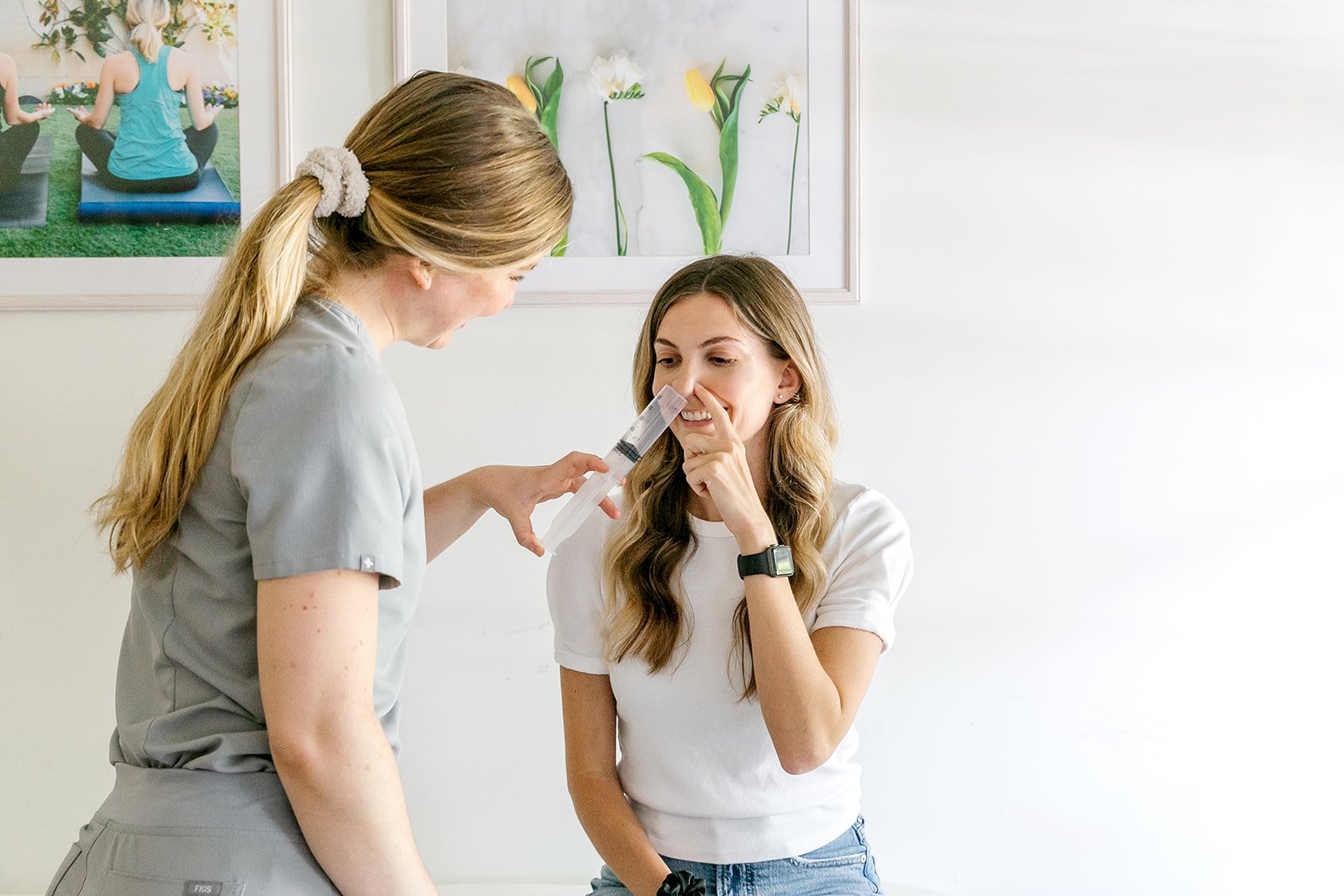

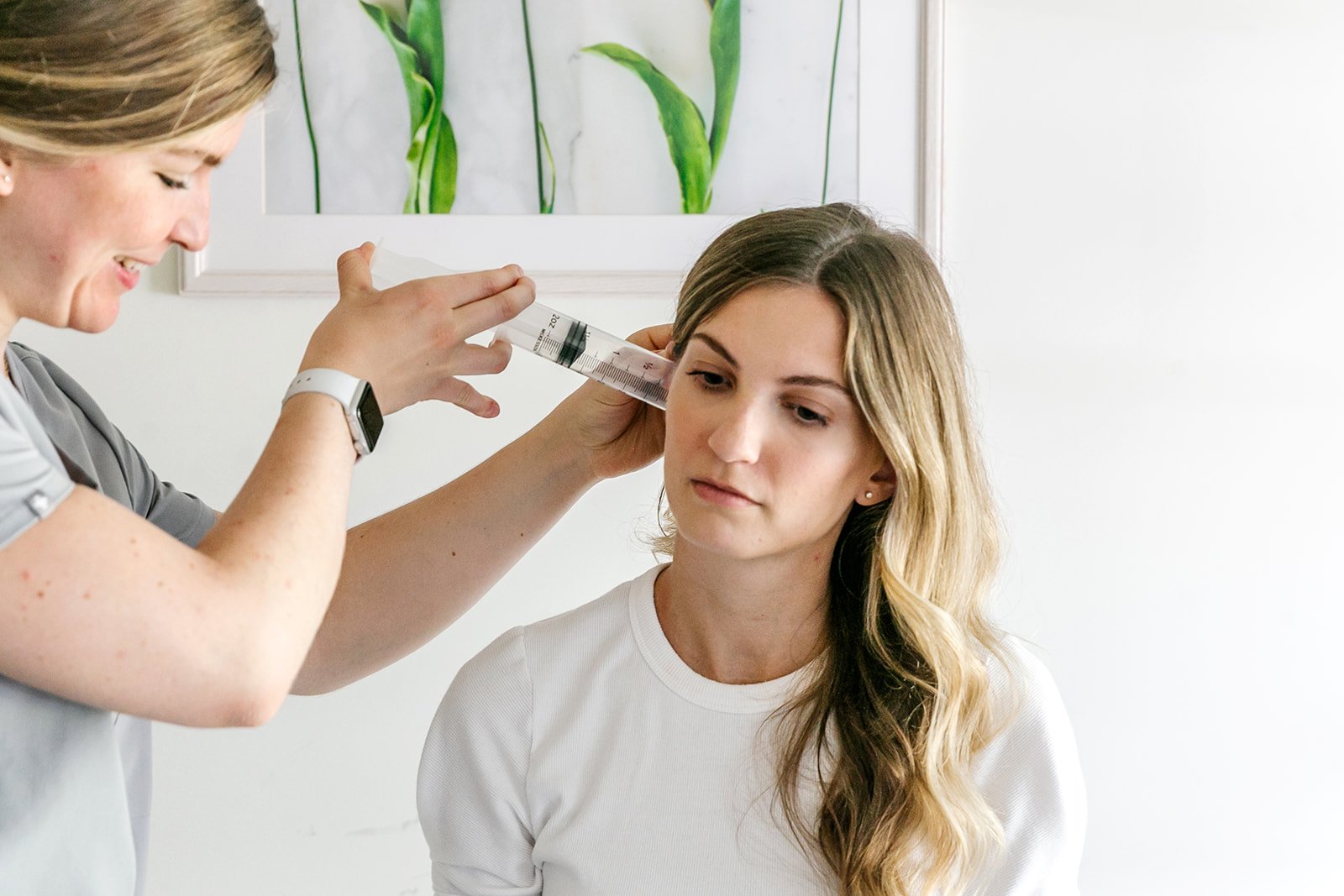
Insufflation is a fancy word for putting ozone gas into a specific body cavity, which in this case means the ear, nose, rectum or vagina. When administered through ear and nose insufflations, the ozone is simply placed into your nose or ears through a needle-less syringe. With vaginal or rectal insufflations, one of our nurses will fill a syringe with ozone and attach a catheter. Detailed instruction will be given on proper administration. Lubricant and a private bathroom are provided.
With Ozone IV, the full amount of ozone infusion enters the bloodstream to maximize availability to tissues. This is shown to increase oxygen utilization, decrease inflammation, destroy germs, improve mitochondrial function, help stimulate the immune system and more. When given intravenously, the Ozone Therapy is not affected by stomach or intestinal disease or malabsorption. It is systemic and can be viewed as a special type of immunotherapy. With insufflations, the localized therapy allows the ozone to target a specific tissue directly, and it is non-invasive.
Ozone IV therapy is great for anyone with circulatory conditions, viral/bacterial infections (Lyme, Epstein Barr, etc.), autoimmunity and/or inflammation, respiratory issues, joint pain, anti-aging needs, or anyone suffering from heavy metal toxicity and/or mold toxicity.
Ear insufflations are great for anyone suffering from ear infections, sinus infections, brain fog, tinnitus, vertigo, ear pain, disease or tumors in head or neck.
Nose insufflations are great for anyone suffering from nasal infection, allergies, eye infections or symptoms related to inflammation, or brain fog.
Rectal ozone can be used for virtually any condition, chronic or acute disease. It is the second best way to receive ozone systemically, after IV therapy. Indications for rectal insufflation include tumors, inflammation to any nearby tissues, parasites, maintenance therapy for chronic inflammatory disease, and for those who have too poor vein access to receive Ozone IV.
Vaginal ozone is a great way to administer ozone to a localized area. Indications for vaginal ozone include lymphatic detox, vaginosis, yeast infections, inflammation to local tissues, tumors, reproductive organ disease, UTIs, and postpartum healing.
Click here to book your first Ozone IV or an Ear/Nose Insufflation! In order to maximize your Ozone experience, we always recommend arriving fully hydrated and well-rested. To further the circulatory and detoxification process, we encourage you to consider a detox foot soak or an infrared sauna afterward to further the benefits.
Be sure to check out our list of FAQs on this page, and do not hesitate to reach out to us with any unaddressed questions!
Wait… So, you’re telling me there’s more to rest than getting a bit of shut-eye?
Shocking, we know. But yes! That is exactly what we’re saying. We’re even going to let you in on a little secret…
Yep! There you have it. And it’s hard to believe, huh? We can’t speak for everyone, but we’ve always been told that a full REM cycle is all we need for a bright-eyed, bushy-tailed, and under-eye-circle-free morning.
Of course, that was until we stumbled across a TED Talk by Saundra Dalton-Smith that finally shed some light on why we’re all so sleepy. In it, she explains that there are seven different types of rest and that getting enough sleep each night is just not going to cut it.
Now, let’s all take a moment to think about that. How many nights have you crawled into bed utterly exhausted, slept a full eight or nine hours, and woken up the next morning still feeling sluggish and fatigued? (Don’t worry, we’ve all been there.) Sure, you slept through a full REM cycle, however, there are other kinds of rest that your body might still be craving.
In the wise words of Dalton-Smith, “we go through life thinking we’ve rested because we have gotten enough sleep—but in reality, we are missing out on the other types of rest we desperately need.”
Sounds intriguing, right? Well in today’s post we’re going over the 7 types of rest (and why you need them all!). Stay tuned, and we’ll get to the bottom of why we’re all so sleepy all the time.
Now we all know what physical exhaustion feels like. It is all those moments where you’ve struggled to keep your eyelids open or simply couldn’t stop the yawns from spewing. These physical indicators tell you that you’re lacking passive physical rest—aka sleep—which is easily remedied by going to bed a few minutes earlier or sneaking in a mid-afternoon catnap.
However, this traditional, sleepy rest is only one component of physical rest. The other is active physical rest – things like yoga at our Boutique Fitness Studio, stretching, holistic bodywork, and massage work. Although it isn’t technically required for our bodies’ daily functioning, active physical rest helps improve our bodies’ circulation and flexibility.
If you’re feeling sluggish, yet are all caught up on physical rest, then you might need a little mental boost. Mental fatigue looks different for all of us, but the easiest way to combat it is by giving yourself a mental break.
To prevent hitting that inevitable wall, we should all be making a conscious effort to turn our brains off during the day. These breaks include anything from going on a walk to grabbing a quick bite to practicing deep, mindful breathing. Practices like these remind our bodies to slow down, which renews our capacity for productivity later.
Sensory rest has everything to do with our surroundings. Take a quick moment to scan the room around you. Are there any bright lights? Funky smells? Loud music? Have you been staring into a computer screen? If so, how long?
It doesn’t matter where you are or what you’re doing, external stimuli can quickly overwhelm your senses. To prevent a sensory overload, we recommend conducting a little sensory reboot every so often.
This can be achieved with something as simple as a 5-minute meditation, or you could take a few moments to close your eyes and regroup. If you’re feeling extra ambitious, you could try taking an “electronic-free” hour, afternoon, day, or weekend. (Crazy idea –we know.)
Did you know that every one of us uses our creative juices at some point throughout the day? Yes, even those of you who don’t think you’re creative. From pitching meetings to creating content, you honestly might be surprised by just how creative you are.
To make sure our creativity is in full supply, we all need regular creative resets. However, how you choose to do so is totally up to you! Some of our favorites include taking a stroll through nature or letting ourselves get lost in a fabulous book. Essentially, you’re looking for activities that relieve the pressure to create while offering some inspiration, which of course boosts creativity.
Emotional rest is another equally important (yet often overlooked!) component of rest and rejuvenation. If you’re not quite sure what we’re talking about, think about how often you say yes to do something (that—let’s be honest—you would rather not do).
For people-pleasers especially, it is easy to sacrifice your wellbeing for the sake of others. Therefore, we like to describe emotional rest as taking a “yes-vacation.” (Now truly, doesn’t that sound appealing?)
Instead of immediately agreeing to something or someone, pause to acknowledge how you are feeling. Tell whoever that you’ll think about it and commit only when you’re feeling up to it.
If your day-to-day work or life is emotionally heavy, then this type of rest is especially important. It gives your brain that oh-so-needed pause, and it is as simple as taking a few quiet moments for yourself or chatting with someone with whom you are your authentic self.
Social rest is especially important for introverts and people who find socializing exhausting. We’re able to socially rest merely by balancing our exhausting social encounters with rejuvenating ones.
To start, try making a list of all the people you find stimulating, engaging, and easy to be around. Then, make a list of all the people whose company is more of a challenge. From there, make a conscious effort to maximize time spent with the former group and minimize time spent with the latter. (Trust us, you will quickly start to feel noticeably lighter.)
This little boundary will also equip you to love the harder-to-love people in your life with more grace and energy!
Last, but not least, is spiritual rest. Now regardless of your spiritual beliefs, all human beings need to feel connected to something larger than themselves.
We feel spiritually rested when we are connected beyond the physical and mental realms. And instead of feeling disconnected from the world, we feel a deep sense of love, belonging, and purpose.
If you practice a certain religion, this could mean devoting a few, quiet moments to prayer. Or you could try a morning meditation. If neither sounds particularly appealing to you, a spiritual reboot could also be achieved by volunteering in your local community or participating in something that forces you to look beyond yourself.
Here at R+R, we are all about full-body healing that is tailored to your personal needs. Regardless of whichever kind of rest your body is craving, we’d love to help you achieve it.
If you’re ready to begin your wellness journey, browse our Where to Start page. All our offerings are synergistic in nature, so there is truly no wrong place to start. Honor whatever your body needs today, and our team will help you navigate from there.
Quite simply, a Farming Cooperative (Co-Op for short) is a system where like-minded, hard-working farmers can pool the fruits of their labor to offer a larger variety to consumers. In doing so, they also split expenses such as supplies, materials and production costs while simultaneously side-stepping supermarket red tape and lag times in order to offer you the freshest foods possible… straight from the farm to your table.
This centuries-old concept caught our attention when we met Robert D. Copeland (aka Bob) last summer while planning for our Fall Market. Bob owns and operates Sunflower Farms, a local farm offering delicious grass-fed, pasture-raised beef and organically grown produce to The R+R Farm Co-Op. His passion for (and knowledge of!) cooperative farming and regenerative agriculture had us smitten from the get-go.
Keeping simplicity top of mind, regenerative agriculture can be defined as the farming practices that nurture the land and animals to allow nature to work as intended.
Digging a little deeper (and at the risk of sounding like Negative Nancy), one learns the methods of regenerative farming are counter-culture to the conventional food system’s goal of pumping the life out of the land, stuffing livestock into abysmal living conditions (feedlots and feedbarns), and feeding the livestock GMO grains they are not designed to eat – all in the name of the bottom line. The harm-reduction approach of regenerative farming nurtures the farmland by introducing such practices as adding organic top soil, avoiding chemically-laden pesticides, avoiding tilling, and by implementing fermentation, inoculation, intercropping, crop rotation and composting (to name a few).
According to Bob of Sunflower Farms, "Regenerative agriculture also involves grazing cattle, sheep, goats on pastures of grasses and moving them around from small pasture to small pasture regularly as they graze the grasses about halfway down to the ground. As they graze and move around in the small pastures, they leave behind a well-fertilized and plowed soil. The herds rotate from one pasture to the next on a weekly or more frequent basis depending on herd-size until you're back at the starting point where the grass has had time to regrow."
This more patient, counter-culture approach requires a community aspect in order to thrive, thus the appeal of a farming cooperative.
Now that you’re up to speed and have two new vocabulary words under your belt, let’s dig into why you should join The R+R Farm Co-Op!
Pasture-raised meat and regenerative farming practices offer produce and meats packed with more nutrients and antioxidants proven to increase heart health, aid in disease prevention, build and maintain muscle mass, improve exercise, and more.
[caption id="" align="alignnone" width="750"]
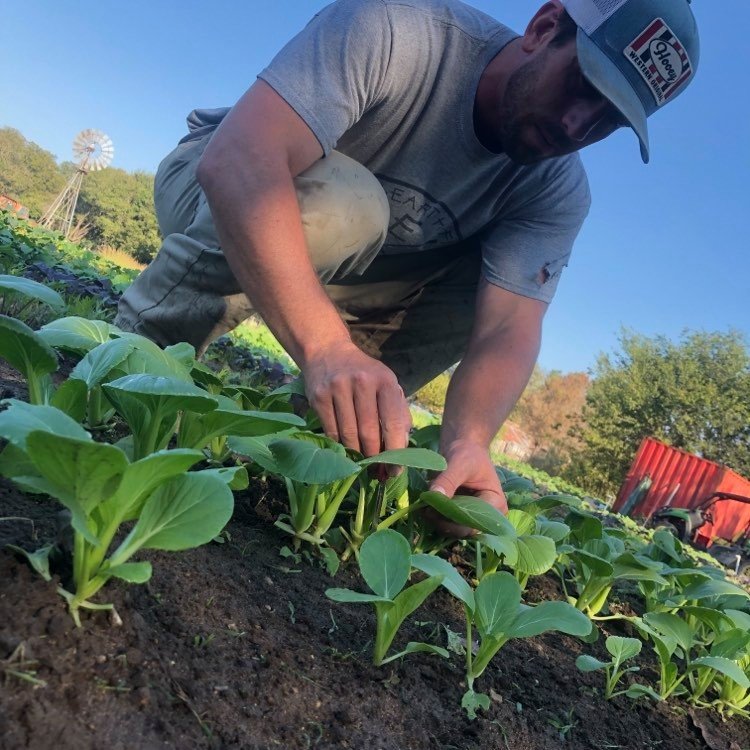
Larry Goodson, Farmer + Owner of First Earth Farm provides organically grown produce to The R+R Farm Co-Op. [/caption]
How? You ask.
Remember what we learned about regenerative farming? These methods support the soil and strive to leave the land better than it's ever been. Think of it this way: What does your food eat? If your veggies are consuming high-quality organic nutrients from a solid soil, and if the animals are grazing organic grass grown on said soil - we’d venture to say their diet is pretty top-notch. Ipso facto… yours will be too!
Phys.org reports on the results of a study conducted in January 2022 over 10 farms across the US comparing regenerative soil to conventional soil stating, “The food grown under regenerative practices contained, on average, more magnesium, calcium, potassium and zinc; more vitamins, including B1, B12, C, E and K; and more phytochemicals, compounds not typically tracked for food but that have been shown to reduce inflammation and boost human health. Crops grown in the regenerative farms were also lower in elements broadly detrimental to human health, including sodium, cadmium and nickel, compared with their conventionally grown neighbors.”
Further, pasture-raised meats - especially beef - are full of Omega-3 fatty acids and Conjugated Linoleic Acid (CLA). Both Omega-3s and CLA greatly enhance your nutritional intake, and as it turns out, both are sorely lacking in grain-fed meats.
There’s something to be said about slow and steady. It really does win the race, especially when it comes to nutrition.

It is said a picture is worth a thousand words, and this one is no exception. Factory Farms, mostly owned by multinational corporations, throughout the country shove chickens, cows, pigs, goats and more into concrete blocks to sit in their own feces where they are pumped with goodness knows what to fatten them up… all in the name of making a buck.
The regenerative farming practices incorporated into The R+R Farm Co-Op treat the animals with the dignity and respect they deserve by giving them room to roam as they were created to do. Many of the animals even become pets and are befriended by the farmers! As we believe you’ll soon agree, happier, stress-free animals produce tastier food.
Regenerative farming practices incorporated into our Co-Op are better for the environment by limiting chemical run-off. When you don’t spray the produce with pesticides and other harmful chemicals, there’s no residue seeping into the soil, into the food, and into your body. Period. This also means it’s not floating into the air we breathe! As mentioned above, the care taken to bring the soil to its optimal state with the goal of leaving it better than it was found benefits the environment for generations to come.
You may be wondering why we need a farming cooperative when we've got supermarkets packed with produce and meat on every major corner, but did you know USDA stats show that farmers who sell through conventional grocery stores only receive 14% of the profit from their hard work? 14%!
“Sure, the local supermarket has tomatoes in February, but they’re not coming from anywhere within 5000 miles of where you’re sitting. People want what they want, but they don’t understand what it takes to get it,” laments Bob.
By equipping local farmers to bring their in-season bounty to your table via the Co-Op, you’re not only doing your part to improve the broken food system, you’re putting money right back into the local economy.
The focus on sustainability to accompany regenerative farming ensures the land is never worked beyond what it can healthfully produce. This gentler practice allows for generations to come to reap the benefits of the rich farmland… just as God intended! We are instructed to be stewards and shepherds of the land and animals we get to enjoy.
As poignantly stated by Annemarie Sullivan, owner of Sullifarm + Kitchen providing all pasture-raised pork to the Co-Op, “Remember, every time you eat a meal, you are either enforcing a positive or negative effect. Not just to your body, but to our animals, our communities, our future generations, our air, water, and soil.”
By joining The R+R Farm Co-Op, you can rest assured that while you might not be the one digging in the dirt, you’re enforcing the positive effect of the most sustainable farming practices in the industry.
In a world of marketing mumbo jumbo with virtually no regulation on what the creative team at AB&C Marketing Company throws on the package of hot dogs to make them sound like they’re straight from heaven, even the savviest of shoppers can be misguided. Further, the red-tape and expensive hoop jumping required to obtain a USDA Organic stamp would make your head spin.
Organically grown produce and pasture-raised meats are the terms colloquially used by regenerative farmers to describe the most nutrient-dense food for your health as well as the most humane and nurturing practices for the animals and for the land.
Bob sums it all up perfectly saying, “Come for the nutrition and flavor. Stay for the Farm Share increase!”
Step 1: An annual Co-Op Membership of $89 must be secured to join and order from the Co-Op (spots are limited - so don't delay). Memberships go toward supporting the farmer’s supplies, inclement weather issues, production as well as the operational costs to run The Co-Op. Note: Your Co-Op Membership does not include the cost of food you choose to order. Secure your Membership here.
Step 2: After a Membership is purchased, customers can shop produce, meats, eggs, and more provided by our local farmers during shopping windows open every other Friday thru Monday. Check out this calendar for ordering and pick-up dates.
Step 3: Customers will then pick up their conveniently bundled goods the Thursday following the order window at R+R 11am-5pm. Ordering opens March 21st-28th & first pickup is March 31st.
Sunflower Farms provides all of the delicious pasture-raised, grass-fed beef.
Little Foot Farm provides free-range, organic, pasture-raised eggs to the Co-Op.
Sullifarm + Kitchen provides all of the pasture-raised pork products.
Hollow Trace Market Farm provides all of the organically grown produce, specialty herbs and canned goods sold.
Armagh Creamery provides all of the dairy products.
Icon Bread provides all of the sourdough bread to The R+R Farm Co-Op.
Prairie Oasis Farm provides the pasture-raised chicken and lamb to the R+R Farm Co-Op.
Head to therrfarmcoop.com to learn more about the Co-Op, our amazing farmers, available products and to join the Co-Op! Stay tuned for more from The R+R Farm Co-Op including recipes and pro-tips from our knowledgeable farmers.
.png)
Peptides have become one of the most discussed and debated areas in health and wellness. You may have heard about them for recovery, weight management, gut health, skin health, or healthy aging. And if you spend any time online, you've probably seen some pretty bold claims about what they can do.
There is a reason peptides are generating so much interest. They represent an exciting area of medicine that allows us to think about health at the cellular level and potentially influence processes the body already performs naturally.
However, this doesn't mean every peptide is appropriate, or even adequately studied, for every person.
I am cautiously optimistic about what peptide therapy may offer. My approach is also intentionally conservative. Peptides should be considered in the context of the evidence available, the individual patient, and a comprehensive treatment plan rather than a shortcut to better health.
Peptides are short chains of amino acids, the same building blocks that make up proteins.
Many peptides occur naturally in the human body and act as signaling molecules. Think of them like text messages your cells send to one another. Each peptide carries a specific message that can tell cells to start, stop, or adjust a particular process, from metabolism and hormone signaling to inflammation and tissue repair.
In medicine, peptide-based therapies aren't entirely new. Insulin, for example, is a peptide hormone, and a growing number of peptide-based medications have been developed and studied for specific medical uses.
What is newer is our growing understanding of how certain peptides may be used to influence these existing communication pathways. Rather than asking the body to do something completely foreign, many peptide therapies are designed to work with signals the body already uses.
Peptides aren't new, but public interest in them has exploded.
Part of that growth has come from the visibility of peptide-based medications such as GLP-1 receptor agonists. At the same time, research into cellular medicine, metabolism, recovery, and longevity has brought a much wider range of peptides into the conversation.
Today, you'll hear peptides discussed in relation to everything from weight management and body composition to injury recovery, gut health, skin health, and immune function.
What's important to understand is that not all peptides have been studied to the same degree. Some peptide medications have decades of research and are FDA-approved for specific uses. Others are newer or still emerging, with promising research but less human or long-term data available.
That doesn't necessarily mean a newer or less-studied peptide has no place in medicine. It means we need to understand what evidence exists, where the limitations are, and weigh the potential benefits and risks for the individual patient.
That's why I don't approach peptides as a menu where a patient simply chooses one based on the result they're looking for. The better question is whether a particular peptide makes sense for that patient, that goal, and their overall health.
Because this is a rapidly developing area of medicine, I wanted additional, specialized training before incorporating peptide therapy more deeply into my practice.
I recently completed Peptide Therapy Certification through the Seeds Scientific Research & Performance Institute (SSRP), a clinician-focused program centered on the application of cellular medicine and peptide therapy in clinical practice.
The training takes a comprehensive look at peptide therapy across a wide range of patient cases, including metabolic, hormonal, autoimmune, musculoskeletal, cardiac, and other complex health concerns. More importantly, it goes beyond simply learning which peptide may be used for which purpose.
The program examines mechanisms of action, patient selection, protocols, dosing and timing, potential interactions, and how peptide therapy can be thoughtfully integrated into a patient's broader plan of care.
Peptides are a rapidly evolving area of medicine. If I'm going to offer them to patients, I want to understand not only their potential benefits, but also their limitations, appropriate use, sourcing, and where the research is still developing.
One reason peptide therapy can be confusing is that there isn't one universal method of delivery.
Depending on the specific peptide and its intended use, formulations may include:
The route matters because peptides are molecules that can be broken down by digestive enzymes and may have difficulty crossing the intestinal barrier. For many peptides, injection remains the most established way to deliver a predictable amount into the body.
Certain peptides can also be delivered effectively through the nasal route, which can offer another useful option depending on the molecule and treatment goal.
Oral and liposomal preparations have a place as well, but absorption and bioavailability vary significantly depending on the peptide and formulation.
In other words, the best delivery method depends on the peptide and the patient. Effectiveness and absorption matter, but so does choosing a method a patient can realistically follow consistently. If someone knows frequent injections aren't something they can maintain, for example, I'll take that into consideration when evaluating other appropriate options. The goal is to find an effective approach that also works in real life.
There are dozens of peptides being researched and discussed, but a few names come up frequently in my appointments with my patients.
BPC-157 has received significant attention for its potential role in tissue repair and gastrointestinal health. Much of the enthusiasm, however, has outpaced the human clinical evidence. BPC-157 is not FDA-approved, and we still have important questions about its safety and effectiveness in humans.
GHK-Cu, sometimes called a copper peptide, has been studied primarily for its potential roles in skin and tissue biology. It is commonly encountered in topical skin and hair products, or injectables.
Thymosin-related peptides have been explored for their effects on immune signaling and tissue repair.
Growth-hormone-related peptides, including compounds that influence growth hormone signaling, have also attracted attention for recovery, body composition, and other goals. These require particularly thoughtful medical oversight because altering one hormonal pathway can affect other systems throughout the body.
And then there are GLP-1-based therapies, a category many people don't initially realize involves peptide-based medications. These drugs have become well known for their roles in diabetes and weight management and are among the clearest examples of how powerful peptide-based therapeutics can be when supported by substantial clinical research.
These aren't interchangeable therapies. Each works through different pathways, carries different potential benefits and risks, and has a different body of research behind it.
If there's one point I want patients to understand, it's this:
Please don't buy peptides "from a guy."
The popularity of peptide therapy has created a large online market of products labeled things like "research use only." That doesn't mean those products are appropriate or safe for you to inject into your body.
With an unregulated source, you may not actually know what's in the product. The product could contain the wrong concentration, impurities, contamination, or potentially a different substance altogether. You may also simply be spending a lot of money on something that doesn't contain a meaningful amount of what the label claims.
This becomes especially important with injectable products because you're bypassing many of the body's natural defenses.
Sourcing isn't an afterthought in peptide therapy, it's part of the treatment itself.
If I'm going to consider a peptide for a patient, I want to know where it came from, how it was prepared, whether the source meets appropriate standards, and what evidence exists for using that particular therapy.
At Restore + Revive, we're very intentional about the compounding pharmacies and distributors we work with. We carefully evaluate our sourcing partners and the standards they follow before prescribing or recommending a product because what's in the product, how it's prepared, and where it comes from matter just as much as choosing the right peptide in the first place.
This may be the most important part of the conversation.
You cannot out-peptide poor sleep, a nutrient-poor diet, chronic stress, lack of movement, excessive alcohol use, or other lifestyle factors that are actively working against your health.
Peptides may influence cellular signaling, but those cells still need the right environment to function well.
If someone comes to me looking for a peptide to improve energy, recovery, body composition, or overall health, I'm also going to ask about sleep. I'm going to look at nutrition, exercise, stress, metabolic health, hormones, gut health, and anything else that may be contributing to the problem.
Sometimes a peptide may complement that work. Sometimes it isn't where we need to start.
I don't want peptide therapy to become another version of taking a pill for a symptom without asking why the symptom exists in the first place.
Two people can walk into my office with the exact same complaint and leave with very different plans.
Your medical history matters. Your medications matter. Your laboratory results, lifestyle, symptoms, goals, and risk factors matter. Even when peptide therapy is appropriate, the specific peptide, route, timing, and length of treatment may differ from one person to another.
I also want patients to understand that some uses of peptides are still experimental. "Promising" and "proven" are not the same thing.
There are areas where early research is exciting, but we don't yet have the long-term human data I'd like to see. Being interested in emerging medicine shouldn't mean abandoning the same critical thinking we apply everywhere else in medicine.
The use of modern peptides is an exciting new frontier in medicine.
What interests me most is the possibility of working at the cellular level to influence processes involved in areas such as wound healing, metabolic health, gut health, immune function, and other complex health concerns.
But I approach peptides the same way I approach the rest of medicine. They're one tool, not the entire toolbox.
I am cautiously optimistic about what peptides can offer, while maintaining a conservative approach to their use. When I consider peptide therapy, I do so with an understanding that some applications have considerably more evidence than others and that many uses remain experimental.
I want to know what we're trying to accomplish, why a particular therapy makes sense, what we know about its risks and benefits, and how it fits into everything else we're doing for your health.
The goal isn't to prescribe the newest thing. The goal is to make a thoughtful decision about whether that tool can meaningfully contribute to your care.
Peptide therapy is developing quickly, and I expect our understanding of it to continue changing as more research becomes available.
This is exciting, but it's also exactly why medical guidance matters.
If you're interested in peptides, don't start with "Which peptide should I take?" Start with "What am I trying to improve, and why is it happening in the first place?" From there, we can determine whether peptide therapy belongs in the conversation at all.
At Restore + Revive, peptide therapy is considered within the context of the whole person, not as a replacement for nutrition, movement, sleep, stress management, or other foundational aspects of health.
If you're curious about peptide therapy and whether it may have a role in your health plan, schedule an appointment with Christopher Weiss, MD, to discuss your concerns, goals, and the options that may be appropriate for you.
Contact us at (817) 720-6220.

If you've started researching hormone replacement therapy, you've probably come across the terms Bioidentical Hormone Replacement Therapy (BHRT) and synthetic hormones. Unfortunately, there's a lot of conflicting information online, and it can be difficult to know what is true and what hormone replacement is best for you and your unique needs.
My belief is that the goal of hormone replacement therapy isn't simply to replace hormones because someone reaches a certain age. It's to understand why someone is experiencing symptoms, determine whether hormones are actually part of the picture, and create a treatment plan that's personalized to that individual.
Let's start by defining what these terms actually mean.
Hormones are chemical messengers that allow different parts of your body to communicate with one another.
They help regulate nearly every major system in the body, including:
As we age, it's normal for hormone production to gradually change and most commonly decline. For some people, those changes are barely noticeable. For others, declining hormone levels can significantly impact how they feel and function. That's where hormone replacement therapy may become part of the conversation.
Synthetic hormones are medications that are manufactured in a laboratory to mimic the effects of the hormones your body naturally produces. While they're designed to act like hormones such as estrogen or progesterone, their molecular structure is not identical to the hormones your body makes on its own.
Hormone medications have been used for decades. Some of the earliest hormone replacement therapies became widely available in the 1940s and 1950s and were developed long before bioidentical hormone therapies became more common. Many of these medications were created to effectively relieve symptoms of menopause and other hormone deficiencies and have been studied extensively over the years.
Examples include medications such as medroxyprogesterone acetate and conjugated equine estrogens.
Like any medication, synthetic hormones come with potential benefits, risks, and side effects, including considerations related to certain hormone-sensitive cancers, that should be evaluated based on each person's health history and goals.
The term bioidentical refers to a hormone's molecular structure. Bioidentical hormones are chemically identical to the hormones naturally produced by the human body. In other words, the molecule is the same whether your body makes it or it's produced in a laboratory.
Although bioidentical hormones have gained significant attention over the past two decades, they're not a new concept. Researchers have been studying and using bioidentical forms of hormones for many years, and today several FDA-approved hormone therapies use bioidentical estradiol and progesterone.
As our understanding of hormone physiology has evolved, many providers, such as myself, have increasingly incorporated bioidentical hormones into practice because they offer another evidence-based option for appropriately selected patients. That doesn't mean they're the right choice for everyone, but they have become an important part of modern hormone replacement therapy.
One common misconception is that bioidentical hormones are simply "natural hormones" taken directly from plants. While many bioidentical hormones begin with plant compounds derived from soy or wild yams, they're extensively processed and purified before becoming medication. By the time they're prescribed, they're pharmaceutical products, not simply plant extracts.
Current evidence does not suggest an inherent increased cancer risk with bioidentical hormone therapy.
Common bioidentical hormones include:
One way I like to explain this is by thinking about hormones as keys.
Hormones work by attaching to receptors throughout the body. Those receptors act like locks, and the hormone acts like the key. Because bioidentical hormones have the same molecular structure as your body's natural hormones, they fit those receptors in the same way your own hormones do.
Synthetic hormones may interact with those receptors differently because their structure is different. That difference can influence how the body metabolizes the hormone, how long it remains active, and how it affects different tissues.
When hormone replacement therapy is appropriate, I prefer BHRT whenever possible. Because these hormones are chemically identical to those your body naturally produces, they're designed to interact with your body's hormone receptors in the same way your own hormones do.
I've dedicated additional training to hormone optimization through WorldLink Medical, including attending multiple advanced conferences focused on evidence-based BHRT. That education, combined with my experience caring for patients, has reinforced my belief that hormone replacement should be thoughtful, individualized, and based on each person's unique needs rather than a one-size-fits-all approach.
One of the biggest reasons I believe in BHRT is the transformation I've seen in my own patients. When hormones truly are part of the problem and we take the time to optimize them appropriately, I've watched men regain their confidence, rebuild strength and muscle, improve their energy, and feel like themselves again. I've seen women experience more stable energy throughout the day, improved sleep, better mood, clearer thinking, and a renewed sense of well-being.
That doesn't mean BHRT is the answer for every symptom or every patient. Hormone therapy should always be considered alongside your medical history, symptoms, laboratory findings, and overall health. But when it's the right fit, the improvements can be truly life changing.
One question I hear often is:
"If hormone imbalance is so common today, why didn't our grandparents seem to struggle with it?"
The truth is, there probably isn't one single answer.
Today's world exposes us to far more substances that can interfere with our hormonal health than previous generations experienced. These compounds, known as endocrine disruptors, can interfere with the body's normal hormone signaling.
They're found in many aspects of modern life, including:
While we're still learning about the long-term effects of these exposures, research suggests they may contribute to changes in hormone balance for some individuals.
At the same time, our lifestyles have changed dramatically. Chronic stress, poor sleep, processed foods, sedentary habits, obesity, and environmental toxins can all influence the body's ability to produce, metabolize, and regulate hormones.
And there's another important difference.
Many previous generations simply accepted fatigue, weight gain, poor sleep, low libido, and declining energy as an unavoidable part of getting older. Today, we recognize that while some hormonal changes with aging are expected, feeling miserable doesn't have to be.
I often tell my patients: "Normal isn't always optimal."
My goal isn't to help you simply survive the aging process. It's to help you feel energized, healthy, and capable so you can fully enjoy the years ahead.
As we age, it's normal for our bodies to gradually produce fewer hormones. For women, estrogen and progesterone naturally decline during perimenopause and menopause. For men, testosterone levels typically decrease more gradually over time. Just because these changes are common doesn't mean you have to accept them as your new normal.
For women, symptoms may include:
For men, symptoms may include:
One of the reasons I enjoy practicing functional medicine is that we don't stop at identifying what is happening. We ask why it's happening.
One of the first questions I ask my patients is simple:
If you once felt great and now you don't, what changed?
Was it simply the natural aging process? Did your symptoms begin after an illness, pregnancy, injury, surgery, or a particularly stressful season of life? Have years of poor sleep, chronic stress, environmental exposures, or nutritional deficiencies gradually taken their toll? Sometimes there's a clear turning point. Other times, the changes happen so gradually that people don't realize how differently they feel until they look back.
Hormones may absolutely be part of the answer, but they're rarely the entire story. My job is to connect the dots and understand why your body is functioning differently today than it was years ago.
That's why we look beyond hormone levels alone. We also evaluate factors that can influence how your body produces, metabolizes, and responds to hormones, including:
If we simply replace hormones without understanding what's driving the imbalance, we may miss opportunities to improve your overall health. My goal is to identify the root causes contributing to your symptoms and create a plan that helps you feel like yourself again.
When you come to see me for concerns about your hormones or overall health, my goal isn't simply to prescribe medication. My first priority is getting to know you and understanding your health story.
We'll spend time discussing your symptoms, medical history, lifestyle, nutrition, sleep, stress, exercise habits, and any changes you've noticed over time. One of the questions I often ask is, "When did you last feel your best?" Understanding what has changed helps us identify potential root causes instead of simply treating symptoms.
From there, we'll use blood work as one piece of the puzzle, not the entire picture. Your symptoms, medical history, and overall health are just as important as your hormone levels. If Bioidentical Hormone Replacement Therapy (BHRT) is appropriate, we'll develop a personalized treatment plan together.
I don't believe in writing a prescription and sending you on your way. Hormone optimization is a process, not a one-time event. I'll continue working alongside you, monitoring how you're feeling, reviewing your updated blood work, and making thoughtful adjustments along the way. As your body responds, we'll fine-tune your treatment with the goal of helping you regain your energy, improve your sleep, restore your strength, and ultimately help you feel like yourself again.
If hormones aren't the primary driver of your symptoms, we'll focus on identifying and addressing the underlying factors that are. My goal isn't to chase numbers on a blood test. It's to understand why you don't feel like yourself and create a personalized plan that helps you feel your best for the long term.
Understanding the difference between synthetic hormones and Bioidentical Hormone Replacement Therapy (BHRT) is an important first step, but it's only part of the conversation. The right treatment isn't determined by a headline or what's popular. It's determined by your symptoms, your health history, your goals, and what's happening inside your body.
If you're experiencing symptoms you think may be related to hormone imbalance, you don't have to navigate it alone. At Restore + Revive, I take a personalized, root-cause approach to hormone health. Together, we'll work to understand why you're not feeling your best and determine whether BHRT or another treatment approach is the right fit for you.
I believe normal isn't always optimal. My goal is to help you regain your energy, improve your health, and feel your best so you can fully enjoy the years ahead.
To learn more or schedule an appointment with Dr. Weiss, call 817-720-6220.
Disclaimer: The information provided in this blog is for educational and informational purposes only and is not intended as medical advice. Always consult with your healthcare provider before starting any new service, product, or treatment. Please note that prices, offerings, and other details mentioned in this post reflect information available at the time of publication and may have changed since.

This is a topic that feels especially personal to me.
I see patients in our practice every week who are struggling with symptoms that have been brushed off, misunderstood, or reduced to something far too simplistic. And as a mom to young girls, this conversation matters to me on an even deeper level. I care not only about how we care for women now, but also about what kind of awareness and support the next generation will grow up with.
For years, PCOS (Polycystic Ovary Syndrome) was the name many women were given for a slew of symptoms they were experiencing. But for a lot of patients, that label only captured the surface of what was really going on.
That is why this recent name change matters, and feels long overdue. The condition previously known as PCOS has now been renamed PMOS- polyendocrine metabolic ovarian syndrome. The new name better reflects the full-body nature of what so many women have actually been experiencing all along. (The Lancet; Endocrine Society)
PCOS was the term used for a condition often associated with:
The name PCOS never told the whole story. Many women diagnosed with PCOS did not have ovarian cysts, and cysts were never required for diagnosis in the first place. That mismatch has caused confusion for years. (WHO ; The Lancet)
This was not a random “rebrand” or thoughtless name change.
The name change came out of a 14-year international effort involving researchers, physicians, advocacy groups, and patients themselves. More than 50 organizations were involved, and more than 22,000 survey responses helped shape the outcome. It was driven by growing recognition that the old name was scientifically incomplete and often misleading. (Endocrine Society; The Lancet)
The new name matters because it reflects what this condition actually involves:
In other words, this condition has always been about more than just ovaries. (University of Colorado Anschutz ; Endocrine Society)
This is not a brand-new condition. It is a more accurate name for the condition many women have long known as PCOS.
For adults, diagnosis still generally involves meeting 2 out of 3 criteria after ruling out other causes:
For adolescents (10–19 years old), the criteria are more specific. Diagnosis requires:
That matters because cycle irregularity can be common early on, and we want to be thoughtful about over- or under-diagnosing younger girls. (The Lancet)
One of the biggest issues with the old name is that it often led women to dismiss or question their own symptoms.
It made it easier to think:
But they often are not separate at all.
This condition can affect:
That is exactly why a broader, more accurate name matters.
This is not rare, and it is not something we should only start talking about in adulthood.
A closer look at the numbers:
As a provider, that is something I pay close attention to. And as a mom to young girls, it makes this conversation feel even more important. We need earlier awareness, earlier support, and better conversations for younger generations.
While we embrace this updated name and the more accurate diagnostic framework, at Restore + Revive, we have been caring for patients with a “why is this happening?” approach since the day we opened our doors.
We do not just look at the label. We strive to look at the full picture and person sitting in front of us.
This often includes discussing and reviewing:
For many women, the symptoms under this diagnosis are deeply connected. Most of the time, they involve some combination of hormones, metabolism, and lifestyle factors.
That is where a functional medicine approach can be so helpful. Instead of chasing symptoms one by one, we step back and ask what is driving the pattern in the first place. (WHO ; American Society for Reproductive Medicine)
If you have been dealing with irregular cycles, acne, hair changes, weight resistance, fertility concerns, or signs of hormone and metabolic imbalance, please know this:
We also know these symptoms are not limited to adults. At Restore + Revive, we have providers who care for both adults and adolescent patients, so we can support women as well as younger girls who may be starting to experience these patterns early.
If this resonates with your story, we would love to help.
At Restore + Revive, our goal is to offer care that is personalized, root-cause focused, and grounded in the understanding that hormone health, metabolic health, and lifestyle are all connected.
Call us at 817-720-6220 ext 2 to schedule an appointment and learn more.
Dabney Poorter, FNP-C (Family Nurse Practitioner-Certified), is the Founder of Restore + Revive and is passionate about helping patients feel their best through research-based, personalized care. With a background in kinesiology, nursing, nutrition, and integrative medicine, Dabney takes a whole-body approach that includes in-depth health history review, lab interpretation, nutrition support, supplement guidance, and medication management. As a Family Nurse Practitioner, Certified Nutritionist, lifelong learner, and mom of two girls, she is deeply committed to equipping and empowering patients at every stage of their health journey.

We are thrilled to welcome Dr. Christopher Weiss, MD, to the Restore + Revive Functional Medicine team! Dr. Weiss will begin seeing adult patients on June 1, 2026, bringing over a decade of experience in family medicine and a unique background that blends emergency care with a root-cause, functional medicine approach.
Dr. Weiss is a board-certified family medicine physician with more than 10 years of experience caring for patients across a wide range of settings. His medical journey began on the front lines as a paramedic on a 911 response ambulance in California, where he developed a deep respect for acute care and rapid intervention.
He went on to earn his medical degree from St. George’s University School of Medicine and completed his residency at UT Southwestern Medical Center, where he refined his clinical expertise in comprehensive family medicine.
This dual background gives Dr. Weiss a deep respect for the life-saving role of modern medicine, while also reinforcing his belief that we’ve oftentimes gone too far in relying on it as the default. He is passionate about stepping back to understand why illness is happening in the first place, and focuses on supporting the body as it was designed to function. Today, he blends these perspectives to deliver thoughtful, individualized care centered on long-term health and healing.
Dr. Weiss is known for his grounded, “common sense” as he puts it, approach to medicine. He believes in prioritizing and supporting the body’s natural design and ability to heal.
His approach centers on:
He works closely with patients to create personalized care plans that reflect both clinical evidence and individual needs, helping them move beyond symptom management toward true wellness. This approach also allows for more time, deeper investigation, and a more meaningful patient–doctor relationship than the traditional quick visit model.
Dr. Weiss has pursued advanced training in several key areas of functional and integrative medicine. His unique areas of focus include, but are not limited to:
His ability to investigate and address these often “invisible” drivers of illness makes him a valuable partner for patients who have not found answers through conventional care alone.
Dr. Weiss works exclusively with adult patients, allowing him to take a more focused and in-depth approach to complex health concerns in adulthood.
Undergraduate: University of Southern California, Keck School of Medicine (Bachelor of Science)
Medical Degree: St. George’s University School of Medicine
Residency: Family Medicine, UT Southwestern Medical Center
Board Certification: American Board of Family Medicine
Additional Training & Certifications:
Dr. Weiss brings the same intentional, hands-on mindset to his life outside the clinic as he does to his patient care. He enjoys working on land and construction projects, designing and building, and cultivating a sustainable food environment at home, including tending to his animals including chickens and a pony.
He stays active playing hockey and training in Jiu Jitsu, where he has earned his blue belt. He also has a deep appreciation for precision and performance, with interests ranging from Formula 1 to shooting sports.
At home, he enjoys life with his wife and their two children, keeping family life grounded, active, and connected.
His approach to life outside the office gives him a genuine understanding of the balance between work, family, and creating a lifestyle that supports long-term health.
Dr. Weiss shares what drew him to Restore + Revive:
“I was drawn to Restore + Revive because it aligns with how I believe medicine should be practiced. I have a deep respect for modern Western Medicine when it’s needed, but I also believe we’ve moved too far into treating symptoms instead of people. What really made Restore + Revive stand out to me was its reputation and hearing firsthand from patients about the level of care they’ve experienced and the results they’ve seen. There’s a clear commitment here to stepping back, asking better questions, and focusing on what’s actually driving someone’s health concerns. That kind of environment, where I have the freedom to think critically and care for patients more completely, is what drew me in.”
Dr. Weiss offers two ways to work together, depending on your needs and goals:
Adult Well Visits, Primary Care (50 min)
If you are looking for a more thorough provider and appointment for your annual well-visit check-up, Dr. Weiss is here to support you.
Adult Sick Visits (30 min)
For acute concerns when you’re not feeling your best and need timely, thoughtful care.
Call 817-720-6220 ext 2 to book an appointment with Dr. Weiss!
Since opening in 2016, Restore + Revive has been dedicated to providing personalized, professional, and integrative care all under one roof in Fort Worth. Our mission is to help every patient restore and revive their whole person, body, mind, and spirit.
We are so excited for our patients and families to meet Dr. Weiss!

If you’re searching for a more root-cause approach to your child’s health, you’re not alone. Dr. Shane Rainey, a functional medicine pediatrician in Fort Worth, takes a deeper look at common childhood conditions like eczema by addressing what’s happening beneath the surface. Rather than simply treating symptoms, his approach focuses on gut health, immune balance, nutrition, and environmental factors to support long-term healing. In this Q&A, Dr. Rainey shares what eczema really is, what he evaluates first, and practical steps families can take to start improving their child’s skin from the inside out.
Dr. Rainey:
Eczema is more than just dry skin. At its core, it involves three main things:
So what you see on the surface is really just a reflection of what’s happening underneath.
Dr. Rainey:
I like to zoom out and look at the whole child, not just the skin. Some of the first things I evaluate include:
Dr. Rainey:
No, and that’s a really important mindset shift for families. There is a strong gut-skin connection, and eczema is often tied to how the immune system is developing and functioning. The skin is just one way the body is expressing a deeper imbalance.
Dr. Rainey:
Genetics can absolutely play a role, but they are only part of the picture. Environmental factors and gut health have a big influence on whether eczema develops and how severe it becomes. Even if no one in the family has eczema, a child can still experience it based on these other factors.
Dr. Rainey:
I like to think of the gut as the “control center” for the immune system. In fact, about 70–80% of the immune system lives in the gut, so when things are off there, it can show up in other places, including the skin.
An easy way to picture it is this: if the gut is like the foundation of a house, and that foundation is unstable or inflamed, you’ll start to see cracks show up elsewhere. For many kids, eczema is one of those “cracks.”
When the balance of good and bad bacteria in the gut is disrupted, whether from antibiotics, diet, or other factors, it can lead to increased inflammation and a more reactive immune system. That immune response can then show up on the skin as redness, irritation, and itching.
The encouraging part is that when we start supporting gut health, we’re often helping calm the immune system at the same time. And for a lot of kids, that’s when we begin to see real improvement in their eczema.
Dr. Rainey:
Nutrition plays a huge role, I am a huge advocate for focusing on diet and eating real, whole foods. The skin relies on certain nutrients to stay strong and resilient.
Some of the most important include:
When kids are deficient in these, the skin barrier can weaken and inflammation can increase, making eczema worse.
Dr. Rainey:
One of the best ways to support skin health is through real, nutrient-dense foods. When we’re thinking about eczema, I like to focus on a few key nutrients and where to find them:
Essential fatty acids (omega-3s)
These help reduce inflammation and support a healthy skin barrier. Foods to include:
Zinc
Zinc plays a big role in skin healing and immune function. Foods to include:
Antioxidants
These help protect the skin from inflammation and oxidative stress. Foods to include:
Vitamin D
Vitamin D helps regulate the immune system and supports skin repair. Sources include:
Bone broth is another easy win here. It’s rich in amino acids and nutrients that support gut health, and since the gut and skin are so connected, that can go a long way for kids with eczema. Use it to soups, cook rice or pasta in it, add it to sauces, etc.
The goal isn’t perfection, it’s just consistently incorporating a variety of these foods to help support the skin from the inside out.
Dr. Rainey:
This is incredibly common, so first, you’re not alone. I never expect kids to flip a switch overnight and suddenly love salmon and spinach.
Instead of aiming for perfection, I encourage parents to think in terms of small, strategic wins over time.
Here are a few ways to start:
At the end of the day, progress is what we’re after. Small changes, done consistently, can still make a big impact on your child’s skin and overall health.
Dr. Rainey:
I don’t love a one-size-fits-all answer because every child is different. But if a family can’t see me or another functional medicine provider right away, there are a few simple things I often recommend starting with:
I know how frustrating and overwhelming it can be to deal with a condition like eczema, especially when it’s your child. First, you are not alone, and you should not feel guilty. As a parent, it’s incredibly hard to watch your child uncomfortable, itching, and not feeling their best, and to feel like you’re not seeing improvements.
As a father, I understand that firsthand. There’s nothing easy about navigating your child’s health, especially when it feels like you’ve tried everything.
My hope is that some of these insights and simple strategies give you a starting point and help you feel a little more empowered. Small, consistent changes can make a meaningful difference over time.
If you’re looking for more personalized support, I’d love to help. You can schedule a free meet-and-greet or a functional medicine pediatric appointment with me to take a deeper, root-cause approach to your child’s eczema and overall health.
You can call us at 817-720-6220 Ext. 2 or email integrative@restoreandrevivefw.com.

Hair thinning can feel discouraging and terrifying, especially when it seems to come out of nowhere. We sat down with Restore + Revive’s Founder and Certified Functional Medicine Provider, Dabney Poorter, FNP-C, to talk through the most common causes of hair loss and what you can do to support healthy hair growth from the inside out.
Question 1: If a client comes to you and is suddenly experiencing hair loss, what first comes to mind for you?
Dabney: Hair loss is usually a symptom of something deeper, so my first step is always to look for the “why.” Ideally we start with comprehensive testing, not just a surface-level check. The 4 main things I typically run labs to evaluate for are:
Q2: If blood panels look good, what are some other sneaky reasons somebody might still be experiencing hair loss?
Dabney: Sometimes, the answer lies in our genetics. If parents or close family members have experienced thinning or pattern hair loss, there can be a hereditary component. In those cases, I may recommend genetic testing to help determine whether certain gene patterns are at play, allowing us to build a comprehensive and customized plan to tackle accordingly.
Q3: Are there any over-the-counter products you like to help maintain strong hair growth?
Dabney: Like I previously mentioned, I always like to look at the root cause of hair loss, which is typically something happening inside the body. However, external factors and products can be helpful in creating a healthy environment for strong hair growth.
I always remind clients to pay attention to water quality, especially if you live in an area with hard water, which can be harsh on the scalp and hair. Simple water filtration devices or shower heads can be extremely helpful.
I also love hair growth sprays that stimulate follicles without causing irritation. One of my favorites is from Rowe Casa, their hair spritz. It is gentle, natural, safe for most hair types, and it smells amazing!
Finally, using a clean, gentle shampoo can make a big difference. Some people use the same shampoo for years, and over time it may no longer agree with their scalp or hair. Innersense is my personal favorite.
Q4: What are some “free” things people can do to support hair growth and discourage hair loss if testing isn’t something they want to do or can’t afford right now?
Dabney: There’s a lot you can do at home to support your hair and overall wellness:
Q5: I’ve heard people can lose hair after being sick, especially after COVID. Why does that happen? Can other illnesses cause it too?
Dabney: Yes, post-illness hair loss is actually very common, and we’ve seen it a lot in recent years. Essentially, when the body experiences something stressful, like a viral infection or high fever, it often shifts its resources toward healing vital organs and away from “non-essential” functions like hair growth.
This can lead to a condition called telogen effluvium, which causes more hair follicles to enter a resting phase. You’ll typically notice increased shedding about 2–3 months after the illness, once the body starts to reset.
However, it’s not just COVID, other viral infections, severe flu, or even surgery can trigger the same response. The good news is that this type of hair loss is usually temporary. Supporting recovery with good nutrition, stress management, and gentle scalp care can help encourage regrowth as the body rebalances.
Q6: When you say inflammation can cause hair loss, what exactly do you mean?
Dabney: Think of inflammation like your body being on “high alert.” It’s a natural response to injury or infection. For example, when you get a cut, the redness and swelling you see is inflammation helping you heal. But when inflammation sticks around all the time, it can start affecting other parts of your body, including your hair. Chronic inflammation can disrupt the normal hair growth cycle, causing follicles to stop producing hair or to shed prematurely. Some common inflammation triggers include:
Q7: Do men and women experience hair loss differently?
Dabney: Yes. Hair loss often looks and develops differently in men versus women because of hormones and genetics.
While the patterns may look different, the underlying principle is the same: hair follicles are sensitive to hormones, inflammation, and nutrient availability.
At Restore + Revive we know how frustrating hair loss can feel, but it’s often a signal that your body needs support. By identifying root causes, whether hormonal, nutritional, stress-related, or genetic, we can take a functional approach to restore healthy hair growth. Even small changes can have a meaningful difference.
To schedule an appointment with Dabney Poorter or one of our Functional Medicine providers, you can call us at 817-720-6220 Ext. 2 or email integrative@restoreandrevivefw.com.
Disclaimer: The information provided in this blog is for educational and informational purposes only and is not intended as medical advice. Always consult with your healthcare provider before starting any new service, product, or treatment. Please note that prices, offerings, and other details mentioned in this post reflect information available at the time of publication and may have changed since.

[caption id="" align="alignnone" width="840"]
Farmer Bob Copeland, R+R functional medicine patient. [/caption]
“I haven’t been sick since tonsillitis inflamed me when I was six years old. Don’t get me wrong, I’ve seen my share of doctors and hospitals, but an ambulance ride was always involved. Accidents happened, but I haven’t been sick sick, ever. Until now.
“The early spring of 2023, I was out on my farm battling brush and mesquites with a chainsaw and long handle shears, when my helper and friend says ‘Hey, your speech sounds weird.’ I already knew it was off, but thought it was related to recent dental work. Wrong. My tongue was also getting swollen, and I knew it was time to see a doctor, but I didn’t really have a PCP— mine had recently retired. One more high hurdle, this year of all years, I had to get my health insurance policy from United Healthcare. You’ve heard of them?
“UH website was loaded with doctors and other providers they claimed were ‘in-network’ which were in fact not, because none of them would accept the UH policy. They knew better. It took five months to locate a clinic and doctor in Fort Worth, who promptly sent me for X-rays, called me back in to say it was ‘all clear’ and sent me home.
“Thankfully, I was already in the right place at the right time, with a little bit different brand of doctors: Restore and Revive Wellness Center. We had started the R+R Farm Co-op a couple of years ago, so I knew the wellness center’s owner Dabney Poorter, FNP, and one of the doctors on staff, Brighton Miller, DO. They both bought pasture raised meats, raw milk, and organic vegetables from our co-op of farmers on a regular basis. Dabney knew I had an ongoing problem. Dr. Miller overheard me talking to my assistant Amelia one day in our offices at The Homestead,” and asked to talk to me in private. I’ll never forget it; she said ‘Bob this is something in your head.’ Then her and Dabney ordered some bloodwork on me, and eventually after wrestling UH over it, I had an MRI, CT- Scan, and Ultrasound done.
“Dr. Miller was right. I had a tumor in my head, in a bad spot located right on my brain stem. Ouch.
“Dr. Miller gave me the diagnosis, we talked about the many options for treatment including removal of the tumor, and Dr. Miller knew my eventual surgeon from medical school, whom she highly recommended— Dr. Christopher Shank. Then Dabney asked me to try the High Dose, Intravenous Vitamin C therapy, and folks, it was the best piece of advise I have ever had, bar none. Dabney, Dr. Miller, and the nurses there at the wellness center saved my life. The surgeon and oncologist had initially said I would most likely need radiation therapy and possibly chemotherapy. That old school of thought persisted throughout my ordeal, but I was never sold on chemo, and was very hesitant of the radiation, especially since the tumor had been in such a bad place— right on the ‘motherboard’ as one doctor described it.
“I jumped at the Vitamin C therapy having done research of numerous homeopathic options, and trusting Dabney and Dr. B (Miller) as I did. I had 12 doses of 50 ml Vitamin C prior to my brain surgery. Most fortuitous for me, all the doctors and nurses, my surgeon Dr. Shank, Harris Methodist hospital, and the rehab centers to follow, I switched from UH to Blue Cross for my health insurance policy in January of this year (2025). Dr. Shank performed a craniotomy on me January 14, and my uninvited guest was evicted. To date, Blue Cross has paid every claim. Still waiting on a few from UH.
“‘I was able to get the whole tumor out,’ said Dr. Shank when he saw me the following day on his rounds. ‘Everything went great.’ I was just barely functioning at about 50%, but I understood that great news, and thanked him immensely.
“Recovery has taken quite some time (if you’re an impatient busybody like me) but I am still on the mend. Three weeks of inpatient physical therapy, and speech therapy, then more of both therapies twice a week since. I lost 50 pounds in the year of my discontent, I still have speech issues, and an overactive salivary gland, which has made it difficult to gain weight, but have I added 25 pounds back on. My speech therapist is very knowledgeable and committed to seeing me get thru this, and she comes to the rehab center in my hometown. Looks like I’m gonna be around to grill a few more steaks!
“I have no scientific knowledge of how high doses of Vitamin C attack the cancer cells, but I have proof that it does— Me. Just a couple weeks ago I went back to the imaging lab for yet another MRI of my head, and a procedure which sounds scary but wasn’t all that bad, a lumbar puncture, to see if my brain and spine were both clear of any more tumors. When I went to the oncologists office, the PA was there to deliver the news: All Clear. And this time they were right. In five months, I went from a cancerous tumor in my head, to all clear and not needing radiation or chemotherapy. YAHOOO!
“The only thing left for me to do now is continue my speech therapy (Try This: Stick out your tongue, bit down on it lightly to hold it out, then try to swallow. Extremely difficult and virtually impossible for me to do two months ago, but now I can make it happen, and it’s an important hurdle to clear in my therapy.)
“Also on my To-Do List: Thank the knowledge, forward- thinking, and expertise of Dabney Poorter, Dr. Brighton Miller, the nurses and staff at Restore and Revive Wellness Center for saving my bacon! Had it not been for their courage and dedication to providing functional, alternative medicine for me and all their patients, I would probably be wallowing in an unhealthy cycle of toxic chemical treatments, ongoing medical bills, and further loss of my once good health.
“Vitamin C therapy worked for me, and should you be unfortunate enough to find yourself in the same situation, I would recommend you try it before going the traditional medicine route most cancer patients take. But of course, that’s just my opinion! (And I’m not a doctor.)
“Thank you Restore and Revive Wellness Center for giving me back my life. You are the best of the best in healthcare.
“It’s time for Farmer Bob Copeland to go back to work feeding you all.” — Farmer Robert “Bob” Copeland
If you or a loved one is navigating a chronic health condition, our functional medicine team would be happy to sit down and learn about your experience. Then, we can put together a highly tailored, personalized plan for health and healing. Learn more about our functional medicine practice or call (817) 720-6220 ext 2 today.
*Please note that this is not medical advice. This is merely a personal testimony written by one of our functional medicine patients recounting his own, very personal experience. Always speak to your healthcare provider before adding to, retracting from, or making changes of any kind to your treatment plan. High-dose vitamin C is not beneficial for everyone, and you should speak with your healthcare provider before taking it.

Symptoms like chronic bloating, headaches, unexplained fatigue, insomnia, and body aches are all incredibly common. However, they often indicate an underlying disease or chronic condition. Because most health problems are multifactorial — stemming from various systemic imbalances and dysfunctions — functional lab testing can help you uncover the root cause(s).
At Restore + Revive, lab testing is one of our integrative medicine Fort Worth services offered to both adults and children. Read on to discover why lab tests are an essential component of preventative medicine. (Plus, we’ll overview our most popular ones!)
As an integrative medicine practice in Fort Worth, we use functional lab testing to get a full picture of a patient’s health. Doing so allows us to detect any changes, protect against chronic diseases and conditions, and create personalized plans for health and healing.
Wondering which lab tests are right for you? Here’s a quick overview of our most popular ones:
The GI-Map is a comprehensive stool test that detects parasites, bacteria, H. pylori, fungi, and more. Essentially, it assesses the health of your gut microbiome and unearths any underlying causes of irritable bowel syndrome (IBS), autoimmune diseases, skin conditions, and more.
The Dutch Test takes hormone testing to a whole other level. Specifically, it looks at sex hormones and their metabolites, cortisol patterns produced by your adrenal glands, and an organic acids test (OAT). In other words, it offers valuable insights into hormone imbalances, oxidative stress, gut dysbiosis, melatonin, neuroinflammation, nutritional deficiencies, and more. As integrative medicine Fort Worth providers, we use this test to optimize hormone health and correct hormone-related symptoms like fatigue, weight gain, hair loss, and mood swings.
This integrative lab test measures the mineral content of your hair. Believe it or not, just a small hair sample can help us understand your entire body’s mineral status. This test is especially great for assessing intracellular activity (inside the cells) – which is hard to do via blood work alone.
At Restore + Revive, we use this test to uncover mineral imbalances, deficiencies, and excesses. And it reveals a multitude of information regarding your…
Below are some other integrative lab tests we offer at Restore + Revive:
As a center for integrative medicine in Fort Worth, we use functional lab testing to identify hormone imbalances, metabolic problems, thyroid dysfunction, autoimmune issues, and more. Then, we use your results to create a personalized plan for healing.
In addition to standalone lab testing, we offer a Lab Testing Appointment Package (that costs $575 + lab fees) for both adults and children. It includes a discovery appointment, custom lab selections, an appointment to review your results, and a personalized healing protocol.
Want to learn more? Call (817) 720-6220 (extension 2), email integrative@restoreandrevivefw.com, or visit the integrative medicine section on our website.

Peptide therapy is gaining immense popularity in regenerative medicine – and for good reason! Peptides are responsible for a variety of bodily functions, but as we age, our natural peptide levels decline. This weakens our bones and immune system, slows our metabolism, amplifies fatigue, disrupts mental clarity, and much more.
Peptide therapy is a revolutionary treatment that replenishes our peptide stores. By doing so, it offers a multitude of health benefits ranging from muscle and joint recovery to sleep and cognitive improvements.
So, if you’re struggling with age-related weight gain, brain fog, immune deficiency, or sexual dysfunction, keep scrolling. Today’s article covers everything you need to know about peptide therapy, as well as which peptides are right for you.
As you probably already know, proteins are long chains of amino acids. Peptides, on the other hand, are shorter chains of amino acids. Therefore, you can think of peptides as small fragments of protein.
Peptides support a variety of bodily functions that include building muscle, burning fat, and losing weight. Some peptides are designed to stimulate human growth hormone (HGH) and are called growth hormone-releasing peptides (GHRP). And other peptides are designed to support specific goals like weight loss or the reduction of joint pain.
As we mentioned, our natural peptide stores decline with age – that’s where peptide therapy comes in. By replenishing our peptide levels, this treatment supports bone and muscle strength, heals damaged tissues, wards off diseases, boosts energy levels, improves skin elasticity, and optimizes mental clarity.
At R+R Integrative Medicine, we prescribe peptides for weight loss, athletic performance, sleep, hair growth, and more.
Peptide therapy offers a variety of health benefits that improve one’s quality of life:
If you’re struggling with fatigue or lack of energy, peptide therapy revitalizes your body by optimizing energy production.
Peptides strengthen the body’s immune response, making you less susceptible to — and better equipped to ward off — diseases.
Peptide therapy regulates your sleep patterns, ensuring you get a restful night’s sleep.
The cognitive-enhancing effects of peptide therapy are ideal for improving memory, mental focus, and clarity.
Peptide therapy also addresses specific health concerns:
As we mentioned, we prescribe different peptides for different reasons. Here’s a glimpse of the most popular peptides and their benefits:
BPC-157 is a peptide that treats diseases of the GI tract and musculoskeletal injuries. It stands for “body protective compound”, and it’s often used for stomach and intestinal conditions like leaky gut and inflammatory bowel disease (IBS). It also accelerates the healing of soft tissues after injury.
This powerful peptide is produced by the thymus gland, which is a critical part of the immune system. It’s most often used to treat chronic viral diseases. However, it also boosts immunity and controls inflammation associated with chronic diseases.
This combination of peptides stimulates muscle development by increasing the blood level of hormones associated with growth. We prescribe it to increase muscle mass and strength, decrease body fat, accelerate recovery, improve sleep, and enhance cognitive function.
PT-141 treats sexual dysfunction and related issues. Essentially, this peptide enhances sexual desire and increases sexual satisfaction in both men and women. It works by stimulating the melanocortin system, which regulates sexual arousal.
This injectable drug was initially used as diabetes medication. It prompts the body to produce more insulin, which lowers blood sugar (glucose). When used in combination with diet and exercise, it supports weight loss. It can also reduce the risk of heart disease, diabetes, and cancer in people who are overweight or obese.
Interested in peptide therapy in Fort Worth? Our Integrative Medicine team would love to help you explore your options and determine the best peptide(s) for your medical needs. Contact our team to schedule an appointment today.

How often do you feel a sickness coming on, and you immediately start to wonder - is this a cold? allergies? a virus?? For obvious reasons, this can be a little panic-inducing presently, so keep this resource close if/when symptoms do start!
As a place of immunity, Restore and Revive strives to do all we can to encourage preventative health, and the immunity packages grouped by age from Daycare to Adults at the bottom of the post are the best way to stay above the wellness line!
.png)
Be sure to catch the IGTV video with our co-founder, Taylor Dukes, on what to take, eat, drink and do in each scenario, but for a quick recap, peek below! PS we sell all of the listed supplements at R+R. Call 817.720.6220 to purchase!
D Hist for adults
D Hist, Jr. for kiddos
Diffuse essential oils for breathing and/or congestion such as Raven, Thieves, RC
Saline rinse
Neil Med Sinus Rinse
Nasal Spray - we prefer Silver or XClear
Consider looking into fungal overgrowth as root cause if allergies are recurrent
Vitamin C
Vitamin D
Zinc
Cold Calm
Essential oils for breathing and/or congestion such as Raven, Thieves, RC
Nasal spray - silver or xclear
Drink fluids, clear broths, bone broth
Viracid
Vitamin C
Vitamin D
Oscillinum
Zinc
Rest, drink fluids, eat cooling foods and fruit if you have a fever
Take lukewarm baths with epsom/magnesium salt and iodine
Above all, stay calm, put away the screen, and let your body rest. We heal when we sleep. All of this said, want to know the best way to treat a cold or flu? Boost your immunity so they never even have a chance! Take advantage of the following age-specific packages to keep your body primed to fight anything that comes its way this sick season!
We have limited quantities of our immunity packages, so please reserve yours by calling 817.720.6220 today! If you’re not local to Fort Worth, you can always shop our Fullscript link for all of these great brands and more!
Check out this post on immune boosting IVs + Shots as the pefect addition to any of the regimens listed!

What does our adrenal system do, and why do we need to nourish it? Think of your adrenals as the producers and regulators of your hormones and neurotransmitters. These hormones and neurotransmitters then regulate your metabolism. So we're talking reproductive health, brain health, weight management, energy and mood, and since the adrenals regulate all these systems, you can see why it's so important to keep them in check! If you’re feeling off in any of the following areas, chances are adrenal fatigue might be the culprit:

Most of us have some degree of adrenal fatigue, and it comes with no surprise *stress* holds court as the leading suppressor of adrenal glands leading to their fatigue. Read below for a few steps to keep stress at bay and to heal your adrenal system:
The beautiful thing about our bodies is they’re able to heal when we let them. Through dietary, lifestyle and supplemental adjustments, adrenal fatigue does not have to stick around for long. At R+R, we offer several healing modalities to support your adrenal system and the healing process!
We get asked frequently about milk around these parts. Sometimes, the discussion involves what is the best milk for their growing toddler, and sometimes, they are surprised the answer is not 2% (too low) or skim milk (which is water masquerading as milk, like a bad costume ball). The correct answer is whole, real milk. This conversation is part of a larger conversation about dietary fat, which has a long, complicated history in American nutrition since the Eisenhower administration.
Most parents are surprised to learn that toddlers should get roughly 30-40% of their total daily calories from fat, and infants under a year need even more than that with fat making up about half of their calories or more. Breast milk itself has half its calories as fat, which is worth sitting with for a second, because it means the original template for feeding a human being is not low-fat at all.
As a pediatrician, I don't want families to be afraid of fat. I bring this topic up because once parents understand what fat is actually doing in a growing child's body, "low-fat" stops sounding like the responsible choice and starts sounding like the risky one.
Kids aren't just small adults, and their diets shouldn't be shrunken-down versions of ours. Both the American Academy of Pediatrics and the American Heart Association put the target fat intake for kids ages 1-3 at around 30-40% of daily calories, gradually narrowing toward 25-35% by ages 4-18, still well above where we'd land for a typical adult.
Part of the reason is simple math. Fat delivers more than twice the energy per gram that protein or carbohydrates do, which matters when you're trying to fuel a growing body with a stomach the size of a fist. But, fat isn't only fuel. It becomes part of the physical structure of cells all over the body, including in the brain.
This is where things get especially interesting.
Brain development starts before birth and continues rapidly through the early years of life. Specific fats, specifically the long-chain omega-3 fatty acid DHA (docosahexaenoic acid), are part of the raw material for that process. DHA concentrates heavily in the brain and retina and accumulates fastest during the exact window of time when your child's brain is developing the most.
So what does all of this mean? Simply put, fat provides essential building blocks your child’s brain needs to grow, develop, and function properly.
Because of this, I try to get parents thinking beyond "is my child eating enough," and toward "are they getting what their brain needs right now." A calorie is not just a calorie. A calorie is also the message it sends to the body about what to do with those calories. In practice, that usually means fatty fish like salmon or sardines, avocado, olive oil, nuts and nut butters, seeds, and eggs.
Vitamins A, D, E, and K are fat-soluble. Without fat present in a meal, the body can't fully absorb them, and although the vitamins don’t disappear, they can pass through mostly unused. In other words, some vitamins are virtually useless to the body without a fatty diet.
Vitamin A supports vision, immune function, and growth. Vitamin D supports bone health, immune health, and calcium metabolism. Vitamin E works as an antioxidant. Vitamin K plays a role in blood clotting and bone metabolism. All four depend on fat to actually do their job, which means how you combine foods matters just as much as the foods themselves.
Steamed vegetables with no oil, or fruit served completely fat-free, may be delivering less of their vitamin content than the same food with a drizzle of olive oil or a spoonful of nut butter alongside it. This is one of the more useful, and more overlooked, facts in pediatric nutrition.
The pattern I see most often is a parent trying hard to make the healthy choice reaches automatically for the lowest-fat version of everything on the shelf. For kids under 2, this can work against them.
Fat and cholesterol restriction should be avoided entirely before age 2. There's real research tying restricted fat intake in young children to slower growth. One commonly cited threshold is that fat intake below about 20% of calories can delay growth in toddlers. That's a very different message than the "less fat, always better" instinct most of us grew up with as adults.
On milk specifically, the American Academy of Pediatrics recommends whole milk for children between 12-24 months, largely because the fat content supports brain development during that window. Around age 2, most healthy-weight toddlers can transition to reduced-fat milk, though if your child is growing slowly, your pediatrician may recommend staying on whole milk longer. If you're not sure where your child falls, it's worth asking at your next visit.
After age 2, the conversation shifts from how much fat to what kind.
Plant-based milks aren't automatically nutritionally equivalent to whole dairy milk. Many popular options, including almond and cashew milk, are much lower in fat, protein, and calories—all nutrients that are especially important during periods of rapid growth.
That doesn't mean plant-based milk can't have a place in your child's diet, particularly when there is a dairy allergy or another reason to avoid dairy. But don't assume one milk is an even swap for another. If you're choosing a dairy alternative for a young child, talk with your pediatrician about which option best meets their nutritional needs and where they may need additional fat, protein, or nutrients elsewhere in their diet.
Not All Fats Are Created Equal
I try not to label foods "good" or "bad." Some food is fun and some food is fuel. I'd rather families focus on fuel in the context of their overall pattern of eating than police one ingredient. For everyday meals, the fat sources worth leaning on are:
None of this means maximizing fat at every meal. It means not restricting it out of habit, and choosing nutrient-dense sources most of the time.
Saturated fat is a type of dietary fat found naturally in foods like butter, cheese, whole-milk dairy, eggs, and meat. It’s also found in many highly processed foods, including donuts, pastries, fried foods, chips, and packaged snacks.
But the source matters. Saturated fat from a nutrient-dense whole food like butter (particularly from a grass-fed, pasture raised, happy cow) isn't the same nutritional package as saturated fat from a donut or a bag of chips. Cheese also provides protein, calcium, and other nutrients, while highly processed foods often pair saturated fat with refined carbohydrates, added sugar, and fewer nutrients.
So when we talk about limiting saturated fat, I don't want parents to become afraid of serving their child an egg, some cheese, or butter. Instead, focus on the bigger picture: prioritize whole, nutrient-dense foods, include plenty of unsaturated fats from foods like avocado, olive oil, nuts, seeds, and fish, and limit the highly processed foods that can quickly become a major source of saturated fat in a child's diet.
The takeaway: don't fear fat—pay attention to where it's coming from.
If you've got a picky eater, getting enough calories and nutrients into them can feel like a win some days. This is where fat can be especially helpful. Because fat is energy-dense, even a small addition can make foods your child already loves work a little harder.
Instead of trying to completely change what your child eats, start with familiar foods and add nutrient-dense sources of fat.
Dr. Rainey's Top 5 Picky-Eater Wins:
Often, the win isn't getting a picky eater to accept an entirely new food. It's finding simple ways to make the foods they already eat more nutrient-dense.
If you've seen me talk about my favorite supplements for kids, you know omega-3s are high on my list. But the key word here is supplement.
Food comes first. Fatty fish like salmon, sardines, anchovies, and mackerel are great sources of omega-3s, but realistically, many kids aren't eating enough of them regularly. If you know your child isn't getting much omega-3 through their diet—or they're a particularly selective eater—a supplement may be helpful.
That doesn't mean grabbing any bottle labeled "brain health" off the shelf. Your child's age, diet, health history, and the quality and dosage of the supplement all matter. If you're not sure your child is getting enough omega-3s, talk to us. We can help evaluate their diet and recommend a supplement when appropriate.
You don't need to track grams of fat at every meal. Eggs with avocado or Greek yogurt with chia seeds covers breakfast. A turkey and avocado wrap or hummus with vegetables works for lunch. Salmon with roasted vegetables, or tacos topped with avocado, covers dinner. For snacks, cheese, avocado toast, or fruit with nut butter all do the job.
None of this needs to be perfect. Consistent exposure to nutrient-dense food matters more than any single meal.
Nutrition is the first thing I look at when I'm evaluating a child's health, but it's never the only thing. If a child isn't growing as expected, has very limited food preferences, seems low on energy, or has digestive symptoms, I want the bigger picture. What their diet actually looks like day to day, how they're sleeping, whether there are GI issues or nutrient deficiencies, and what their growth curve looks like over time, not just at one visit.
Sometimes the fix is simple. Sometimes those symptoms are telling us to look further. Either way, that's the value of treating nutrition as one piece of a larger picture instead of the whole picture.
Fat isn't something to eliminate from a child's diet or feel guilty about serving. It fuels growth, helps build the brain, forms cell membranes, and unlocks vitamins the body couldn't otherwise use. During childhood, when so much of the body is still being built, that work matters more than it ever will again.
If you have questions about your child's nutrition, growth, picky eating, or overall development, come see us at Restore + Revive in Fort Worth. We are happy to take a closer look and help figure out what your child actually needs.
Contact us at (817) 720-6220.

Back-to-school season is exciting, but it also comes with a lot of change. After months of later bedtimes, flexible schedules, vacations, and more time outside, children are suddenly expected to wake up early, sit in the classroom all day, and adjust to new teachers, classmates, and routines.
For some kids, that transition is easy. For others, it can take a few weeks for their bodies and emotions to catch up.
The good news is that you don't have to completely overhaul your family's routine. A few intentional changes before school starts can help your child feel more rested, focused, and prepared for the year ahead.
Here are a few of the things I encourage families to focus on.
One of the biggest adjustments children make isn't actually going back to school. It's resetting their internal body clock, also known as their circadian rhythm.
During the summer, later bedtimes and sleeping in are completely normal. But our bodies don't instantly adjust to an earlier schedule.
Instead of waiting until the night before school starts, begin adjusting bedtime and wake-up time 2–3 weeks before school begins. Try moving both earlier by about 15–30 minutes every few days. Small changes are much easier than one big shift.
As you're adjusting your child's schedule, these simple habits can help support their natural sleep cycle:
These habits help your child's brain recognize when it's time to be awake and when it's time to rest.
Sleep does so much more than prevent cranky mornings.
While your child sleeps, their brain is processing new information, their immune system is hard at work, and growth hormone is released to support healthy growth and development.
Children who consistently get enough sleep often have an easier time with:
The American Academy of Sleep Medicine recommends 9–12 hours of sleep for children ages 6–12 and 8–10 hours for teenagers.
Breakfast truly sets the tone for the rest of the day.
Many quick breakfast foods, like sugary cereal, pastries, or toaster waffles, are high in refined carbohydrates. These foods can cause blood sugar to rise quickly and then crash a few hours later, leaving children hungry, tired, or struggling to focus before lunch.
Instead, try building breakfast around protein, healthy fats, and fiber.
Some simple ideas include:
Protein helps provide more steady energy throughout the morning and supports healthy brain function, growth, and muscle development.
Don't forget hydration, either. Even mild dehydration can affect concentration, mood, and physical performance. Sending your child to school with a reusable water bottle is one of the easiest ways to support them throughout the day.
Back-to-school season also means increased exposure to germs. Kids are spending more time indoors, sharing classrooms, and likely interacting with many more people than they were over the summer.
While getting sick occasionally is a normal part of childhood, there are several ways to help support a healthy immune system.
The biggest difference makers are often the basics:
These habits help support the immune system all year long, not just during cold and flu season.
Every child is different, and supplements should never replace healthy nutrition and lifestyle habits. That said, there are several nutrients we commonly discuss with families, especially during the school year.
As children head back into the classroom, they're naturally spending less time outside.
Vitamin D supports bone health, immune function, and healthy growth. If your child spends most of the day indoors or has a known deficiency, talk with your healthcare provider about whether supplementation may be appropriate.
Omega-3s support brain development and may help support attention, learning, and overall brain health.
Good food sources include salmon, sardines, walnuts, flaxseed, and chia seeds.
A healthy gut plays an important role in immune function.
While not every child needs a probiotic, they may be beneficial in certain situations, especially after antibiotic use or for children with ongoing digestive concerns. Fermented foods like yogurt and kefir can also help support a healthy gut microbiome.
Vitamin C and zinc both play important roles in supporting normal immune function.
Most children can get plenty of these nutrients through a balanced diet rich in fruits, vegetables, lean proteins, nuts, and seeds. For some children, supplementation may be appropriate depending on their individual needs.
Rather than recommending the same supplements for every child, we prefer an individualized approach based on your child's health history, diet, and specific concerns.
Back-to-school isn't just a physical transition, it's an emotional one too.
Even children who love school may feel nervous about a new teacher, making friends, changing classrooms, or adjusting to a new routine.
Those feelings are completely normal.
One of the best things you can do is simply create space for your child to talk.
Ask questions like:
Sometimes children don't need us to fix the problem. They just need to know we're listening.
The school year can feel busy for the whole family.
Homework, sports, extracurricular activities, and packed schedules can leave very little downtime.
Creating just a few minutes each day to slow down can help children better manage stress.
That might look like:
These simple habits help support emotional regulation and teach children healthy ways to manage stress.
Back-to-school season is also a great time to check in on your child's overall health.
Whether your child needs an annual wellness visit, a sports physical, help managing ADHD, support for sleep concerns, or you're looking for a more root-cause approach to recurring illnesses, our pediatric team is always here to help.
We believe every child deserves care that's personalized to their unique needs. Sometimes that means answering questions about nutrition or supplements. Other times, it's helping families get to the root of ongoing concerns like fatigue, digestive issues, anxiety, or frequent illnesses.
Our goal is to partner with families and support children through every stage of growth and development.
If you have questions about sleep, nutrition, immune health, anxiety, ADHD, or your child's overall wellness, we'd love to partner with your family.
Contact Restore + Revive to schedule an appointment or learn more about our pediatric services.
Emmaline Rhodes is a pediatric nurse practitioner at Restore + Revive, trained at Vanderbilt University with a background in pediatric nursing. Her clinical experience led her to integrative medicine, where she developed a strong interest in root-cause, whole-child care.
She focuses on helping families implement practical, sustainable plans for children with ADHD and other pediatric concerns, with an emphasis on structure, regulation, and daily support. Emmaline is passionate about supporting the mind, body, and spirit of each child while helping families feel confident and supported in their care journey.

As parents, we often celebrate major milestones like rolling, crawling, walking, and talking. What many people don't realize is that before these milestones can develop, babies rely on a series of automatic movements called primitive reflexes (Healthline).
These reflexes are present from birth and help infants survive, grow, and build important neurological connections. As a child's brain matures, these reflexes should gradually disappear, allowing more purposeful and coordinated movement to take over.
When a reflex remains active beyond the age it typically should, it may be referred to as a retained primitive reflex.
Primitive reflexes are involuntary movement patterns controlled by the brainstem. They are normal and necessary during infancy, helping with feeding, protection, posture, and early motor development.
As higher brain centers mature, these reflexes become "integrated," meaning the child gains voluntary control over movement instead.
Think of primitive reflexes as the training wheels of early development. They're helpful at first, but eventually children need to outgrow them to develop more advanced motor and cognitive skills.
As a child's nervous system matures, primitive reflexes gradually fade away and are replaced by more purposeful, voluntary movement. Most primitive reflexes should no longer be present after the ages listed below.
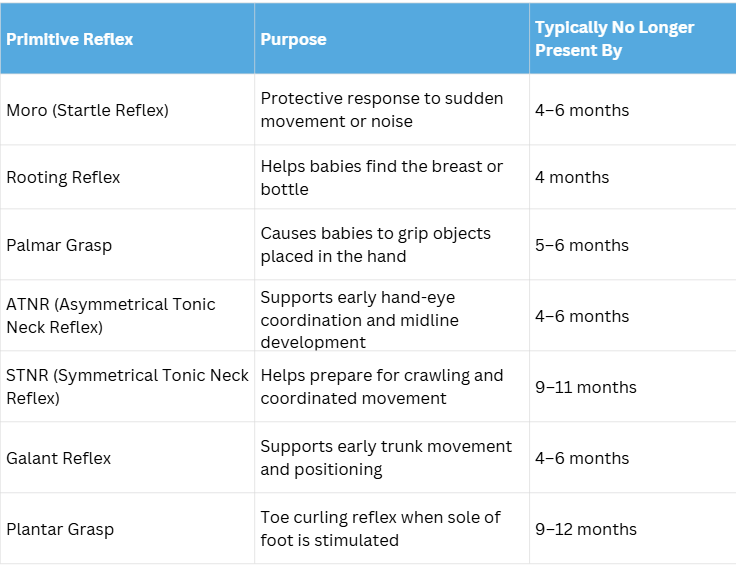
In many children, reflex integration happens naturally with normal development. However, some factors may contribute to reflexes remaining active longer than expected.
Possible contributing factors include:
In many cases, there is no single identifiable cause of retained primitive reflexes. Some children may have contributing factors such as prematurity, limited early movement experiences, or developmental delays, but many children with retained reflexes do not have any clear risk factors at all.
It is also important for parents to know that this is not something they caused. Even in cases where contributing factors are NOT present, development is complex, and these patterns can simply occur as part of how a child’s nervous system matures.
Retained reflexes don't always present in obvious ways. Instead, parents may notice challenges in areas such as movement, coordination, attention, posture, or learning.
Research has found associations between persistent primitive reflexes and challenges with motor skills, posture, coordination, and some aspects of learning and attention, although the strength of these relationships is still being studied.
The topic of retained reflexes has received significant attention in recent years. While studies have found associations between persistent reflexes and developmental challenges, experts continue to debate how much retained reflexes directly cause these difficulties. Current evidence suggests that retained reflexes may be one contributing factor rather than the sole explanation for attention, learning, or behavioral concerns.
For this reason, a comprehensive developmental evaluation is often more helpful than focusing on reflexes alone.
My biggest recommendation if you suspect your child may have retained reflexes is not to panic that something is wrong with your child. Instead, simply get them moving. Movement is one of the primary ways children develop and strengthen the neurological pathways that support coordination, balance, body awareness, and motor control.
Children learn through movement, and some simple exercises can help support body awareness, coordination, balance, and motor control.
Try incorporating activities such as:
One of my general recommendations is simply encouraging activities that naturally incorporate crawling, climbing, balancing, crossing midline, and coordinating both sides of the body together. These movement patterns help build the foundation for more advanced motor skills, attention, and body awareness.
Many of the best "activities" don't feel like activities at all. Time at the playground, riding bikes, swimming, gymnastics, martial arts, dance, hiking, and active outdoor play can all provide valuable movement experiences that support healthy neurological development.
Outdoor environments naturally challenge a child's balance, coordination, strength, and spatial awareness. Running, hiking, exploring uneven terrain, and climbing all provide valuable opportunities for the nervous system to develop and mature.
Many of the activities that support healthy development are surprisingly simple:
These everyday movement experiences can have a powerful impact on a child's overall development.
If you've noticed your child is struggling and movement-based play and at-home activities aren't leading to improvement, or if a teacher, pediatrician, or other third-party recommends exploring additional support, several therapies may be beneficial.
The options I most commonly recommend include occupational therapy, chiropractic care, physical therapy, and, in some cases, a developmental vision evaluation. The best choice depends on your child's specific challenges and developmental needs.
A pediatric occupational therapist can evaluate:
Occupational therapists often incorporate movement-based activities designed to support motor development and reflex integration.
Many of our families choose to work with a pediatric chiropractor who has experience evaluating nervous system function and movement patterns in children. Some children may benefit from an approach that focuses on posture, movement, and overall nervous system support.
For children with gross motor delays, balance concerns, muscle weakness, or coordination challenges, physical therapy can help improve strength, stability, movement patterns, and overall function.
Because some retained reflexes may influence visual tracking and eye coordination, a developmental vision evaluation can be helpful for children experiencing challenges with reading, eye tracking, or visual-motor skills.
Parents should consider discussing concerns with their pediatrician if they notice:
Most importantly, concerns should be evaluated within the context of the child's overall development rather than focusing on any single reflex alone.
If you've noticed challenges with coordination, balance, posture, attention, sensory sensitivities, or other developmental concerns, don't hesitate to bring them up with your pediatrician.
Many retained reflexes can be screened through simple movement-based assessments performed during an office visit. These evaluations help us determine whether retained reflexes may be contributing to your child's challenges and whether additional support could be beneficial.
While primitive reflexes are covered in pediatric training, more advanced assessment of retained reflexes and their potential impact on development often requires additional education and clinical experience. At Restore + Revive, we can help evaluate your child, provide guidance, and connect your family with trusted specialists when appropriate.
Most importantly, if you have concerns about your child's development, trust your instincts. Early evaluation and support can make a meaningful difference.
We would love the opportunity to meet your child, answer your questions, and help determine the best next steps for your family.
Contact our office at 817-720-6220 ext. 2 to schedule an appointment.

Attention-Deficit/Hyperactivity Disorder (ADHD) is often viewed only through the lens of symptoms such as inattention, hyperactivity, impulsivity, or emotional dysregulation. While these experiences are very real, we believe they rarely tell the full story.
At Restore + Revive, we take an integrative medicine approach to understanding ADHD in children and teens. This means we look beyond symptom management and focus on identifying and addressing any underlying contributors that may be influencing brain function, behavior, and overall wellbeing.
Our mission is simple but meaningful: To support the mind, body, and spirit of every child, moving beyond symptom management and toward a more complete, personalized approach to care.
This philosophy applies directly to how we evaluate and support conditions such as ADHD.
ADHD is a neurodevelopmental condition that affects how the brain regulates attention, behavior, and executive function.
This can impact:
Every child with ADHD is different. Some may struggle with focus and attention, while others may experience more hyperactivity or emotional reactivity.
It is also important to understand that ADHD is not simply a behavioral issue. It is influenced by brain function, nervous system regulation, sleep, nutrition, environment, and overall health.
ADHD is a clinically recognized neurodevelopmental disorder that is diagnosed based on established medical guidelines. Clinicians typically use criteria outlined in the Diagnostic and Statistical Manual of Mental Disorders (DSM-5), along with a comprehensive history, behavioral observations, and input from parents and teachers.
A diagnosis is based on:
In some cases, additional evaluations may be recommended to better understand learning differences, emotional health, or coexisting conditions.
ADHD does not look the same in every child, and symptoms often change with age.
A thoughtful, root-cause approach supporting the mind, body, and spirit
At Restore + Revive, ADHD care is not built around a single tool or a single solution. It is built around understanding the individual child in front of us.
We take a functional approach, we look at how different systems in the body may be influencing focus, behavior, and emotional regulation. Rather than focusing only on managing symptoms, we work to identify and address contributing factors that may be affecting how a child functions day to day.
Our process is intentional and comprehensive. It often includes diving deep into the following areas.
Supporting brain function through targeted nutrition
Nutrition plays a direct role in focus, mood, and energy regulation. What a child eats can be just as important as when they eat, therefore significantly influencing how they function throughout the day.
For example, we often see children starting their day with a high-carbohydrate, low-protein breakfast such as cereal, pancakes, or packaged snacks. By mid-morning, teachers may report that the child is “bouncing off the walls,” struggling to focus, or becoming irritable. This can be related to rapid blood sugar spikes followed by crashes, which directly impact attention and behavior.
In other cases, children may be picky eaters and have limited diets or subtle nutrient deficiencies that affect brain function and neurotransmitter balance.
In our care, we look at:
Small, strategic changes in nutrition can often lead to noticeable improvements in focus, energy, and emotional regulation.
Understanding the gut-brain connection
The gut and brain are in constant communication, and disruptions in gut health can influence mood, behavior, and attention.
For example, a child with frequent stomach aches, constipation, or irregular bowel habits may also struggle with irritability, poor focus, or emotional outbursts. Oftentimes digestive symptoms can be linked with behavioral changes.
We also find that children with a history of frequent antibiotic use or highly processed diets, have impacted their gut microbiome imbalance. This imbalance may play a role in inflammation and how the brain processes signals.
We explore:
Supporting gut health can be a key step in improving both physical symptoms and behavioral patterns.
Improving sleep to improve daytime behavior
Sleep is one of the most powerful, yet overlooked, factors in ADHD symptoms.
For example, a child who takes a long time to fall asleep, wakes frequently, or breathes through their mouth at night may not be getting restful, restorative sleep. The next day, this can show up as inattention, hyperactivity, impulsivity, or emotional reactivity.
Some parents are surprised to learn that what looks like ADHD during the day may be closely tied to poor sleep quality at night.
We assess:
When sleep improves, families often notice significant changes in focus, mood, and overall behavior.
Helping children feel more regulated and in control
Many children with ADHD are not just struggling with attention. They are struggling with regulation.
For example, a child may do well in a structured, calm environment but become overwhelmed in busy or noisy settings. This can lead to meltdowns, impulsive behavior, or difficulty transitioning between activities.
Others may constantly seek movement, fidget, or have trouble sitting still, not because they are unwilling, but because their nervous system is seeking regulation.
We can support regulation with:
When the nervous system is regulated, children are often better able to focus, respond, and engage.
Using testing to better understand how your child is uniquely wired
In some cases, we offer functional lab testing to gain a clearer picture of how your child’s body functions at a deeper level.
These insights can help us understand:
This type of information allows us to move beyond trial-and-error and toward more personalized, precise care.
For example, when families are exploring medication, this testing can provide helpful guidance on how a child may respond, which can support more informed and confident decision-making.
Not every child requires this level of testing, but when used appropriately, it can be a valuable tool in building a care plan that truly reflects how your child is uniquely created.
Our goal is to prepare personalized plans that meets each child and family where they are
We recognize that every family comes in with different goals, preferences, and comfort levels when it comes to treatment, especially around supplements and medication.
Our role is to provide thoughtful guidance, education, and options, while partnering with you to create a plan that feels right for your child.
For some families, the goal is to take a medication-free approach, focusing first on areas such as nutrition, sleep, gut health, and nervous system support. In these cases, we build a comprehensive plan using lifestyle strategies and, when appropriate, targeted supplementation to support brain function and regulation.
For other families, medication may be something they are already using or considering, especially if symptoms are significantly impacting school, relationships, or daily life. When medication is part of the plan, we take a thoughtful approach to:
In many cases, families come to us after feeling like they have “tried everything,” or they are unsure what the next right step is. Our goal is to help bring clarity to that process.
If your child or teen is struggling with ADHD and you feel like you’ve tried everything or you simply don’t know where to start, we’re here to help.
We take the time to understand the full picture and guide you through clear, personalized next steps.
We would love to talk with you and explore how we can support your child.
Call us at 817-720-6220 ext 2 to schedule an appointment and learn more about how we can support your child and your family.
Dr. Shane Rainey is a double board-certified pediatrician with over 10 years of experience, including seven years as a pediatric hospitalist and former Division Chief of Pediatric Hospital Medicine at Banner Children’s at Desert Medical Center. He has also served in academic roles at the University of Arizona College of Medicine and the University of Illinois College of Medicine.
At Restore + Revive, Dr. Rainey takes a functional medicine approach to pediatric care, combining conventional medicine with root-cause strategies that look at the full picture of a child’s health, including nutrition, sleep, gut health, and nervous system regulation. His focus is understanding each child individually and supporting long-term wellness of the mind, body, and spirit in partnership with families.
Emmaline Rhodes is a pediatric nurse practitioner at Restore + Revive, trained at Vanderbilt University with a background in pediatric nursing. Her clinical experience led her to integrative medicine, where she developed a strong interest in root-cause, whole-child care.
She focuses on helping families implement practical, sustainable plans for children with ADHD and other pediatric concerns, with an emphasis on structure, regulation, and daily support. Emmaline is passionate about supporting the mind, body, and spirit of each child while helping families feel confident and supported in their care journey.

If your child struggles with eczema, allergies, hives, or unexplained skin or behavioral flares, histamine may be playing a bigger role than you realize. As a functional medicine pediatrician Fort Worth, Dr. Shane Rainey takes a whole-child approach to help families understand what is driving these symptoms rather than just treating them on the surface. In this Q&A, Dr. Rainey explains what histamine is, why some children become more sensitive to it, and practical ways to help calm the body naturally so kids can feel better from the inside out.
Dr. Rainey:
Think of histamine like your child’s built-in alarm system. It’s a normal chemical messenger the body makes to help the immune system respond to potential threats like allergens, bug bites, or infections.
When everything is working like it should, histamine is actually really helpful. It might cause a runny nose during allergy season or make a mosquito bite itchy so your child notices it and reacts the way they’re supposed to.
But sometimes that alarm system gets a little too sensitive. It can go off when there’s no real danger, or it can stay switched on longer than it should. That’s when we start to see symptoms like itchy skin, eczema flares, hives, or chronic runny noses, even from things that normally wouldn’t bother most kids.
So histamine isn’t the enemy. It actually has an important job. The issue is when it gets out of balance and starts overreacting.
Dr. Rainey:
There are a few common reasons we see this in kids:
Most of the time, it’s not just one thing. It’s a combination that pushes the system over its threshold.
Dr. Rainey:
Histamine issues can show up in a lot of different ways, which is why they’re often overlooked. Common signs include:
When you start seeing patterns across multiple systems, that’s when histamine becomes something worth looking at more closely.
Dr. Rainey:
Yes, but with an important caveat. Food can contribute to histamine load, but removing foods alone is rarely the full solution. It’s more about the body’s ability to process histamine than it is about avoiding every possible trigger forever.
That said, in some children, temporarily reducing high histamine foods can help calm symptoms while we work on the underlying system.
Common high histamine foods include:
The key is not fear or restriction, but understanding when food is playing a role versus when it’s something deeper.
Dr. Rainey:
This is where histamine really becomes most familiar to families, especially during allergy season.
When your child is exposed to things like grass, pollen, dust, or pet dander, the immune system can overreact and release histamine. That histamine release is what causes many of the classic allergy symptoms like sneezing, itchy eyes, runny nose, and even eczema flares.
So in that sense, histamine is actually part of the normal allergic response, it’s the body’s signal that something is triggering the immune system.
During allergy season, many families turn to antihistamine medications or more natural histamine support supplements to help reduce symptoms. And while these can be helpful for symptom relief, it’s important to understand what they are doing. They are essentially helping to quiet down the histamine response temporarily, not necessarily addressing why the immune system is reacting so strongly in the first place.
I like to take the approach of not just trying to block histamine, we ask why the body is becoming so reactive in the first place. That’s where gut health, immune balance, and environmental load all come into play.
The goal is not to fear histamine, but to better understand it so we can support the body in a more sustainable way.
Dr. Rainey:
The goal is not to eliminate histamine completely, but to help the body process it more effectively and reduce unnecessary activation. Some foundational strategies include:
The goal is to lower the “background noise” so the immune system is not constantly in overdrive.
Dr. Rainey:
There are a lot of simple, everyday strategies that can help reduce the overall histamine load on a child’s body, especially during high allergy seasons when pollen, grass, and environmental exposures are higher. Some of the most helpful things I recommend include:
The goal isn’t to eliminate histamine entirely, but to help the body handle it more efficiently so kids are more comfortable, especially during peak allergy times.
When families first hear about histamine, it can sometimes feel like one more complicated piece of the puzzle. If your child has been dealing with chronic symptoms like allergies, eczema, or frequent “flares,” it’s completely understandable to feel frustrated or overwhelmed trying to connect all the dots.
As a pediatrician and a father, I understand how hard it is to watch your child feel uncomfortable and not have clear answers. Most parents I meet are simply trying their best with the information they’ve been given, and often that information is oftentimes incomplete.
My hope is that this helps you start to see histamine not as something to fear, but as a signal. When we learn how to read those signals, we can better understand what the body is trying to tell us and begin to support it more effectively.
If you feel like your child may be dealing with histamine-related symptoms and you want a deeper look, we’d be happy to help. You can schedule a free meet-and-greet or a functional medicine pediatric appointment with me to take a deeper look into your child’s overall health.
You can call us at 817-720-6220 Ext. 2 or email integrative@restoreandrevivefw.com.

We are thrilled to welcome Dr. Shane Rainey, DO, to the Restore + Revive family! Dr. Rainey will begin seeing patients on April 6th, bringing over a decade of experience in pediatric care to our Restore + Revive Functional Medicine Team.
Dr. Rainey is a double board-certified pediatrician with more than 10 years of clinical experience, including seven years as a pediatric hospitalist. He has also served as Division Chief of Pediatric Hospital Medicine at Banner Children’s at Desert Medical Center, and has held teaching roles at both the University of Arizona College of Medicine and the University of Illinois College of Medicine.
His background as a hospitalist has given him an appreciation for conventional medical care when treating and helping children recover from acute illnesses, while recognizing that health maintenance and healing extends beyond medicine alone. Dr. Rainey integrates osteopathic principles and a holistic, root-cause approach with personalized care to optimize and individualize health for every patient.
When asked, Dr. Rainey’s approach to patient care is simple yet powerful:
“First, do no harm. Listen more than I talk. Treat every patient as if they were family. Care for the whole patient, body, mind, and soul. Always tell the truth as I understand it, and spend quality time with patients and families to discover their values and perspectives.”
He is currently enrolled in the multi-year Integrative Medicine Fellowship at the internationally renowned Andrew Weil Center for Integrative Medicine at the University of Arizona, further enhancing his ability to provide evidence based, root cause, integrative care.
Dr. Rainey’s clinical and research interests include, but are not limited to:
He has published over a dozen peer-reviewed articles in prestigious journals such as Hospital Pediatrics and the Journal of Osteopathic Medicine.
Pronounced like the weather, Dr. Rainey’s appreciation for a good pun nearly led him to become a meteorologist, although he could not escape his true calling in medicine. When he’s not caring for patients, Dr. Rainey is a devoted husband and father of four energetic kids. He and his family are devout Catholics and attend St. Benedict Catholic Parish in Fort Worth. Outside the clinic, he enjoys officiating basketball and is a respected referee (as far as doctors go), having officiated NCAA Division III, junior college, and multiple high school state championships. He is a decent woodworker (as far as referees go), finding satisfaction in building furniture and other things the girls can read on and the boys can climb on and jump off of. He and his family also enjoy homeschooling, camping, spending time in the kitchen, pilgrimages to monasteries, and making the most of their time together whenever they can.
Dr. Rainey explains his journey:
“After more than 10 years in hospital-based practice, I’m thrilled to return to Fort Worth, where I was born, raised, attended undergrad (Go Frogs!), medical school, and met my wife. I love this city and want to be part of a community of healthcare professionals and patient families passionate about creating lasting relationships and pursuing wellness. Integrative and functional medicine allows me to combine evidence-based approaches with strategies that prevent illness, encourage wellness, and truly care for each child, body, mind, and soul.”
We’re excited to offer free 15-minute meet and greet appointments for families who want to meet Dr. Rainey, ask questions, and get to know him before scheduling care.
Dates: Meet & greets available starting on March 26th from 9am - 12pm
Location: 5001 Byers Avenue, Fort Worth, TX 76107
Call 817-720-6220 ext 2 to book your meet and greet with Dr. Rainey!
Since opening in 2016, Restore + Revive has been dedicated to providing personalized, professional, and integrative care all under one roof in Fort Worth. Our mission is to help every patient restore and revive their whole person, body, mind, and spirit.
We are so excited for our patients and families to meet Dr. Rainey!
Want to learn more about our Pediatric Functional Medicine practice? Check out our FAQ page!

Hot and cold contrast therapy has become a go-to recovery and wellness practice for athletes, busy professionals, and anyone looking to optimize their body from the inside out. By combining the deep heat of an infrared sauna with the invigorating effects of a cold plunge, contrast therapy works with your body’s natural systems to support circulation, inflammation response, brain health, and muscle recovery.
In this guide, we break down the benefits of infrared sauna and cold plunge individually, how contrast therapy works, and how you can experience both together at Restore + Revive in Fort Worth.
Infrared saunas use light waves to heat the body directly rather than just warming the air around you. This allows for deeper tissue penetration at lower temperatures, making sessions more comfortable while still delivering strong physiological benefits.
Supports muscle recovery
Infrared heat increases circulation and oxygen delivery to muscle tissue, helping muscles relax and supporting recovery after strength training or physical activity. The warmth can also help improve flexibility and reduce post-workout stiffness.
Improves circulation and cardiovascular health
Heat causes blood vessels to dilate, increasing blood flow throughout the body. Large population studies have shown frequent sauna use is associated with significantly lower risk of cardiovascular disease and improved heart health.
Long-term research from Finland found that people who used a sauna four to seven times per week had about a 50 % lower risk of dying from cardiovascular disease compared with those who used a sauna only once a week, highlighting the powerful association between frequent sauna use and heart health (Science Direct).
Helps reduce inflammation
Infrared sauna therapy has been shown to help lower inflammatory markers in the body, supporting joint comfort and overall recovery.
Supports stress reduction and relaxation
Heat exposure activates the parasympathetic nervous system, helping reduce cortisol levels and promote relaxation. Many people report feeling calmer and more balanced after sauna sessions.
Promotes better sleep
Raising your core temperature and allowing it to gradually cool afterward can support deeper, more restorative sleep.
Cold plunge therapy involves brief immersion in cold water, typically between 45 and 55°F. While it may feel intense at first, cold exposure triggers several beneficial physiological responses.
Supports muscle comfort
Cold plunge therapy supports muscle comfort by temporarily reducing swelling and soreness while calming the nervous system. Many people use cold plunge on non-lifting days or away from intense strength training sessions as part of a broader recovery routine.
Supports inflammation response
Cold exposure causes vasoconstriction, which can help manage swelling and support the body’s natural inflammatory processes.
Boosts mental clarity and mood
Cold exposure increases norepinephrine and dopamine, neurotransmitters associated with focus, alertness, and improved mood. Many people feel energized and mentally clear after a cold plunge.
Strengthens nervous system resilience
Cold exposure acts as a controlled stressor, helping the nervous system adapt and respond more efficiently to everyday stress.
Deliberate cold exposure has been shown to trigger a stress response in the nervous system that, when managed intentionally, helps train the brain to stay calm and focused under stress. Over time, this practice can “build resilience or grit” by improving the brain’s ability to maintain mental clarity while navigating physiological stress (Andrew Huberman, Hubermanlab podcast).
When heat and cold are combined intentionally, the benefits extend beyond either therapy alone.
When used strategically, contrast therapy supports overall muscle recovery by improving circulation and helping the body transition between stress and relaxation. The alternating heat and cold create a pumping effect in the blood vessels, supporting nutrient delivery and metabolic waste removal without replacing proper strength training recovery.
Enhanced circulation
The repeated dilation and constriction of blood vessels improves blood flow and supports lymphatic drainage.
Supports inflammation management
Alternating temperatures helps the body efficiently move fluids and metabolic byproducts, supporting overall recovery.
Improved nervous system balance
Heat promotes relaxation while cold increases alertness. Together, they help train the nervous system to shift more easily between states.
Mental resilience and stress tolerance
Contrast therapy introduces controlled stress in a supportive environment, helping improve resilience over time.
Many people follow a structure similar to this:
Some people finish with heat for relaxation, while others finish with cold for a refreshed, energized feeling. Timing can be adjusted based on goals, comfort, and recovery needs.
Hydration before and after sessions is always recommended.
Please note, while sauna and cold plunge therapy can be beneficial for many people, they are not appropriate for everyone. Individuals should consult with a healthcare provider before starting contrast therapy
At Restore + Revive, we offer both infrared sauna and cold plunge therapy in a comfortable, supportive setting. We can block both services together so clients can enjoy a seamless hot and cold contrast experience during a single visit. Pricing for this therapy combo is $50 (Cold plunge sessions are normally $25 and Sauna sessions $39 = $64 aka this combo is a health MAJOR steal).
Whether your goal is supporting muscle recovery, improving circulation, reducing inflammation, or enhancing mental clarity, our team can help you incorporate contrast therapy in a way that aligns with your wellness goals.
Ready to experience the benefits of hot and cold contrast therapy for yourself? Book your session with Restore + Revive today by calling (817) 720-6220 ext 1 to book.
The information provided in this blog is for educational and informational purposes only and is not intended as medical advice. Always consult with your healthcare provider before starting any new service, product, or treatment. Please note that prices, offerings, and other details mentioned in this post reflect information available at the time of publication and may have changed since.

As we head into a new year, many people are looking for more than surface-level solutions. They want real energy, better focus, improved recovery, and a way to support long-term health. One therapy that continues to gain attention for its foundational role in the body is NAD.
NAD is not a stimulant or a quick fix. It works at the cellular level, supporting how your body produces energy, repairs itself, and responds to stress. That is why NAD has become a cornerstone in longevity and performance conversations.
Discover how NAD supports energy, mental clarity, and cellular health, and the ways you can incorporate it into your wellness routine at Restore + Revive in Fort Worth. For a deeper dive into what NAD is and how it works biologically, you can explore our full NAD overview here.
NAD, short for nicotinamide adenine dinucleotide, is a molecule found in every cell of your body. It plays a critical role in mitochondrial function, which is how your cells convert nutrients into usable energy. NAD is also involved in DNA repair, nervous system function, and cellular communication.
One of the reasons NAD has become such a focus in wellness and longevity is that NAD levels naturally decline with age, stress, illness, and chronic inflammation. When NAD levels drop, the body’s ability to produce energy and repair itself efficiently can decline as well.
As longevity physician Dr. Peter Attia has explained, NAD is “completely ubiquitous throughout the body” and “absolutely essential for the most important chemical reactions that happen in the body,” particularly those related to energy production and cellular repair.
At its core, NAD supports how efficiently your cells create energy. When cellular energy production improves, people often notice benefits that ripple outward, including:
Rather than masking fatigue, NAD supports the systems that create energy in the first place.
This is why NAD is often discussed in longevity research and performance circles, and why it has been mentioned by well-known voices like Joe Rogan and Peter Attia in conversations around energy, aging, and optimization.
Your brain is one of the most energy-demanding organs in your body. NAD plays a role in neuronal energy production and DNA repair, which are essential for cognitive function over time.
Supporting NAD levels may help promote mental clarity, focus, and nervous system resilience, particularly for people experiencing burnout, high stress, or mental fatigue.
Aging is closely tied to how well our cells repair damage and produce energy. NAD supports enzymes involved in DNA repair and cellular maintenance, which is why it is often discussed in the context of healthy aging.
Rather than positioning NAD as an anti-aging treatment, it is more accurate to say that NAD supports the body’s natural repair and resilience systems that tend to decline with age.
While oral supplements exist, IV and injectable NAD offer a more direct and efficient delivery method.
NAD drips are administered intravenously over approximately 3 to 4 hours. NAD+ is a large, delicate molecule. If infused too quickly, it can cause side effects such as nausea, flushing, or a rapid heartbeat. Therefore, a slow IV infusion allows your body to gradually absorb the NAD+ without overwhelming the system. Additionally, NAD+ is water-soluble but unstable in the bloodstream. A slow drip ensures that more NAD+ reaches your cells over the course of several hours, rather than being cleared too quickly by the kidneys.
At Restore + Revive in Fort Worth, NAD shots have become one of our most popular options.
NAD shots provide a quicker, more convenient way to support NAD levels without committing to a multi-hour drip. For clients looking for consistent support, we offer NAD + SubQ shots, which allow for gradual absorption and easy integration into a regular wellness routine. Most clients report minimal or no discomfort, and any mild effects typically fade within minutes to a few hours. Shots are considered a quick, convenient, and safe way to support NAD levels without the longer commitment of a 3–4 hour drip.
Oral NAD supplementation can be a helpful way to support cellular energy and repair, especially between in-office treatments. These supplements provide NAD precursors that help support the body’s natural NAD pathways, but they are not as directly bioavailable as shots or IV NAD. Oral NAD supplements are not as bioavailable because they have to pass through the digestive system first. During digestion, a portion of the NAD or its precursors is broken down in the stomach and liver before it ever reaches the bloodstream. This process, known as first-pass metabolism, reduces the amount that ultimately becomes available for cellular use.
Injectable and IV NAD bypass digestion entirely, delivering NAD directly into the bloodstream. This allows for higher absorption, more predictable dosing, and a greater amount of NAD reaching the cells where it supports energy production and repair. For that reason, we recommend using NAD shots or IV drips as the primary method of support, with oral supplementation as an additional layer to help maintain NAD levels over time.
In our Wellness Shop, we carry Quicksilver NAD+ Gold (50 mL) and Quicksilver NAD+ Platinum (100 mL) for clients looking to support their NAD levels at home alongside in-office therapy.
NAD therapy may be a good fit for individuals who are looking to support:
As with any wellness therapy, personalization and consistency matter.
At Restore + Revive, we recommend starting with a loading dose to accelerate the benefits 1 shot/ week for 2 months and then 1 shot every 2 months for maintenance. Therefore, 10 shots over a span of 6 months. Our 10 shot package is $480 (normally $600).
Pricing and package details can be found here.
The New Year is an opportunity to move beyond quick fixes and invest in your health at a deeper level. NAD supports the foundation of how your body creates energy and maintains resilience, making it a powerful tool for anyone focused on long-term wellness.
At Restore + Revive, we offer both NAD drips and NAD + SubQ shots, to meet you where you are in your wellness journey. Our team can help you decide which option best aligns with your goals, schedule, and lifestyle.
If you are ready to prioritize energy, clarity, and cellular health in the year ahead, NAD therapy may be the place to start.
Contact us today at (817) 720-6220 ext 1 to learn more and schedule your first appointment.
The information provided in this blog is for educational and informational purposes only and is not intended as medical advice. Always consult with your healthcare provider before starting any new service, product, or treatment. Please note that prices, offerings, and other details mentioned in this post reflect information available at the time of publication and may have changed since.

At Restore + Revive, we are always listening, evolving, and finding new ways to elevate your wellness experience in Fort Worth. As a holistic wellness center in Fort Worth, our goal is to provide accessible, results-driven therapies that support whole-body health.
Our 2026 Wellness Center Memberships continue to offer customizable options designed to meet you exactly where you are in your health journey. Whether you are focused on maintenance, recovery, or full-body optimization, there is a membership built for you.
Below, we break down how to get the most out of your Restore + Revive membership and what each option includes.
Focused primarily on vitamin shots and IV therapy in Fort Worth, the Revive Membership is ideal for anyone who wants consistent nutrient support and member-only pricing on our most popular IV drips, vitamin injections, and wellness boosters.
The Revive Membership includes:
All for $149 per month. (And only $134 per month if you enroll in January). To put the value into perspective, a typical IV drip costs $190 and vitamin shots are $30 each.
How to become a member:
Sign up online or email RRmemberships@restoreandrevivefw.com to become a Revive Member.
Our Balance Membership is fully customizable and perfect for wellness enthusiasts looking for a wide range of wellness services in Fort Worth, including IV therapy, sauna sessions, cold plunges, massage therapy, and ozone treatments. The Balance Membership includes:
Choose one per month:
Choose three per month:
Plus, it also includes…
The monthly value of these services exceeds $575, yet Balance Members enjoy everything for $289 per month. (And only $260 per month if you enroll in January.)
Call (817) 720-6220 ext 1 or email RRmemberships@restoreandrevivefw.com to become a Balance Member.
The Elevate Membership offers our most comprehensive level of care and the greatest overall value for advanced wellness services in Fort Worth, including hyperbaric oxygen therapy, massage therapy, IV ozone, thermography, and cold plunge therapy. This option is ideal for those managing chronic conditions, training intensely, or simply prioritizing long-term wellness and performance.
Choose two per month:
Choose six per month:
Plus, it also includes…
A month of these services is valued at more than $1,275, yet Elevate Members receive everything for $519 per month. (And only $467 per month if you enroll in January.)
Call (817) 720-6220 ext 1 or email RRmemberships@restoreandrevivefw.com to become an Elevate Member.
No matter which membership you choose, all Restore + Revive Wellness Center Members enjoy:
Membership is the most effective way to stay consistent with your wellness routine while receiving the best possible value for holistic health services in Fort Worth, Texas. Below is a closer look at the benefits by membership level.
Here’s why we recommend becoming a Revive member:
In addition to the benefits of IV therapy and vitamin shots (see above), here’s why you should consider becoming a Balance Member:
The Elevate Membership offers all the services in the Balance Membership, plus…
To get the most from your Restore + Revive membership:
Have questions about which Restore + Revive membership is right for you? Our Membership Liaison, Aija Mattera, is here to help. Aija’s mission is to make your R+R experience exceptional. Whether you are starting your wellness journey or aiming to enhance your current routine, she ensures your membership aligns with your goals and supports your unique health needs.
To connect with Aija, call (817) 720-6220 ext. 3 or email RRmemberships@restoreandrevivefw.com.
As a thank you to our loyal Wellness Center Members, we are offering a special referral incentive during the month of January 2026.
If you are a current Restore + Revive member and refer a new member who signs up for any membership, you will receive 50% off your next month’s membership.
There is no limit to how many referral credits you can earn. This incentive applies for every new member you refer, so invite your friends, family, coworkers, and workout buddies to join you in prioritizing wellness this new year!
All memberships require a three-month commitment. After the initial commitment period, memberships may be paused or canceled at any time.
The 20% discount on additional IVs applies to both Standard and Premium IVs. The free birthday IV includes options up to a $190 value. Please note that the NAD vitamin shot is excluded from the two complimentary monthly vitamin shots.
To learn more or enroll, visit our Membership Page or contact us at (817) 720-6220 ext. 1 or email RRmemberships@restoreandrevivefw.com.
As the days get shorter and the weather cools down, many people start to feel run-down, fatigued, or catch more colds and viruses than usual. What’s to blame? While there isn’t one single cause, one major culprit is often low levels of vitamin D , the “sunshine vitamin.”
Vitamin D deficiencies tend to become more frequent during the winter months, and for good reason. Between spending more time indoors, shorter daylight hours, and weaker sun exposure, our bodies simply don’t produce enough. But here’s the good news: understanding how vitamin D impacts your immune system, and how to restore healthy levels, can make a big difference in how you feel all season long.
Vitamin D is a powerhouse nutrient that plays a major role in immune defense. Essentially, Vitamin D helps regulate T-cell function and supports balanced immune responses, which play a role in defending against infections.
Vitamin D is unique because your body can produce it naturally, primarily when your skin is exposed to sunlight. When your vitamin D levels drop, your immune system can’t respond as efficiently, leaving you more vulnerable to colds, flu, and other illnesses.
Even in warm and sunny Fort Worth, vitamin D deficiency can become more common in winter. Here’s why:
Less Sunlight Exposure
During the colder months, shorter days and cooler weather mean we spend less time outside. Vitamin D is synthesized in your skin through sunlight, so less exposure = lower production.
Weaker UVB Rays
Even if you are outside, the angle of the winter sun reduces the strength of UVB rays that trigger vitamin D synthesis, especially early in the morning or late afternoon.
More Time Indoors
Between holiday gatherings, less than desirable weather, and indoor activities, many of us spend most of the day inside. Windows block UVB rays, so even sitting by a sunny window won’t boost vitamin D levels to the level needed.
Lifestyle & Nutrition
Low dietary intake can compound the problem. Few foods naturally contain vitamin D, so without supplementation or fortified foods, levels can quickly drop. It’s also no coincidence that the biggest holiday months - Halloween, Thanksgiving, Hanukkah, Christmas, and New Year’s Eve - all fall during this same time frame. Sugar and processed foods tend to be everywhere, while nutrient-dense meals and healthy eating habits often take a back seat.
These lifestyle shifts can leave your immune system more vulnerable right when your vitamin D levels are already dropping. Less sunlight, more sugar, and fewer whole foods create the perfect storm for sluggish energy, low mood, and increased susceptibility to illness.
Did you know Vitamin D deficiency is a common global issue. About 1 billion people worldwide have vitamin D deficiency, and approximately 35% of adults in the United States are deficient, according to the Cleveland Clinic.
Symptoms of low vitamin D can be subtle and often overlap with other conditions. Common signs include:
If you’re unsure, the best way to confirm deficiency is through a simple blood test.
At Restore + Revive, we take an individualized approach to restoring optimal Vitamin D and supporting immune health. Here’s what we recommend:
1. Spend Time Outside
Even on colder days, try to get at least 10–30 minutes of sun exposure daily, ideally around midday when UVB rays are strongest. A short walk, stretching, or simply stepping outside for fresh air can help your body produce vitamin D naturally.
2. Eat Vitamin D–Rich Foods
Vitamin D is fat-soluble, so your body can store it in fat and liver tissue. The “sunshine production” pathway creates vitamin D3 (cholecalciferol) in your skin when UVB rays hit. Once produced, it’s metabolized in the liver and kidneys into its active form that the body can use.
Some foods contain vitamin D naturally or are fortified with it. Eating these foods provides additional vitamin D that your body can absorb directly, supplementing what you might make from sunlight. While sunlight is the main source, certain foods can boost your intake:
Essentially, foods act as an external source of vitamin D to help maintain adequate levels when your body isn’t making enough from sunlight, which is especially important in winter months or for people who spend most of their time indoors.
3. Pair With Healthy Fats
Vitamin D is fat-soluble, meaning your body absorbs it better when eaten with healthy fats like avocado, olive oil, nuts, and seeds.
4. Get Tested
Test your vitamin D levels via a simple blood test, this provides a baseline for your provider to create a personalized supplementation plan. Everyone metabolizes vitamin D differently, so what works for one person may not be enough for another.
5. Supplement Smartly
Vitamin D3 is the preferred form for most people because it’s the same type your body naturally produces. The right dose depends on your levels, absorption, and overall health, which is why our team of functional medicine providers tailor supplementation plans to each individual.
6. Pair with Vitamin K2
Vitamin K2 helps direct calcium into your bones and out of your arteries, enhancing vitamin D’s benefits and supporting cardiovascular health.
7. Prioritize Whole-Body Wellness
Optimal immunity isn’t just about one nutrient. Adequate sleep, hydration, nutrient-dense foods, and balanced stress all strengthen your immune defense.
8. Consider Vitamin Shot Therapy
For those who are significantly deficient or need faster replenishment, Vitamin D shots can deliver vitamin D and other immune-boosting nutrients directly into your system for enhanced absorption.
If you’re feeling run-down or want to strengthen your immune system naturally, our team can help. At Restore + Revive, we combine functional medicine with individualized testing to identify nutrient deficiencies and design a plan that supports your whole-body wellness.
Call (817) 720-6220 to book an appointment or learn more about how we can help you.
Disclaimer: The information provided in this blog is for educational and informational purposes only and is not intended as medical advice. Always consult with your healthcare provider before starting any new service, product, or treatment. Please note that prices, offerings, and other details mentioned in this post reflect information available at the time of publication and may have changed since.

Hot (and healthy!) girl summer is officially here. And while we’re all soaking up the Texas sunshine, sipping on cocktails, and jet-setting around the world, our bodies’ detoxification system could probably use a helping hand.
That’s precisely why Dermashape is the best wellness hack of summer. Read on to learn why you need to book an appointment like, well, yesterday.
Before we delve into the laundry list of health benefits, what exactly is Dermashape? Well simply put, this device combines heat and vacuum suction massage to not only improve the appearance of your skin, but also boost your lymphatic system – helping your body naturally drain fat and toxins.
But of course, that’s not all. Dermashape breaks down fat congestion, stimulates the immune system, reduces water retention, boosts skin elasticity, and alleviates muscle pain. (It truly is somewhat of a holy grail.)
For most of us, summer looks like frequent travels, indulgent dinners, and breaks in routine. And while there is absolutely nothing wrong with that, it can take a toll on your lymphatic system. (Your lymphatic system, as a reminder, is a group of organs, vessels, and tissues that help the body fight infection and disease.)
Dermashape uses gentle, rhythmic movements to stimulate the lymphatic system and encourage the removal of toxins and excess fluids from the body. This process not only enhances detoxification, but it also helps improve skin texture.
As we mentioned, Dermashape uses a combination of heat and vacuum suction massage to stimulate the lymphatic vessels and encourage the movement of lymph. (Lymph is a colorless, watery fluid that carries nutrients and proteins to your cells and tissues.) Doing so flushes toxins, reduces water retention, and improves circulation.
While the exact frequency depends on your specific person, we generally say that it takes just one treatment to feel a difference, three or four treatments to see a visible difference, and ten treatments to notice a significant difference.
Keeping that in mind, we recommend doing one treatment per week until optimal results are achieved. This frequency stimulates the lymphatic system and discourages the congestion from settling once it has been loosened during the treatment. If you tolerate Dermashape well (most people do), we recommend bumping it up to two treatments per week.
Want to know how to make the most of your Dermashape Fort Worth treatment? Here’s what our functional medicine team recommends:
We recommend hopping in the infrared sauna before your appointment to clear your detoxification pathways. It’s also recommended to avoid fats while consuming high fiber, carbohydrates, and lean proteins the day of (and for 24 hours after) your appointment.
We’ll recommend supplementing with specific nutrients for 48 hours after your Dermashape appointment. Most people can benefit from taking essential fatty acids (1000mg/day) to help break down stored fats and produce new cells. We recommend Metagenics Omegagenics – which we carry in our Wellness Shop. We also recommend finishing the day with a Detox Foot Soak.
Trust us. Dermashape is your best-kept secret for looking and feeling your best this summer. Not only will it help flush any toxins or fluid from your system, but it’ll rejuvenate your skin and effectively drain fat. That way, you’ll be left feeling confident all summer long. Come and see for yourself!
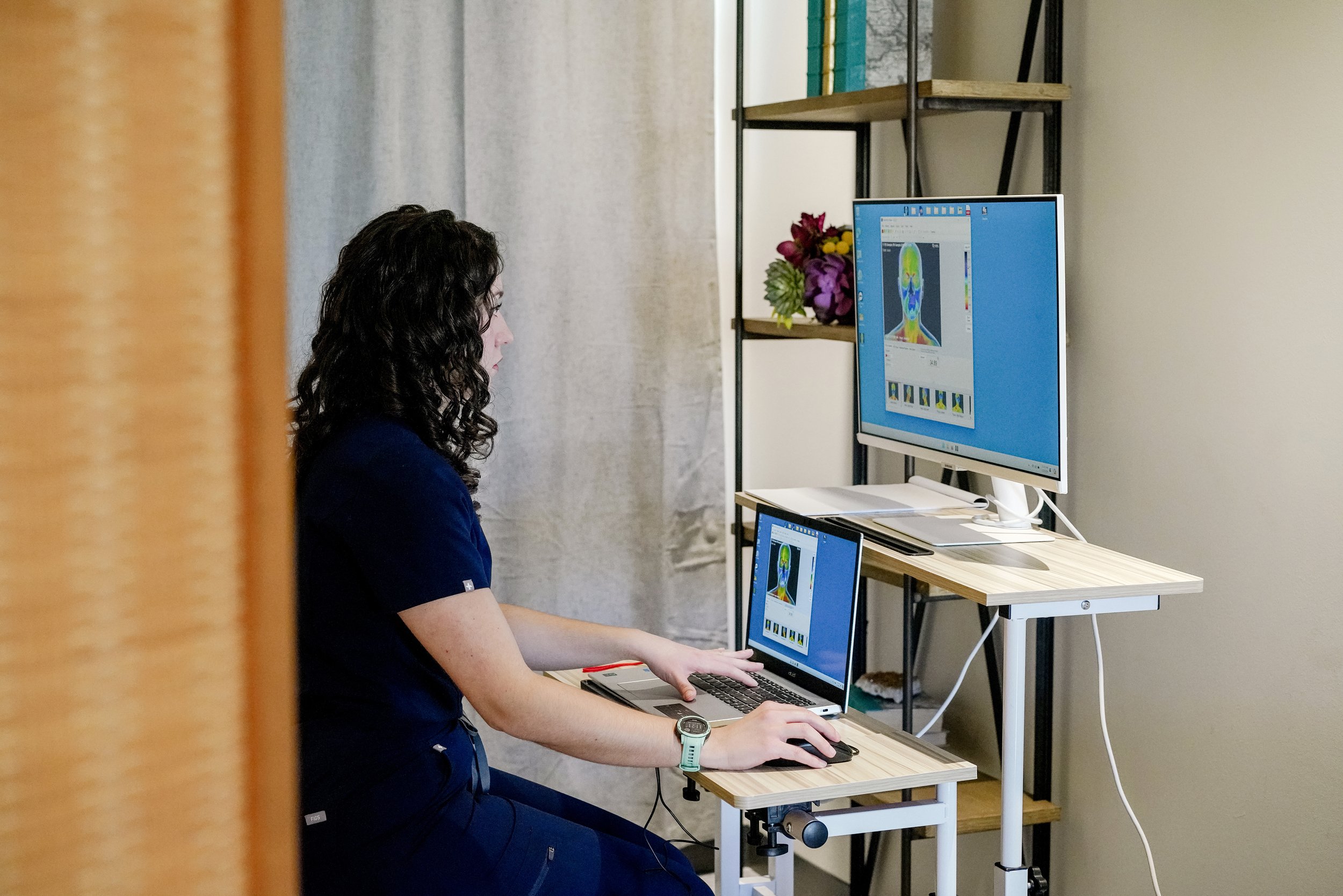
Don’t let anyone tell you differently – preventative medicine is the key to optimal health and well-being. By catching problems and identifying diseases in their earliest stages, you can eliminate them before they cause other issues or become more difficult to treat.
Now, thermography is one of the best available tools in the realm of preventative medicine. And we’re lucky enough to have it under our roof!
Today’s blog post reveals everything you need to know about thermography in Fort Worth – the benefits, how it works, and whether or not it’s for you. Stay tuned!
(Well, aren’t we glad you asked!)
Instead of waiting for disease to be diagnosed, thermography uses thermal imaging technology to identify potentially disease-causing inflammation in its earliest stages. That way, you can make proactive changes for your health.
Essentially, thermography Fort Worth is a painless, non-invasive way to detect various health conditions and monitor disease progression.
Wondering what to expect during your Thermography Fort Worth appointment?
Thermography helps monitor the progression of a variety of medical conditions including (but not limited to):
The benefits of thermography Fort Worth truly are endless. Not only is this non-invasive procedure safe for people of all ages, but it’s an incredibly effective way to detect inflammation and injury. As we mentioned, thermography helps identify a wide variety of conditions (see above), and it can be used to monitor disease progression.
Put simply, thermography Fort Worth is for anyone interested in identifying health challenges early on. It’s especially beneficial to anyone who has…
It’s also ideal for anyone with breast disease risk factors:
If you’re looking for Thermography in Fort Worth, look no further than Restore + Revive. Our experienced and compassionate professionals will guide you through every step of the thermography process and answer any questions you might have.
Our goal is to make you feel as comfortable and confident as possible as you take charge of your health journey. Call (817) 720-6220 ext 1 to schedule an appointment with our team.

If you’ve been following us on social media, you’ve probably heard about Mild Hyperbaric Oxygen Therapy (mHBOT). (We’re currently obsessed.) But what exactly is it? And how on earth can it help you?
Excellent question, friend! And lucky for you, we’re revealing everything you need to know down below.
Before we delve into the greatness that is Mild Hyperbaric Oxygen Therapy, let’s cover the basics. Essentially, this medical treatment enhances the body’s natural healing process by administering an increased oxygen dose in a total body chamber where atmospheric pressure is enhanced and controlled. (Try to say that ten times fast.)
The oxygen pressure inside the hyperbaric chamber is roughly two and a half times higher than normal air pressure – allowing your body to carry more oxygen to your organs and tissues. While oxygen is normally delivered through the bloodstream, your entire body receives the treatment during mHBOT, extending the healing benefits far beyond your arteries.
So, does a little extra oxygen really make that much of a difference? (Spoiler: the answer is yes.) Oxygen fuels every single cell in the body. And whenever we face an injury, combat illness, complete a tiresome athletic performance, or simply confront the natural aging process, our bodies sometimes need a little help getting oxygen to the cells that need it most.
Thankfully, that’s where mHBOT comes in. By increasing our cells’ oxygen levels, this medical treatment facilitates healing, reduces inflammation, and stimulates the growth of new blood vessels.
Here’s how we recommend utilizing it:
Mild Hyperbaric Oxygen Therapy in Fort Worth is best known for healing wounds. By increasing oxygen levels in the bloodstream, it helps stimulate the growth of new blood vessels and increases the production of collagen. Therefore, mHBOT is a fantastic treatment for anyone with chronic wounds – like diabetic ulcers or non-healing surgical wounds.
Many athletes and fitness junkies are using Mild Hyperbaric Oxygen Therapy as a way of enhancing their athletic performance. Increasing oxygen levels in the bloodstream helps improve endurance, reduce muscle fatigue, and accelerate recovery after an intense workout.
Another benefit of mild Hyperbaric Oxygen Therapy in Fort Worth is enhanced brain function and cognition. Again, the increased oxygen reduces inflammation and promotes the growth of new brain cells. This leads to improvements in cognitive function, memory, and overall brain health. It’s also a great tool for people navigating traumatic brain injuries, strokes, or conditions like cerebral palsy.
Mild Hyperbaric Oxygen Therapy can help treat infections by increasing the oxygen levels of the tissues. As a result, it combats harmful bacteria and strengthens the body’s immune system. Therefore, mHBOT is a great way to naturally treat acute infections.
Last but certainly not least, mHBOT has been proven to reduce symptoms of a variety of chronic illnesses like fibromyalgia, multiple sclerosis, cancer, chronic fatigue syndrome, and more. Essentially, the increased oxygen levels reduce inflammation and improve cellular function – reducing uncomfortable symptoms and improving individuals’ overall quality of life.
As you can see, Mild Hyperbaric Oxygen Therapy is somewhat of a holy grail when it comes to healing and recovery. Call (817) 720-6220 ext 1 to learn more about how it can help you or to book your first session.

Our team is constantly searching for new and improved ways to enhance your experience at Restore + Revive. So when a few of y’all reached out with requests for a custom experience, access to more wellness therapies, and even greater discounts on our offerings, we couldn’t resist.
As many of you already know, we’ve completely revamped our memberships for 2025. And instead of having just two options, we’re now letting y’all customize your membership to suit your needs and preferences!
Today’s blog post reveals how to make the most of these *brand-spankin’ new* memberships. Keep scrolling for all the details.
Primarily focused on vitamin shots and IV drips, the Revive Membership is a terrific option for the self-proclaimed supplement savant. It offers members-only pricing on our favorite drips, boosters, and shots.
It includes…
… for just $149 per month! (And in January, we’re running a special to take 10% off that monthly rate, bringing the price to just $134 per month.) Become a Revive Member today.
A typical IV costs $190 and vitamin shots are $30 each – to put things into perspective.
Our balance membership is our first of two customizable memberships. Ideal for any and all wellness junkies, it allows you to tailor your R+R experience to your unique needs and preferences.
Choose one per month:
Choose three per month:
Plus, it also includes…
All of this (^^) equates to more than $575 in value. But you get it for just $289 per month! (And only $260 per month if you enroll in January.)
Call (817) 720-6220 ext 1 or email RRmemberships@restoreandrevivefw.com to become a Balance Member.
Our final membership, the Elevate Membership, maximizes our wellness offerings for a vast discount. It’s a fantastic option for anyone looking to put their health and wellness first – whether you’re navigating a chronic health condition, training for an athletic event, or simply looking to operate at your best.
Choose two per month:
Choose six per month:
Plus, it also includes…
A month’s worth of the above services is valued at more than $1,275. But as an Elevate member, you get them all for just $519 per month. ($467 per month if you enroll in January.)
Call (817) 720-6220 ext 1 or email RRmemberships@restoreandrevivefw.com to become an Elevate Member.
Regardless of which membership you choose, all R+R members receive…
Becoming a member is — hands down — the best way to make the most of our holistic wellness offerings. However, here are some additional benefits:
Here’s why we recommend becoming a Revive member:
In addition to the benefits of IV therapy and vitamin shots (see above), here’s why you should consider becoming a Balance Member:
The Elevate Membership offers all the services in the Balance Membership, plus…
Here’s how to make the most of your R+R membership:
This will maximize your body’s ability to detox and/or to receive and metabolize vitamins and minerals. We recommend half your body weight in ounces of filtered water each day.
Every R+R member gets two FREE vitamin shots per month. These are a great option when you’re on the run and a fantastic supplementary boost to your vitamin IV drips.
Make sure you’re selecting services that align with your body’s needs. Regarding IV therapy specifically, you can select an IV specifically created for immunity, hangovers, weight management, detoxing, energy, athletic performance, happy hormones, or a healthy liver. Or, you can opt for an IV that supports general wellness including our Myers Drip Plus, Vitamin C, Glutathione, and more. These drips all have immune-boosting, detoxifying, and energizing properties.
Make sure to check out our complete list of our Vitamin IV offerings.
To get the most out of your membership — and your health! — consistency is key. Services don’t roll over, so try to utilize all aspects of your membership each month. We also recommend scheduling all of your membership services at the beginning of your membership cycle to help keep you on track and organized.
On average, we recommend vitamin IVs every two to four weeks, but it depends upon your unique make-up whether more or less frequent is ideal for you.
Doing multiple services at once (or on the same day) can save time and convenience. For example, you can ask the nurse to administer Ozone while receiving your IV.
When receiving a detox foot soak, try not to focus on how the water looks, but on how you feel after the treatment. It’s what’s happening on the inside of your body, not on the outside!
Our Registered Nurses and staff can help you decide which Vitamin IVs or services are best for you based on your needs. You can also customize services to suit your needs – just ask! Our Member Liaison is here for any and all questions, needs, or concerns.
Don’t forget to take advantage of 20% select R+R services including vitamin IVs, vitamin shots, detox foot soaks, infrared sauna, cold plunge, ozone, revive room with red light therapy, nutrition consults, pelvic floor physical therapy, dermashape, massage therapy, Neubie, In-body and thermography.
All memberships require a 3-month commitment. Then, you can cancel or pause any time after 3 months.
Please note that the 20% off of additional IVs applies to both Premium and Standard IVs. And the free birthday IV includes IVs up to a $190 value.
Lastly, the NAD vitamin shot is excluded from the two free monthly vitamin shots.
Visit our Membership Page to learn more and enroll today. You can also call (817) 720-6220 ext 1 or email RRmemberships@restoreandrevivefw.com to become a member.
.png)
Red light therapy (RLT) is all the rage in holistic health right now – and for good reason! From supporting skin health and accelerating athletic recovery to reducing inflammation and improving mood, this emerging treatment supports a wide variety of health issues and conditions.
Therefore, we’re thrilled to announce that we’ve added Platinum LED’s Biomax 600 Full Body Red Light to our Revive Room. Read on to discover what it is, how it works, and the many benefits of red light therapy.
Red light therapy uses low levels of red and near-infrared light to penetrate the skin and stimulate cellular repair. By interacting with our cells’ mitochondria (aka the power plants), red light stimulates the production of Adenosine Triphosphate (ATP), which is our bodies’ primary energy currency. And with more energy, our cells are better equipped to perform their specialized functions, repair themselves, and replicate. Additionally, enhanced ATP production helps reduce inflammation, improve circulation, and accelerate tissue repair.
Wondering if RLT is for you? Here’s a quick overview of the benefits of red light therapy:
Red light therapy rejuvenates the skin and supports healthy aging by boosting collagen and elastin production, repairing damage caused by UV rays, and reducing inflammation and bacteria. Additionally, it improves skin conditions like acne, age spots, and wrinkles. Early clinical trials have also found that red light therapy can relieve painful skin conditions like psoriasis.
Another benefit of red light therapy is its ability to reduce joint pain and inflammation in people with arthritis. Researchers believe this is because red light releases nitric oxide, which enhances blood circulation, delivers nutrients and oxygen to damaged tissues, and promotes tissue repair and regeneration.
Red light therapy has been found to accelerate injury recovery and reduce the return-to-play period in athletes. It also enhances muscle recovery and overall athletic performance.
Researchers have linked red light therapy to better mental well-being. More specifically, it’s been shown to improve mood while alleviating symptoms of depression and anxiety. It also improves sleep quality by regulating serotonin levels and balancing circadian rhythm.
RLT stimulates various physiological processes that aid in cellular regeneration. As a result, it contributes to faster healing times and better injury recovery.
Interested in red light therapy Fort Worth? As we mentioned, we recently added it to our Revive Room, which features a variety of innovative ways to biohack your biology and achieve emotional and physical well-being.
In addition to red light therapy, the Revive Room has a zero-gravity relaxation lounge chair, an infrared PEMF mat, NuCalm technology, and aromatherapy. Therefore, it’s a fantastic way to reset your nervous system, accelerate recovery, and improve mental well-being.
You can book a session in the Revive Room online for just $50. Or, you can purchase four sessions for $180 ($45 per session) or eight sessions for $320 ($40 per session).

With more than 500 million views on TikTok, the viral cold plunge trend is here to stay. The benefits of cold immersion have been shown to include: reduction in inflammation, pain relief, improved blood pressure and circulation, better sleep, nervous system repair, workout recovery, facilitation of weight loss, improved mood and increased energy.
With a cold plunge, the goal is to initiate the sympathetic nervous system which can be done relatively quickly. The more you become accustomed to doing cold plunges, the longer you will be able to stand the freeze, working your way up to 10 minute sessions with a few one minute dunks under the water.
To see benefits of a cold plunge, we recommend a minimum of 2-4 times per week. As an added bonus, we strongly recommend considering our Infrared Sauna + Cold Plunge Combo for the ultimate treatment.
Cold Plunge services are now offered at 4927 Byers Avenue. To book an appointment, call (817) 720-6220 or click here.
To buy a cold plunge package, visit our website. Cold plunge services make a great gift! To purchase, visit the gift card page on our website.
HOW OFTEN SHOULD I DO A COLD PLUNGE?
To see benefits of a cold plunge, we recommend a minimum of 2-4 times a week.
HOW LONG SHOULD YOU STAY IN THE COLD PLUNGE?
Brain benefits have been shown to be reaped in as quickly as 40 seconds! You can work your way up to 10 minute sessions with a few one minute dunks.
WHAT ARE THE BENEFITS OF THE COLD PLUNGE?
HOW COLD IS THE COLD PLUNGE?
47° to 49° F

To put it simply: Ozone is Oxygen. More specifically, naturally occurring oxygen is made of two molecules (O2) and ozone is made of three (O3). Ozone is naturally occurring in the environment, but only at levels much higher in the atmosphere than earth level. This is because the O3 oxygen absorbs UV light and breaks down and recycles itself as it passes through the atmosphere. This naturally occurring state is recreated by taking a 100% oxygen tank through an ozone generator to bind with another molecule to make Ozone/O3.
The two main roles of oxygen in the body are as a signaling molecule and as an oxidizer. As a signaling molecule, oxygen helps tell our body how to respond to the environment both inside the body as well as outside the body. In this role, oxygen modulates the immune system and increases or decreases oxygen delivery to our cells. As an oxidizer, oxygen accepts electrons. There are so many chemical reactions within our body that rely on the transfer of electrons, the most important of which is the way our body uses oxygen to burn fuel for energy.
In addition to playing a vital role in balancing the body’s chemistry, our tissues, organs and cells all love (and thrive!) on oxygen. The crucial role of oxygen in our overall health led to the implementation of Ozone Therapy during WWI due to its antibacterial and health promoting properties. Ozone Therapy targets inflammation, assists in reduction of toxins in the body, promotes mitochondrial health, stimulates overall oxygenation, improves immune system function and more.
At R+R, we offer two of the most effective ways to administer Ozone Therapy through Ozone IV as well as through nasal, ear, rectal and vaginal insufflations. When administered intravenously through Ozone IV, one of our highly trained RNs first draws a sample of your own blood, then ozonates it, and returns it intravenously. The oxygen attaches itself to our red blood cells and as blood circulates throughout the body, oxygen leaves your blood and moves into organs and tissues providing necessary fuel and healing promotion. In its 3 molecule state, oxygen is highly reactive and thus creates a therapeutic response in the body by both stimulating blood flow and by oxidizing harmful substances. By oxygenating the blood at this cellular level, the body receives the oxygen it craves to thrive in an incredibly specific and beneficial way.
Insufflation is a fancy word for putting ozone gas into a specific body cavity, which in this case means the ear, nose, rectum or vagina. When administered through ear and nose insufflations, the ozone is simply placed into your nose or ears through a needle-less syringe. With vaginal or rectal insufflations, one of our nurses will fill a syringe with ozone and attach a catheter. Detailed instruction will be given on proper administration. Lubricant and a private bathroom are provided.
With Ozone IV, the full amount of ozone infusion enters the bloodstream to maximize availability to tissues. This is shown to increase oxygen utilization, decrease inflammation, destroy germs, improve mitochondrial function, help stimulate the immune system and more. When given intravenously, the Ozone Therapy is not affected by stomach or intestinal disease or malabsorption. It is systemic and can be viewed as a special type of immunotherapy. With insufflations, the localized therapy allows the ozone to target a specific tissue directly, and it is non-invasive.
Ozone IV therapy is great for anyone with circulatory conditions, viral/bacterial infections (Lyme, Epstein Barr, etc.), autoimmunity and/or inflammation, respiratory issues, joint pain, anti-aging needs, or anyone suffering from heavy metal toxicity and/or mold toxicity.
Ear insufflations are great for anyone suffering from ear infections, sinus infections, brain fog, tinnitus, vertigo, ear pain, disease or tumors in head or neck.
Nose insufflations are great for anyone suffering from nasal infection, allergies, eye infections or symptoms related to inflammation, or brain fog.
Rectal ozone can be used for virtually any condition, chronic or acute disease. It is the second best way to receive ozone systemically, after IV therapy. Indications for rectal insufflation include tumors, inflammation to any nearby tissues, parasites, maintenance therapy for chronic inflammatory disease, and for those who have too poor vein access to receive Ozone IV.
Vaginal ozone is a great way to administer ozone to a localized area. Indications for vaginal ozone include lymphatic detox, vaginosis, yeast infections, inflammation to local tissues, tumors, reproductive organ disease, UTIs, and postpartum healing.
Click here to book your first Ozone IV or an Ear/Nose Insufflation! In order to maximize your Ozone experience, we always recommend arriving fully hydrated and well-rested. To further the circulatory and detoxification process, we encourage you to consider a detox foot soak or an infrared sauna afterward to further the benefits.
Be sure to check out our list of FAQs on this page, and do not hesitate to reach out to us with any unaddressed questions!

Wait… So, you’re telling me there’s more to rest than getting a bit of shut-eye?
Shocking, we know. But yes! That is exactly what we’re saying. We’re even going to let you in on a little secret…
Yep! There you have it. And it’s hard to believe, huh? We can’t speak for everyone, but we’ve always been told that a full REM cycle is all we need for a bright-eyed, bushy-tailed, and under-eye-circle-free morning.
Of course, that was until we stumbled across a TED Talk by Saundra Dalton-Smith that finally shed some light on why we’re all so sleepy. In it, she explains that there are seven different types of rest and that getting enough sleep each night is just not going to cut it.
Now, let’s all take a moment to think about that. How many nights have you crawled into bed utterly exhausted, slept a full eight or nine hours, and woken up the next morning still feeling sluggish and fatigued? (Don’t worry, we’ve all been there.) Sure, you slept through a full REM cycle, however, there are other kinds of rest that your body might still be craving.
In the wise words of Dalton-Smith, “we go through life thinking we’ve rested because we have gotten enough sleep—but in reality, we are missing out on the other types of rest we desperately need.”
Sounds intriguing, right? Well in today’s post we’re going over the 7 types of rest (and why you need them all!). Stay tuned, and we’ll get to the bottom of why we’re all so sleepy all the time.
Now we all know what physical exhaustion feels like. It is all those moments where you’ve struggled to keep your eyelids open or simply couldn’t stop the yawns from spewing. These physical indicators tell you that you’re lacking passive physical rest—aka sleep—which is easily remedied by going to bed a few minutes earlier or sneaking in a mid-afternoon catnap.
However, this traditional, sleepy rest is only one component of physical rest. The other is active physical rest – things like yoga at our Boutique Fitness Studio, stretching, holistic bodywork, and massage work. Although it isn’t technically required for our bodies’ daily functioning, active physical rest helps improve our bodies’ circulation and flexibility.
If you’re feeling sluggish, yet are all caught up on physical rest, then you might need a little mental boost. Mental fatigue looks different for all of us, but the easiest way to combat it is by giving yourself a mental break.
To prevent hitting that inevitable wall, we should all be making a conscious effort to turn our brains off during the day. These breaks include anything from going on a walk to grabbing a quick bite to practicing deep, mindful breathing. Practices like these remind our bodies to slow down, which renews our capacity for productivity later.
Sensory rest has everything to do with our surroundings. Take a quick moment to scan the room around you. Are there any bright lights? Funky smells? Loud music? Have you been staring into a computer screen? If so, how long?
It doesn’t matter where you are or what you’re doing, external stimuli can quickly overwhelm your senses. To prevent a sensory overload, we recommend conducting a little sensory reboot every so often.
This can be achieved with something as simple as a 5-minute meditation, or you could take a few moments to close your eyes and regroup. If you’re feeling extra ambitious, you could try taking an “electronic-free” hour, afternoon, day, or weekend. (Crazy idea –we know.)
Did you know that every one of us uses our creative juices at some point throughout the day? Yes, even those of you who don’t think you’re creative. From pitching meetings to creating content, you honestly might be surprised by just how creative you are.
To make sure our creativity is in full supply, we all need regular creative resets. However, how you choose to do so is totally up to you! Some of our favorites include taking a stroll through nature or letting ourselves get lost in a fabulous book. Essentially, you’re looking for activities that relieve the pressure to create while offering some inspiration, which of course boosts creativity.
Emotional rest is another equally important (yet often overlooked!) component of rest and rejuvenation. If you’re not quite sure what we’re talking about, think about how often you say yes to do something (that—let’s be honest—you would rather not do).
For people-pleasers especially, it is easy to sacrifice your wellbeing for the sake of others. Therefore, we like to describe emotional rest as taking a “yes-vacation.” (Now truly, doesn’t that sound appealing?)
Instead of immediately agreeing to something or someone, pause to acknowledge how you are feeling. Tell whoever that you’ll think about it and commit only when you’re feeling up to it.
If your day-to-day work or life is emotionally heavy, then this type of rest is especially important. It gives your brain that oh-so-needed pause, and it is as simple as taking a few quiet moments for yourself or chatting with someone with whom you are your authentic self.
Social rest is especially important for introverts and people who find socializing exhausting. We’re able to socially rest merely by balancing our exhausting social encounters with rejuvenating ones.
To start, try making a list of all the people you find stimulating, engaging, and easy to be around. Then, make a list of all the people whose company is more of a challenge. From there, make a conscious effort to maximize time spent with the former group and minimize time spent with the latter. (Trust us, you will quickly start to feel noticeably lighter.)
This little boundary will also equip you to love the harder-to-love people in your life with more grace and energy!
Last, but not least, is spiritual rest. Now regardless of your spiritual beliefs, all human beings need to feel connected to something larger than themselves.
We feel spiritually rested when we are connected beyond the physical and mental realms. And instead of feeling disconnected from the world, we feel a deep sense of love, belonging, and purpose.
If you practice a certain religion, this could mean devoting a few, quiet moments to prayer. Or you could try a morning meditation. If neither sounds particularly appealing to you, a spiritual reboot could also be achieved by volunteering in your local community or participating in something that forces you to look beyond yourself.
Here at R+R, we are all about full-body healing that is tailored to your personal needs. Regardless of whichever kind of rest your body is craving, we’d love to help you achieve it.
If you’re ready to begin your wellness journey, browse our Where to Start page. All our offerings are synergistic in nature, so there is truly no wrong place to start. Honor whatever your body needs today, and our team will help you navigate from there.

In the spirit of flu season, allow us to introduce you to your lymphatic system. Essentially, it is a small part of your immune system that helps your body circulate lymph — a colorless liquid that acts as a filter against microbes — and flush out toxins.
Ipso facto, we are all about improving the immune system, cleaning up your gut, and boosting your lymphatic system all from the comfort of your own home. And if this sounds like something you also might be into (who wouldn’t?!), you’ve come to the right place. We’re here to tell you everything you should know about caring for your lymphatic system from home.
Excellent question, my friend! A properly functioning lymphatic system is key to a healthy and happy body. However, regardless of its importance, this little system is simply one of those aspects of the body that most people know very little to nothing about.
If this sounds like you, don’t fret! You are absolutely not alone, and we are more than happy to break it all down for you.
Essentially, you should think of your lymphatic system as your body’s in-house sanitation center. It is the part of your immune system that circulates lymph throughout your body. And lymph, just for clarity’s sake, is a colorless fluid whose job is to act like a filter for microbes, toxins, and any other harmful or poisonous substances that wind up in our cells, tissues, and organs.
Of course, the lymphatic system also plays a role in maintaining our body’s fluids, producing white blood cells, and fighting all sorts of infection.
Now that we’ve told you all of this, I am sure you are probably wondering how your lymphatic system is doing? How do you know if yours is functioning in tip-top shape? What happens if it’s not?
If you fall victim to a poor diet, a sedentary lifestyle, or a toxic external environment — or a combination of all three — then you might experience a lymph backup or congestion. What this means is that your lymph is unable to flow well, and as a result your cells become poisoned by their own waste. (Not very sexy, we know.)
Not only is lymphatic congestion a major factor in inflammation and disease, but it comes with an uncomfortable — and sometimes painful — list of side effects. Therefore, it is so important to be mindful of your lymphatic system and do your best to ensure it is working properly.
Here are some signs and symptoms that your lymphatic system might be congested:
As amazing as it is, the lymphatic system does need a little bit of help every so often. Thanks to the wisdom of our very own Katherine Wright, PT, DPT, CLT (aka Certified Lymphedema Therapist), here are 5 easy ways that you can care for your lymphatic system from the comfort of your own home:
1. Water with Lemon
Dehydration is a common cause of lymphatic blockage, as lymph becomes thicker and tougher to move. Hot water with a squeeze of lemon juice is wonderful way of rehydrating the body and getting that lymph moving. We recommend starting the day off with a delicious elixir of hot water and lemon, or if you’re feeling a bit daring, you can sip on it once every hour.
2. Dry Brushing
Dry brushing — aka gently exfoliating your skin using a big wooden brush of sorts — is a fabulous way of promoting lymphatic drainage and easing the excretion of toxins. Not only does this revamp your lymphatic system, but dry brushing also promotes refreshed skin, boosts immunity, and reduces cellulite. We recommend dry brushing your skin just before hopping in the shower using a dry brush or body brush, and we love this tutorial by Branch Basics for how to dry-brush.
3. Diaphragmatic Breathing
We know this sounds fancy, but the truth is diaphragmatic breathing is quite simple! This deep breathing technique is sometimes called “stomach breathing” or “belly breathing” because it involves fully engaging the stomach, diaphragm, and abdominal muscles while you breathe.
We recommend placing your hands on your stomach and taking deep, intentional breaths. If done correctly, diaphragmatic breathing encourages full oxygen exchange, slows the heartbeat, stabilizes blood pressure, and even strengthens your diaphragm.
4. Movement
A super easy and wonderful way to support your lymphatic system is to simply move your body! Whether it be a walk around the neighborhood, a delicious yoga flow, or a Pilates class, movement stimulates your lymphatic system and encourages lymph flow. You should aim for just 30 minutes of movement a day, and feel free to move any way that you’d like. It all helps!
5. Self Manual Lymphatic Massage
A self-massage? Now of course this is something we can get behind. And lucky for us, a head and neck MLD (or manual lymphatic drainage) is a great way of giving our lymphatic system a little boost after working 24/7. (And besides being ultra-relaxing, it is easy to perform at home.)
To give yourself a manual lymphatic massage, you want to start at the base of your neck and work upwards. Begin by taking three deep, diaphragmatic breaths, then start with small, downward strokes at each side of your neck (below your ears). You’re aiming for just a slight skin stretch working towards the base of your jaw.
Next, separate your pointer and middle finger from your ring finger and pinky and place each set of fingers on either side of your ear. Make little rainbows to stimulate the lymph nodes in both the front and back of each ear.
Next, move your fingers to your jaw and start working upwards along the jaw line, heading towards your ears. From there, move to your cheeks and starting at your nose, work your fingers outwards (also towards your ears). Finally, move to your forehead and starting in the center, work your fingers outwards (towards — you guessed it — your ears!).
After draining your forehead, work your way back down your face until you reach your neck. Re-massage your neck to drain everything towards your collarbone. That’s it! Here is a video of Katherine doing this massage for further instruction.
For folks looking to go the extra mile, there are certain foods that you can eat to boost your lymphatic system and encourage drainage. And if you’re anything like us, you probably already have most of these in your fridge:
If you hadn’t really thought about your lymphatic system before, we hope something in this article might change your mind. It is easy to start caring for your lymphatic system from home, we promise! Go ahead and get started today, and make sure to let us know how it goes.
Check out the services offered at R+R by the Lymph Queen herself, Katherine Wright, PT, DPT, CLT by clicking here and scrolling down the page to Katherine’s smiling face.

The fine print/CYA: The person writing this is not a medical professional, and the following should not be considered as medical advice. Please consult your provider before partaking in a coffee enema.
Does a coffee enema intrigue you or make you want to run for the hills? Well you’re here, so we’re guessing the former. Let’s get right to it then, shall we?
Step 1: Carve out at least an hour for your first coffee enema.
Step 2: Bring 1 quart (aka 32 ounces aka 4 cups) of filtered water to a boil in a stainless steel or glass pot.
Step 3: While the water boils, follow the directions on your enema kit to attach tubing to the bucket and a tip to the end of the tube. This tip will enter your rectum, so grab a bit of coconut oil to rub on the tip for ease of access.
Step 4: Once boiling, lower heat to simmer and add 3 tablespoons of organic, ground coffee.
Step 5: Simmer for 3 minutes uncovered. Cover, and simmer for 15 more minutes.
Step 6: Let sit to cool or place in freezer for 15-20 minutes until it’s near body temperature. That’s approximately 98 degrees, Nick Lachey.
Step 1: Once coffee reaches the desired temp, strain coffee through the fine sieve into enema the bucket. At this point, you may add a bit of filtered water to the bucket to get the volume back up to 32oz since some may have evaporated.
Step 2: Before transporting the enema kit to your Princess Poop Pallet in the bathroom, WE REPEAT: Ensure your clamp is closed!
Step 3: Once you get to the bathroom, place the bucket on the back of the toilet and unclamp the clamp until coffee fills the tube. Do this over the toilet to prevent any spillage, and clamp it back as soon as the tube is filled.
Step 4: Now it’s time to get in position: Hang the bucket about 12-18” above you. A door handle or cabinet handle typically works well.
Step 5: If you have a mirror handy, use this to help you place the lubricated enema tip into your rectum.
Step 6: Gently lie on your back or right side. The right side will stimulate the liver, but the back is equally effective. Just get comfortable!
Step 7: Locate the clamp, and gently release. Do as much or as little at a time as you can handle. If you immediately have to go and simply cannot hold the enema in, clamp the tube and sit on the toilet.
Step 8: Repeat the above steps with the goal of holding the contents of the enema bucket in for 15-20 minutes. You may hold as long as 30 minutes. Do not be discouraged if you cannot hold this long! The more you do them, the longer you can hold.
Step 9: Once your timer goes off, gently remove the tube and carefully walk to the toilet to expell the coffee and toxins!
How often can I do an enema?
This is up to you and your provider! Those under a strict detox protocol may do up to 3 a day. Others prefer weekly or bi-weekly.
What time of day should I do an enema?
After a bowel movement and not right after eating. Many report an energized feeling, so earlier in the day might be best.
What should I eat or drink after an enema?
Lots of water! If you feel light-headed, consider adding ¼ tsp of sea salt to your drinking water after the enema.
Can I go on with normal life after an enema?
Stay home for a least an hour so you’re near the privacy of your own toilet, but afterward you are free to function as you normally would.
Who shouldn’t do coffee enemas?
Those who are pregnant or nursing, have serious stomach issues such as Crohn's Disease, hypertension, ulcerative colitis, respiratory/renal/heart failure or are undergoing chemotherapy should not partake in a coffee enema.
Any other questions?
Here is an incredibly informative article with everything and more you might need to know about a coffee enema. Please use caution, and do not do anything without first contacting your provider.
.jpeg)
IVs are for more than just hangovers! Way more.
Did you know we offer 14 different fully customizable IVs? “Customizable” means if you see an ingredient your body doesn’t tolerate well, we can remove and accommodate to best suit your needs. We also offer Boosters of almost every ingredient to add onto an IV for some extra oomph.
Speaking of extra oomph, there’s no greater time to give your system some lovin’ than the holiday season! With indulgences, colder weather, cold and flu season, and the obvious, NOW is the time to make IVs part of your wellness routine.
To maximize your body’s ability to detox and/or to receive and metabolize vitamins and minerals, arrive fully hydrated to your IV therapy session. We recommend your bodyweight in ounces of filtered water every day.
We recommend first using the infrared sauna to open up detox pathways, then an ionic foot soak to gently pull toxins from the body, followed by IV therapy to replenish your body’s optimal state.
Vitamin Shot Bar Happy Hour that is! Every Thursday from 4pm-7pm, all Vitamin Shots outlined below are 50% off - this means they’re only $15/each!
We now offer Off-Site IVs for your next office event, small holiday gathering or just a way to treat yourself and a neighbor without leaving the comfort of your own home!
With these best practices in mind, keep reading for a full overview of each IV Therapy option to get started on this incredible addition to health and vitality. For pricing on each drip, please visit our IV Therapy + Vitamin Shot page.
This one earned its name for the All-Star lineup of ingredients and nutrients for energy, detoxification, immunity, mood-boosting, anti-inflammatory properties, cellular protection and more.
Contains: Zinc, Vitamin C, Magnesium Chloride, Carnitine, Arginine, Glycine, B-Complex, B12 (Methylcobalamin), B5 (Dexpanthenol), B6 (P5P), Glutathione, Phosphatidylcholine
Who can benefit: Anyone and everyone. Whether you’re struggling through a chronic issue or you simply want to optimize your health, we highly recommend The Supreme Drip as your starting point for the holiday season and as a quarterly maintenance IV year-round.
Kick cold, flu, viral and allergy symptoms before they start by arming your body for battle with this immune boosting powerhouse.
Contains: Zinc, Selenium, Vitamin C, B-Complex, B12, B6, Glutathione, Vitamin D3, L-Lysine
Who can benefit: Anyone and everyone! Especially right now. This is also excellent for anyone with auto-immune disease or anyone who tends to catch anything going around easily.
Hangovers hurt, and the older we get, the more they linger. If you’ve got a big night or two on your radar, be sure to book one the day or two after to snap your bod back into gear. If you struggle with dehydration headaches, we highly recommend adding on Toradol to your drip.
Contains: B-Complex, Magnesium, Vitamin C, Multitrace 5 minerals, B6, B12 with the optional add-on of Toradol for nausea
Who can benefit: Anyone on the social circuit!
The original IV vitamin therapy drip was called The Myers’ Cocktail named for the late John Myers, MD, a Maryland physician who used intravenous injections of nutrients to treat many chronic conditions. We have boosted this puppy to super power levels, thus the Plus ;)
Contains: Magnesium Chloride, Vitamin C, B-Complex, B12, B6 (P5P), B5 (Dexpanthenol), Multitrace 5, Glutathione
Who can benefit: This drip is almost always our recommendation for a first-timer or for anyone who doesn’t have any preference on where to begin! This is also an incredible preventative measure for anyone who suffers from altitude sickness. Book a Myers 1-2 days before you leave.
Vitamins and minerals to speed up your metabolism and increase your fat-burning potential.
Contains: B-Complex, B12 (Methyl), Zinc, MIC/B12, Chromium, Carnitine, Glutathione, Phosphatidylcholine
Who can benefit: Anyone looking to shed stubborn weight who is also committed to changing their lifestyle and dietary habits!
Who doesn’t need a little help in this department in the darker days of Fall and Winter? With collagen support to strengthen hair and nails and to amplify elasticity of skin, this drip also touts antioxidant and cognitive enhancement.
Contains: Biotin, Phosphatidylcholine, MSM, B-Complex, B12, Vitamin C, Glutathione, CoQ10
Who can benefit: Any brides, debs, bridesmaids, mothers of the bride! We recommend at least 1 per month in the months leading up to your big event.
Help your cells turn over a new leaf by boosting your body’s ability to eliminate toxins.
Contains: Vitamin C, B-Complex, B12, MIC/B12, B6, Glutathione
Who can benefit: Anyone struggling with mold toxicity, lyme disease, parasites or other chemical exposure in need of a gentle detox.
Ignite your libido and enhance the body and mind while you’re at it.
Contains: Arginine, B-Complex, Vitamin C, Zinc, Carnitine, MIC/B12, B6
Who can benefit: Anyone perimenopausal, menopausal, or any male or female in need of a boost in the bedroom!
Strengthen your body by infusing if with the immune boosting, healing and detoxifying power of Vitamin C! Your skin will thank you too.
Contains: 10 Grams of Vitamin C prepared in 500ML fluids or 20 Grams of Vitamin C prepared in 1000ML fluids.
Who can benefit: Signs of vitamin C deficiency include dry skin, splitting hair, swelling and/or unexpected bleeding of the gums, nosebleeds, poor healing of wounds.
With all the holiday runaround, this one should be a staple in your regimen. Recharge your stamina, boost your mood, regain your focus and get back to being you.
Contains: B-Complex, B12 (Methyl), B5, Magnesium Chloride, Vitamin C, Carnitine, Biotin, Selenium, B2.
Who can benefit: Anyone running on E, moms of littles, doctors and nurses working night shifts or anyone with long hours.
For the athletes and wannabe athletes out there, this drip will help you recover, rehydrate and replenish exactly what your body exerted.
Contains: B-Complex, Carnitine, Arginine, B12 (Methyl), Zinc, Glycine, Magnesium
Who can benefit: High-intensity athletes, gym rats, crossfit competitors, marathoners, runners, skiers, young and old!
The do-it-all to get your body buzzing. This drip detoxifies, protects and cleanses your body to prime your system for immune boosting power.
Contains: 1200 MG Glutathione in 500ML of fluid
Who can benefit: Anyone struggling with mold toxicity or in need of help detoxing safely. This is also a must for strong immunity and liver support.
Love on your liver! ALA stabilizes glucose levels and enhances liver function while also fighting for you as a potent antioxidant and anti-inflammatory agent. ALA also rejuvenates the skin.
Contains: ALA, please inquire for options
Who can benefit: Anyone with liver damage or in need of strengthening their liver function.
NAD is the holy grail of brain function boosting and has been called the “closest thing to the fountain of youth.” Rejuvenate your mind and body while improving each cell’s metabolic function, mitochondrial energy and DNA reparative properties.
Contains: NAD, please inquire for options.
Who can benefit: Anyone with brain fog or in need of brain support. NAD has also proven to support those in recovery from addiction.
Arginine: Wound healing, blood sugar balancing + anxiety reduction
B2: Converts carbohydrates into energy
B5: Aid in digestion and vitamin processing in the body
B6: Supports mood + energy
B12 (Methyl): Vitamin/Mineral methylation + energy support
B-Complex: Stress resilience + nervous system support
Biotin: Hair and nail support + managing blood sugar levels
Carnitine: Energy production + healthy muscles
Chromium: Aids in blood sugar balancing
Glutathione: Immunity, detoxification + cell health
Glycine: Healthy muscles, antioxidant + improves sleep quality
L-Lysine: Anti-viral to promote healing
Magnesium: Digestion, migraine support, anti-inflammatory + mood boosting
MIC/B12: Fat burning, liver support + energy support
MSM: Improves skin health + anti-inflammatory
Multitrace 5: Wound healing + improved hydration
Phosphatidylcholine: Digestive support + memory function
Selenium: Powerful antioxidant
Vitamin C: Promotes proper immune function + energy support
Zinc: Development and function of Immune Cells
Almost all of these can be added as a Booster to your Drip! Just ask!
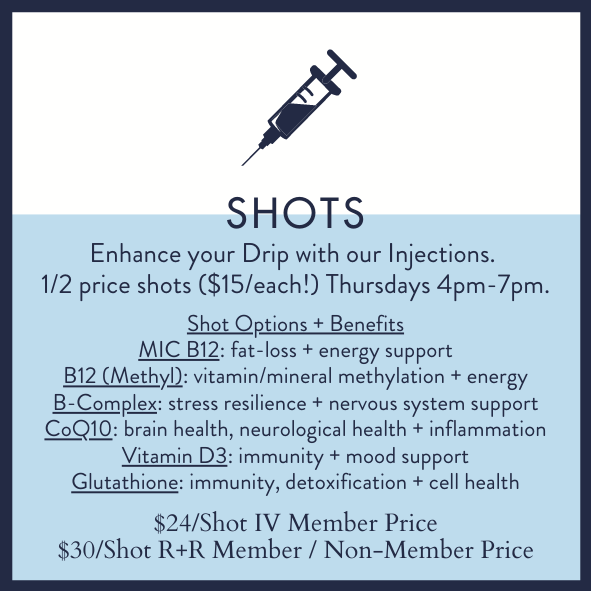
Last but not least, our shot offerings and their benefits - don’t forget our Vitamin Shot Bar Happy Hour every Thursday from 4pm-7pm!
For great price breaks on Member pricing, keep reading for more on this great membership! For $50/month you receive the following perks:
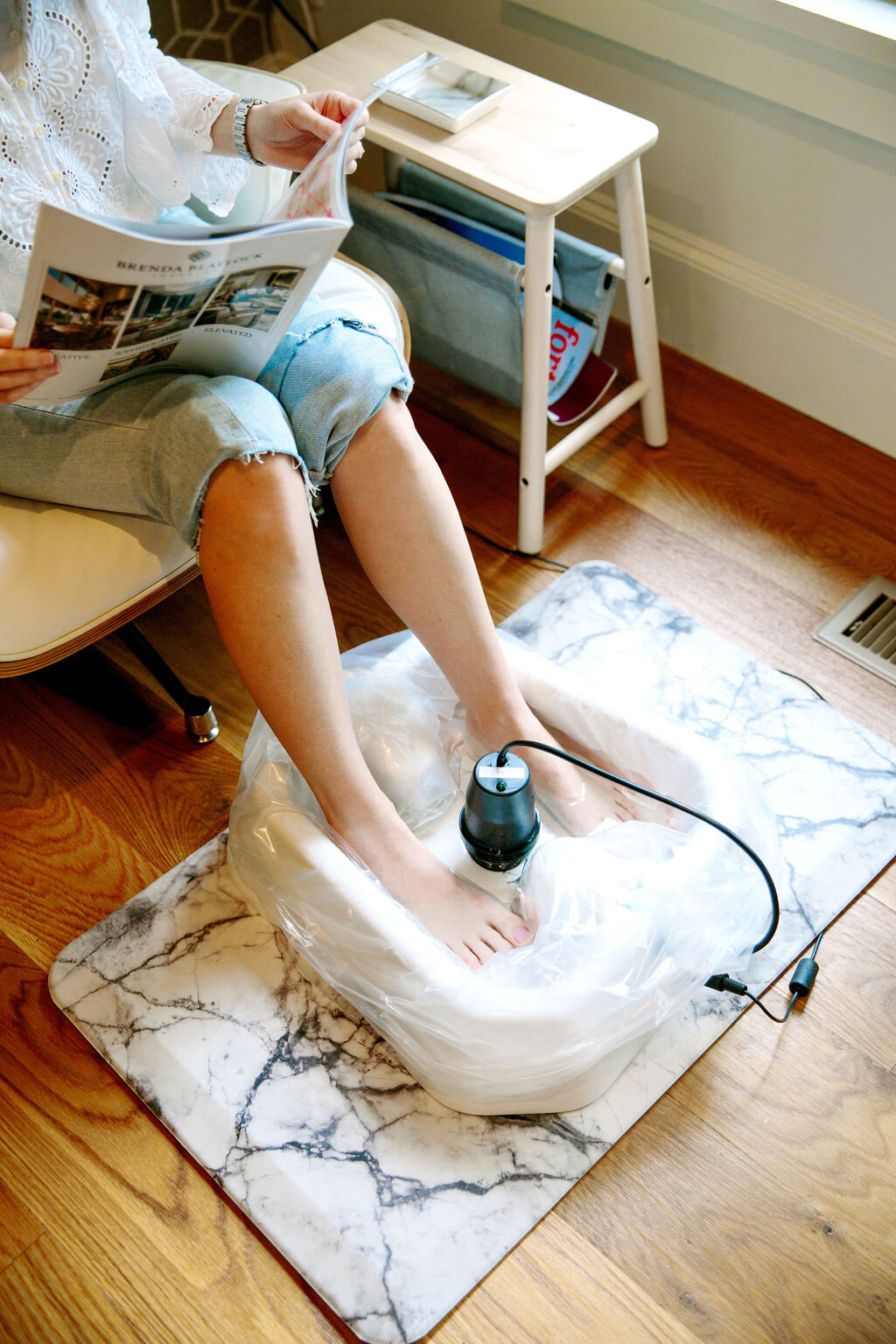
We've all heard you "Don't judge a book by its cover" and the same goes for your foot soaks: Don't judge a foot soak by its color! While the color change can be fascinating (and #wegetit), the focus should be on how you feel after your foot soak vs. what your water looks like. Tossing another idiom your way to drive it home... It's what's on the inside that counts! Meaning, the result inside the human body is the significance, not what's in the basin (for those in the back).
The chemical reaction of the highest quality sea salt on the market with the ionic array causes your body to eradicate whatever it does not want through the soles of your feet to promote wellness at a cellular level. Many get sick because their detox systems (think liver, kidneys, lungs, gallbladder etc.) get clogged for various reasons. Through this idealized sweating process and a little chemistry, benefits may include:
We recommend 1-2 sessions a week in the beginning, evening out to 1 session every week for maintenance and optimal results. At the very least, we recommend 1 foot soak a month.
Bonus: The effects you personally feel after the soak last up to one week after the treatment!

Always looking for ways to improve your experience at R+R, a recent survey of both R+R and IV members revealed several very happy members with a few requests to up the ante! The biggest request we found was to extend hours beyond 5pm to accomodate all the bosses out there in need of later appointment time slots.

Effective NOW, every Thursday, the infrared sauna, detox foot soaks, IV therapy + Vitamin Shots will be available until 7pm!
Take a look below to see further detail on improvements of each membership, specific benefits of each membership’s features, and the best practices for each membership!
4 infrared saunas/month
1 detox foot soak/month
1 free B-12 shot/month
1 discounted rate IV drip at $99/month*
28% off all subsequent IVs
10% off all supplements
Optional Add-on: 1 time discounted ZYTO Scan for only $50
All of this amounts to over $600 in services per month… all yours for only $198/month!
Infrared Sauna: Choose from weightloss, detoxification, cardiovascular, anti-aging, relaxation, or pain relief sessions. Enjoy a private shower post-sauna to rinse off the toxins. Sessions range from 30-45 mins.
Detox Foot Soak: Relax while your body rids itself from heavy metals, toxins and acids to arrive at a more balanced pH while reducing inflammation, encouraging lymphatic drainage, the diminishing of body aches and improvement in mental clarity. Soak appointment will take 45 minutes.
IV Therapy: Customized vitamin, mineral antioxidant and amino acid fusions delivered intravenously for ultimate bioavailability and absorption. Each IV is administered by an RN and takes about 45 minutes. Choose from 14 custom-mixed infusions touting every benefit from immunity to mental clarity to peak performance to hangover help... and everything in between.
B12 Shot: Elevates mood, increases energy, supports bone, heart + brain health, promotes stronger hair, skin + nails.
Supplement Shop: Choose from the highest-quality supplements on the market hand selected by our co-founders to ensure the greatest bioavailability and integrity of content.
ZYTO Scan: Regularly $150, this scan will show you which supplements your unique body craves.
Order of Services
We recommend first using the infrared sauna, then a detox foot soak, followed by IV therapy. The infrared sauna opens up the detox pathways, the foot soak gently pulls toxins from the body and the IV then replenishes to your body’s optimal state to receive nutrients.
Arrive Fully Hydrated
To maximize your body’s ability to detox and/or to receive and metabolize vitamins and minerals, arrive fully hydrated to any service. We recommend your bodyweight in ounces of filtered water each day.
Focus on How You Feel, Not How the Water Looks
When receiving an ionic foot soak, try not to focus on how the water looks, but on how you feel after the treatment. It’s what’s happening on the inside of your body, not on the outside!
Take Advantage of the Discounted ZYTO Scan
This will allow you to more accurately understand which supplements your body needs. That said, we are happy to make general recommendations!
Come to Happy Hour
Vitamin Shot Bar Happy Hour, that is! Every Thursday from 4pm - 7pm, all Vitamin Shots are only $15! Choose from B-Complex, B12 (Methyl), MIC/B12, Co-Q10, D3 & Glutathione to add to your free B-12 Shot.
Explore All Services!
All of our services are synergistic in nature, so feel free to explore our Where to Start page for more on all R+R Therapies as well as our Wellness Practitioners.
1 discounted rate IV drip at $99/month*
28% off all subsequent IVs
1 free B-12 shot/month
20% off subsequent shots + boosters
10% off all supplements
15% off 1 IV Drip for friends + family with member
Complimentary birthday IV drip
For only $50/month you receive access to all of these amazing amenities!
Greater Bioavailability: By intravenously introducing vitamins, minerals, antioxidants and amino acids, you bypass digestion and absorption, going directly to the cellular level.
It’s Okay if You’re Forgetful: With regular IV visits, you will no longer kick yourself for forgetting to take your supplements (again), since the effects of this treatment last for up to two weeks!
.jpeg)
Great Choice for Anyone: With IV therapy, you can increase general wellness or targeted therapy. IV therapy is also a great choice for anyone who is unsure of which vitamins + minerals they lack due to the myriad of vitamins in each drip.
Targeted Treatment: Choose from several IVs specifically created for targeted treatment such as Immunity Boost, Hair of the Dog (for hangovers), Weight Management, Get Glowing, Detox, Hanky Panky (for libido help), Energy, Peak Performance and more.
General Wellness: Choose from several IVs specifically created for general wellness such as The Supreme Drip, Myers Drip Plus, Vitamin C, Glutathione and more.
B12 Shot: Elevates mood, increases energy, supports bone, heart + brain health, promotes stronger hair, skin + nails.
Supplement Shop: When you can’t make it for an IV or simply need to fill in the gaps, choose from the highest-quality supplements on the market hand selected by our co-founders to ensure the greatest integrity of content. You may also shop our online supplement shop via Fullscript here.
Arrive Fully Hydrated
To maximize your body’s ability to detox and/or to receive and metabolize vitamins and minerals, arrive fully hydrated to IV therapy. We recommend your bodyweight in ounces of filtered water each day.
Start Here
If none of the targeted drips jump out at you, you simply cannot go wrong with a Myers Drip Plus! This drip offers immune boosting, detoxifying and energizing properties.
Come to Happy Hour
Vitamin Shot Bar Happy Hour, that is! Every Thursday from 4pm - 7pm, all Vitamin Shots are only $15! Choose from B-Complex, B12 (Methyl), MIC/B12, Co-Q10, D3 & Glutathione to add to your free B-12 Shot.
Explore All Services!
All of our services are synergistic in nature, so feel free to explore our Where to Start page for more on all R+R Therapies as well as our Wellness Practitioners.
Order of Services
For the ultimate experience, we recommend first using the infrared sauna, followed by a detox foot soak, followed by IV therapy. The infrared sauna opens up the detox pathways, the foot soak gently pulls toxins from the body and the IV then replenishes to your body’s optimal state to receive nutrients.
Is there a minimum usage of services per month requirement? No, but we do encourage you to use your entire package for the greatest benefit.
How often should I get an IV? On average, bi-weekly, but it depends on your unique makeup whether you would benefit from multiple times a week, weekly or monthly.
How long does an IV and/or Vitamin Shot stay in my system? Up to 2 weeks.
I don’t tolerate one of the ingredients in an IV well, can I take it out? Yes! You may customize any IV to suit your needs.
Where is a list of all IVs? Right here!
Do my unused services rollover? No.
Why is there a 3-month commitment? We want you to maximize usage of the services to fully understand the benefits of the membership.
Can I pause my membership? After the 3 month commitment, if an R+R or IV member would like to pause, please call 817.720.6220.
What is your cancellation policy? 30 day notice to cancel either membership after a 3-month commitment.
*Which IVs are excluded from the $99 rate? The Supreme, Get Glowing, 20 Gram Vitamin C, NAD & ALA Drips are not eligible for the $99 R+R Membership IV; however, a 28% discount may be applied.

What if there was a non-invasive way to glance inside your body to get a blueprint of what’s going on in there? To see where you’re off balance, where you might need further investigation, where your body feels stress, which foods likely don’t agree with your genetic makeup, which allergens or toxins appear to be causing a ruckus at a cellular level, which hormone seems to be firing too strong… which one seems to be taking a siesta? Sounds too good to be true, doesn’t it?
We agreed. Until we personally experienced the healing benefits of ZYTO technology! While we do not diagnose based on ZYTO, it is an amazing tool to use to guide a plan of care including but not limited to dietary changes to implement, which supplements to consider and/or beneficial lab work. Speaking of lab work, according to ZYTO, lab reports match with ZYTO’s detections over 90% of the time. We’ve experienced this statistic in our findings as well, and while results cannot be guaranteed (because of you know, legality and such), the R+R Team’s personal experiences and those of our clients cannot be denied:

Intrigued? Let us back up a bit…
It is a biocommunication scan with a ZYTO hand cradle (an FDA-cleared medical device with 6 sensor points) and advanced software technology created to accurately decipher which wellness supplements and protocols your particular body craves for balance.
BiocommuniWHAT? Biocommunication means the exchange of info between a computer and the human body through galvanic skin response. GalvaniWHO? Galvanic skin response is an established technology that measures fluctuations in electrical conductivity of the skin akin to a lie detector test.
By placing your hand on the hand cradle for approximately 5-10 minutes, ZYTO measures the body's energetic responses to help determine the best wellness options for each person. Similar to technology found in a lie detector test, the ZYTO establishes the body's baseline reading. From here, it measures variations as wellness items are introduced from the software. A detailed report will be created at the end of your findings, and our Certified Nutritionist will interpret the report.
By measuring your body for galvanic skin response, a ZYTO scan determines what currently causes your body the most stress - from sleep disturbances to various food sensitivities to environmental contributors and more. From here, it will recommend the exact nutritional supplements, foods, oils, &/or services *your* body is most biologically coherent with to bring you into balance and optimize your wellness.
There is no one-size-fits all for wellness! So while you and your friend might both scan for sleep disturbances, his or her suggested remedy might vastly differ from yours. The suggested protocols match with what will bring your unique biological makeup into balance. Also, ANYONE can benefit from this - no matter your age. We’ve helped babies to the senior adults.
When booked in conjunction with a Nutrition Consultation, you will experience the maximum benefits of all the ZYTO can offer. That said, the ZYTO alone is a great starting point for healing or for those simple wanting to optimize their health. You may call 817-720-6220 to schedule, or follow this link to book a 2-hour Initial Nutrition Consultation + ZYTO Scan with Dabney or a 75 minute Initial Zyto Scan + Interpretation with a member of the Dabney Poorter Nutrition Team.
Your best self could just be one ZYTO Scan away. We can’t wait to serve you!

The previously cloudy waters of Venice run clear, the smog lifts over LA, and the Himalayas are now visible to an Indian town for the first time in years. By Divine design, nature restores itself when given the chance for a reset… and your amazing body is no different.
When given the proper foundation to function properly, our bodies could put the aforementioned Covid byproducts to shame. Each tiny cell (of which your body has about 30 trillion) generates .07 volts of energy. We never claimed to be math savvy, so rounding up to 1, we’re talking almost 30 trillion volts of energy in a single body. For perspective: a bolt of lightning creates about 1 billion volts.
Mmmhmm.
Amazing, high-voltage YOU has the capability to clean house in the best way possible if given the right tools and the right amount of time. Keep reading for 9 ways to cleanse the body - the most important first step - to prime your systems to reach their ultimate potential.



See, you’re feeling better already, aren’t you?! Sidestepping the temptation to address this “unprecedented time” yet again, we hope you’re seeing the silver lining of the slow down and don’t miss the opportunity to take advantage while we have it. Come see us! We’d love to help set your feet on the path to healing.

Immune Boost Drip Kick cold, flu and allergy symptoms before they start by arming your body for battle. This drip includes all the key players:
Zinc for immune function regulation, treats the common cold, effects learning and memory
Selenium powerful antioxidant, boosts immune system, important for thyroid health
Vitamin C necessary for the growth, development and repair of all body tissues key to the immune system
B-Complex for cell health, growth of red blood cells and support of energy levels
B12 for mood support, cell support and bone health
B6 for mood support, brain health and to prevent clogged arteries
Glutathione to reduce oxidative stress, liver support, and improves insulin resistance
Vitamin D3 to improve bone support by helping the body absorb calcium, immune support
L-Lysine for an anti-viral optional boost

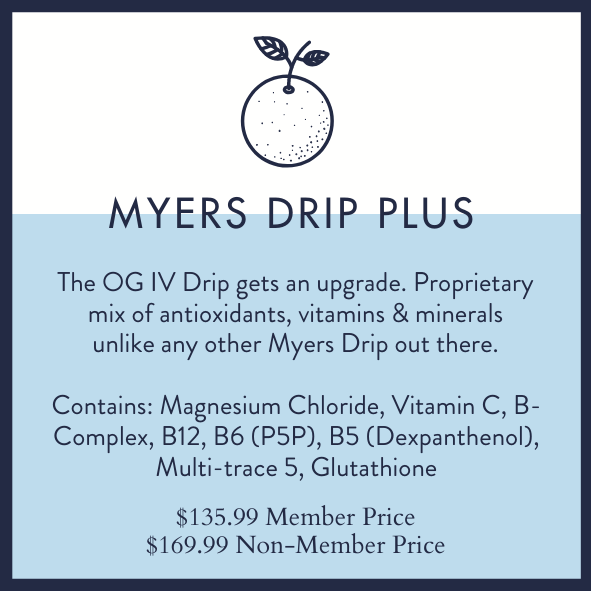
Myers Drip Plus The original IV Drip gets an upgrade with this proprietary mix of antioxidants, vitamins and minerals unlike any other Myers Drip on the market. This bad boy packs a punch with:
Magnesium Chloride supports nerves and muscle systems
Vitamin C necessary for the growth, development and repair of all body tissues key to the immune system
B-Complex for cell health, growth of red blood cells and support of energy levels
B12 for mood support, cell support and bone health
B6 for mood support, brain health and to prevent clogged arteries
B5 for liver function, nervous system function, and for healthy hair, skin and nails
Multi-trace 5 delivers trace amounts of zinc, copper, manganeses, chromium, and selenium
Glutathione to reduce oxidative stress, liver support, and improves insulin resistance

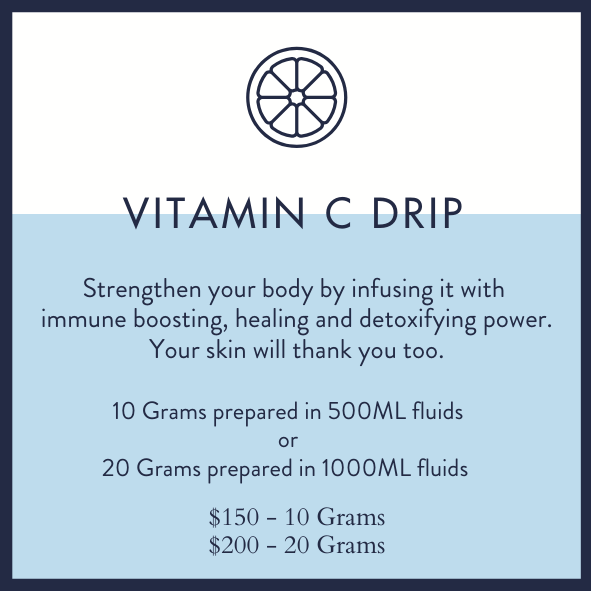
The Supreme Drip This motherload delivers everything you need for energy, detoxification, immunity, mood-boosting, anti-inflammatory and cellular protection. The following nutrients round out this drip:
Zinc for immune function regulation, treats the common cold, effects learning and memory
Vitamin C necessary for the growth, development and repair of all body tissues key to the immune system
Magnesium Chloride supports nerves and muscle systems
Carnitine for optimal mitochondrial function of the cells for energy
Arginine for blood pressure support as well as blood sugar regulation
Glycine a powerful antioxidant to improve collagen and sleep quality, liver support and muscle loss support
B-Complex for cell health, growth of red blood cells and support of energy levels
B12 for mood support, cell support and bone health
B6 for mood support, brain health and to prevent clogged arteries
B5 for liver function, nervous system function, and for healthy hair, skin and nails
Glutathione to reduce oxidative stress, liver support, and improves insulin resistance
Phosphatidylcholine to aid in liver repair
Vitamin C Drip Strengthen your body by infusing it with immune boosting, healing and detoxifying power of Vitamin C. Your skin will be glowing too! Vitamin C is vital to all tissue repair throughout the body including the immune system.
Vitamin D for immune support, joint health, mood support and muscle weakness
B-12 for mood support, cell support, energy, heart, brain and bone health
B-Complex for cell health, support of energy levels, nervous system function, eyesight and digestion
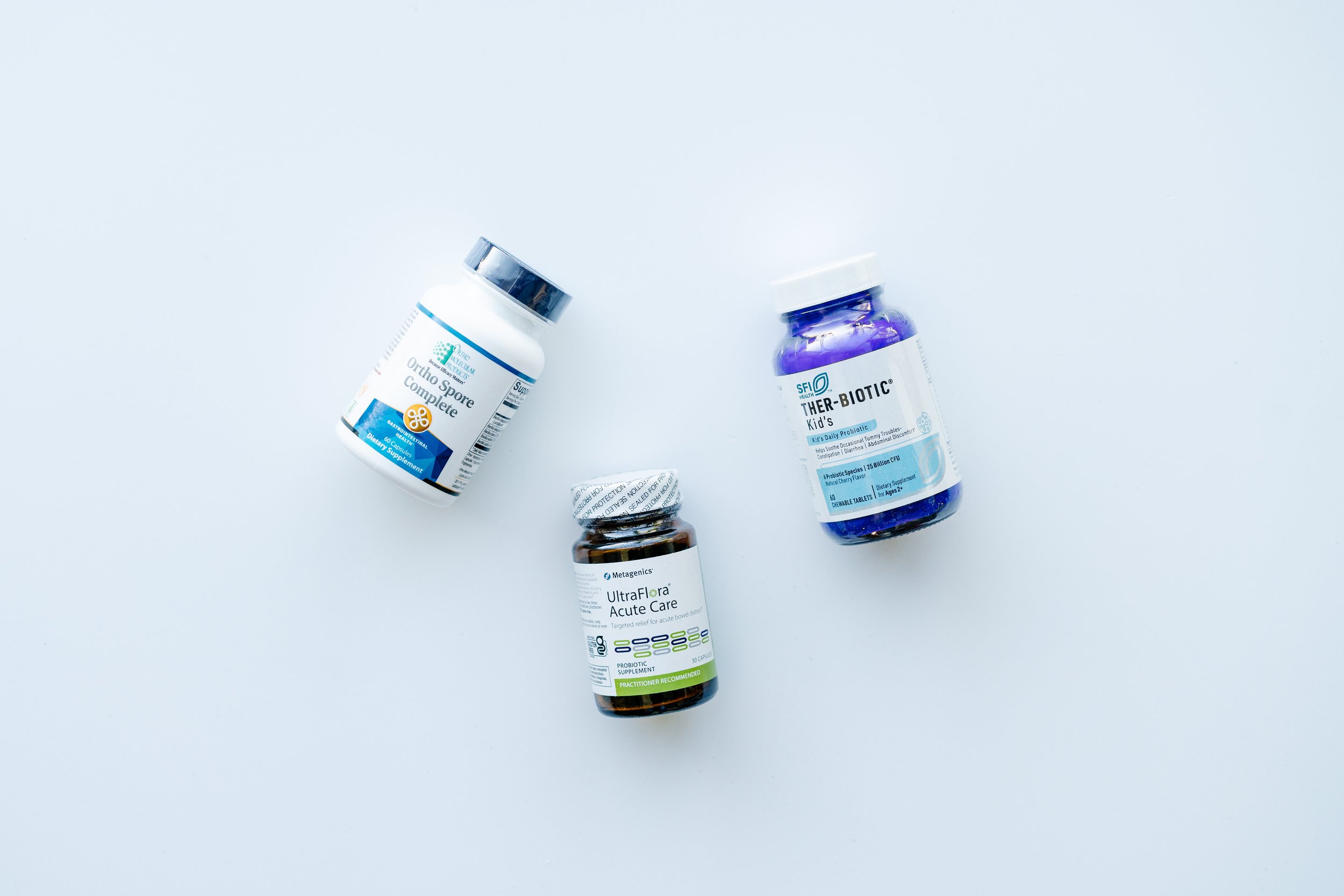
At Restore + Revive in Fort Worth, we often get questions about whether refrigerated probiotics are superior to shelf-stable (freeze-dried) options. The truth is, it’s less about where they’re stored and more about how they’re made.
Let’s break down what really matters.
Probiotics are live microorganisms that support gut, immune, and overall health. They work by balancing the bacteria in your digestive system, strengthening your intestinal barrier, and even influencing mood and inflammation.
But because they’re living organisms, stability matters, and that’s where the difference between refrigerated and shelf-stable forms comes in.
Refrigerated probiotics contain live bacterial strains that require constant cold temperatures to remain viable. They’re often heat-sensitive and can degrade quickly if exposed to warm environments for an extended period of time.
Refrigeration can help maintain potency for these strains, but it also means:
So while refrigeration can be beneficial for certain delicate strains, it is important to be aware of the requirements to properly store and maintain the product.
High-quality shelf-stable probiotics are often freeze-dried, a process called lyophilization. This removes moisture under cold, vacuum-sealed conditions, essentially putting the bacteria into a dormant (but alive) state.
Because they’re protected from heat and moisture, these probiotics can remain stable at room temperature until they’re ingested. Once they reach your gut, the bacteria essentially “wake up” and become active in the gut.
Freeze-dried probiotics are:
The key is quality. A well-formulated, freeze-dried probiotic designed for shelf stability can be just as potent than one that requires refrigeration.
Whether refrigerated or shelf-stable, the following factors matter far more than temperature:
If you’re considering taking a probiotic, here are some high-level guidelines from our functional medicine providers at Restore + Revive recommend:
1. Look for resilient strains
We often recommend probiotics that include Saccharomyces boulardii, a beneficial probiotic yeast that can’t easily be killed by antibiotics. This makes it ideal for supporting gut health during or after antibiotic use.
2. Timing matters
3. Rotate if used long-term
If you plan to take probiotics routinely, rotating different strains can help maintain microbial diversity and prevent your body from adapting to a single formula.
4. When to prioritize usage
While not everyone needs a daily probiotic indefinitely, they can be especially helpful:
5. Brands matter
The effectiveness of probiotics depends on the specific strains, the quality of the formulation, and whether the bacteria can survive the journey through the GI tract.
At Restore + Revive, we don’t put just any product on our shelves (or in our fridge). Our providers and staff are dedicated to finding the very best supplements for our clients. We meet with brand representatives, review research and ingredients, compare formulations, and evaluate pricing, all before a product ever makes it to our wellness shop.
That’s why you’ll find both shelf-stable and refrigerated probiotics available here, because we’ve vetted and approved products from each category that meet our high standards for purity, potency, and effectiveness.
Swing by the Restore + Revive Wellness Center (4927 Byers Avenue Fort Worth, Texas 76107) and see the various probiotics we carry! Some of our favorite brands include: Ther-Biotic, Metagenics, and Ortho Molecular.
Want to meet with one of our functional medicine providers to determine the best product and dosage for you? Give us a call at (817) 720-6220 ext. 2 to book an appointment or learn more about how we can help you.
Disclaimer: The information provided in this blog is for educational and informational purposes only and is not intended as medical advice. Always consult with your healthcare provider before starting any new service, product, or treatment. Please note that prices, offerings, and other details mentioned in this post reflect information available at the time of publication and may have changed since.
When you hear “creatine,” you might think of bodybuilders or elite athletes. But this naturally occurring compound is about far more than building muscle, it has also shown it can support brain function, blood sugar regulation, and healthy aging. Despite common misconceptions, creatine is not a steroid, doesn’t damage kidneys, and doesn’t cause fat gain. In fact, decades of research support its safety and effectiveness for a wide range of people, including women and older adults looking to maintain strength, cognition, and metabolic health.
Creatine is a naturally occurring compound your body produces from amino acids. Our bodies naturally make creatine from amino acids. We get about 1–2 grams per day from foods such as meat and fish. Muscle tissue typically stores 60%–80% of its creatine at baseline, and supplementation can raise these stores by 20–40% (UCLA Health).
Higher creatine stores support short-burst energy for high-intensity movement, such as lifting, sprinting, or other resistance-based exercises. It may also aid in recovery between bouts of activity, helping your muscles replenish energy more efficiently. Essentially, creatine functions like an energy reserve for your muscles, and it’s not just for athletes. By boosting creatine levels, you can enhance physical performance, support strength, and maintain muscle mass as you age, all of which can play a vital role in blood sugar regulation, bone health, and overall wellness.
Safety Note: Creatine is generally considered safe for most healthy adults. However, if your kidneys do not filter waste efficiently or you have a history of kidney problems caution is warranted. Always talk with your healthcare provider before taking creatine or any supplement.
One of the latest areas of research around creatine is surrounding the benefits of cognitive function. Creatine has been shown to play a role in neurogenesis, the formation of new neurons in the brain (QBI). By supporting energy production in brain cells, creatine may help improve memory, focus, and mental stamina.
A 2024 study tested the effects of a single dose of creatine on cognitive performance after one night of sleep deprivation. Fifteen participants were given either creatine or a placebo at 6pm, and their cognitive performance, including reaction times and short-term memory, was tested every 2.5 hours until 9am. The results showed that processing speed was significantly faster in the creatine group. Researchers speculate that when brain cells are under stress, such as during sleep deprivation, they rely on phosphocreatine as an energy reserve, and dietary creatine helps replenish this reserve. While this study was small and the effects are likely short-term, it highlights creatine’s potential to support cognitive function, particularly in situations of high energy demand (Nature).
Maintaining muscle mass is essential for overall health, particularly in regulating blood sugar levels. Muscle tissue plays a significant role in glucose metabolism, and having more muscle mass can enhance insulin sensitivity. Think of your muscles like a sponge for sugar, they help absorb glucose from the bloodstream and keep blood sugar levels balanced. Without enough muscle, that sponge shrinks, making it harder for the body to properly process sugar. Therefore, maintaining and increasing muscle mass is imperative for metabolic health. Creatine supplementation, especially when combined with resistance training, may help preserve and build muscle mass, thereby supporting better blood sugar control (MDPI Nutrients).
It’s important to note that creatine isn’t just for those looking to get “meaty” and build what some might consider to be excessive amounts of muscle. Specifically, women can see significant benefits in muscle maintenance and bone health when supplementing with creatine. As we age, especially women, there’s a natural decline in muscle mass and bone density, which increases risks of falls, fractures, and metabolic issues. Creatine has been shown to help preserve muscle strength in older adults, potentially reducing the risk of sarcopenia (age-related muscle loss) and supporting overall functional capacity (CU Anschutz).
Creatine is most commonly available in powdered or gummy form, and one question we often hear is: “When is the best time to take it?”
According to a 2022 study by internationally renowned sports nutrition experts, timing doesn’t appear to make a significant difference for muscle mass or performance (“Creatine O’Clock: Does Timing of Ingestion Really Influence Muscle Mass and Performance?”).
The key takeaway is consistency over timing. Whether you take it before a workout, after, or on rest days, regular daily supplementation supports muscle energy, strength, and overall health benefits.
Creatine does more than just support muscle growth, it plays a vital role in energy production, cognitive function, and overall vitality. By helping your body regenerate more cellular energy (ATP), creatine supports better workout performance, quicker recovery, and even potentially improved brain function.
At Restore + Revive, we’re intentional about the products we offer. That’s why we carry our favorite, high-quality creatine supplement by Just Ingredients right here in the Wellness Center. Swing by and grab some creatine and other wellness supplements (4927 Byers Ave Fort Worth, Texas 76107)!
Disclaimer: The information provided in this blog is for educational and informational purposes only and is not intended as medical advice. Always consult with your healthcare provider before starting any new service, product, or treatment. Please note that prices, offerings, and other details mentioned in this post reflect information available at the time of publication and may have changed since.
.png)
When people think about muscle, they often think about strength, aesthetics, or athletic performance. But muscle is far more than that. Muscle is one of the most important organs in the body for metabolic health, blood sugar control, aging well, and maintaining independence throughout life. This is true for everyone, regardless of age, gender, or fitness level.
In fact, maintaining muscle may be one of the most powerful tools we have for preventing chronic disease and improving quality of life as we age.
Skeletal muscle is one of the body’s most metabolically active tissues. It plays a central role in:
Unlike body fat, muscle tissue actively uses energy even when you are at rest. The more muscle you have, the better your body can manage energy, movement, and recovery.
One of muscle’s most important and often overlooked roles is how it helps regulate blood sugar.
Think of muscle like a sponge for glucose.
When you eat carbohydrates, your body breaks them down into glucose (sugar), which enters your bloodstream. Insulin’s job is to help move that sugar out of the blood and into cells where it can be used for energy. Skeletal muscle is the primary place where this glucose is stored and used.
When muscle mass is low or muscle is underused, sugar stays in the blood longer, forcing the body to release more insulin. Over time, this can contribute to insulin resistance and blood sugar dysregulation.
Muscle plays a central role in glucose regulation and insulin sensitivity, with research showing that higher muscle mass is linked to improved insulin and glucose measures (PubMed). Strength training improves the ability of muscle cells to take in glucose, even without large changes in weight.
The takeaway is simple: building and maintaining muscle helps your body process and handle sugar more efficiently.
Muscle loss is not just a result of aging, it is one of the drivers of age-related decline.
Beginning in our 30s, adults naturally start to lose muscle mass. This process accelerates with age and is known as sarcopenia.
Without intentional intervention, adults can lose significant muscle each decade.
Loss of muscle is associated with:
The good news is that muscle loss is not inevitable. Resistance and strength-based training can slow, stop, and even reverse much of this decline at nearly any age.
This topic can feel confusing because muscle is not measured the same way as body weight. When we talk about muscle goals, we are referring to skeletal muscle mass, not total lean mass or overall weight.
Skeletal muscle mass is often expressed as a % of total body weight. This % reflects how much of your body weight is made up of muscle that helps you move, lift, and stabilize your body.
General reference ranges used in body composition analysis:
These are not perfection targets. They are helpful ranges that indicate metabolically healthy muscle mass for most adults.
Example 1: Woman weighing 140 pounds
A woman at 140 pounds would generally aim to fall somewhere in the mid-30s to low-40s pounds of skeletal muscle, depending on her frame, genetics, and health status.
Example 2: Man weighing 210 pounds
A man at 210 pounds would generally aim for roughly 70 to low-80s pounds of skeletal muscle.
These numbers are not goals that must be hit exactly. They are reference points to help understand whether someone is under-muscled, adequately muscled, or has room to build more muscle for metabolic and functional health.
Muscle mass is measured through body composition testing, not a standard scale. Common methods include:
Each method has its own margin of error, which is why tracking changes over time using the same method is more important than a single measurement.
Muscle mass %’s are just one piece of the picture. Muscle health is also reflected in:
Someone may fall slightly outside a % age range and still be very healthy if they are strong, functional, and metabolically stable.
Tracking muscle over time, rather than focusing solely on scale weight, provides a clearer and more empowering picture of health.
“Strength training” is a common buzzword, but it does not mean one specific thing.
Strength training refers to any activity where muscles work against resistance to become stronger. That resistance can come from:
Strength training typically involves controlled movements performed for repetitions and sets. The goal is to challenge muscles enough that they adapt by becoming stronger and more resilient.
Most people benefit from strength training at least three times a week, targeting all major muscle groups.
Protein intake and specific amino acids are important for stimulating muscle protein synthesis and helping preserve muscle as we get older (PubMed).
Examples of complete protein sources include:
Distributing protein intake evenly throughout the day supports muscle protein synthesis, especially as we age.
Supplements are not a replacement for nutrition and training, but some may help support muscle maintenance and development:
Supplement needs are individual, and guidance from a healthcare professional is recommended.
Maintaining muscle improves far more than appearance. People with healthy muscle mass often experience:
Muscle is not just about how long you live, but how well you live.
Muscle is a cornerstone of lifelong health. It supports metabolism, protects against insulin resistance, slows age-related decline, and empowers people to stay strong and capable at every stage of life.
Prioritizing muscle is not optional, it is essential. Building and maintaining muscle through strength training, proper nutrition, and supportive lifestyle habits is one of the most impactful investments you can make in your long-term health.
No matter your age or starting point, it is never too late to build strength.
At Restore + Revive, we understand that building and maintaining muscle can feel overwhelming, but you don’t have to do it alone. Our team can help provide guidance, order body composition testing, and progress tracking to ensure you’re on the right path. Our team of dietitians can prepare customized nutrition consultations and plans targeting protein intake, reducing inflammation, and supporting overall wellness. We also carry high-quality supplements and offer supportive therapies at our wellness center to support muscle growth, recovery, and overall health. Whether you’re just starting out or looking to refine your routine, we’re here to help you reach your muscle health goals safely and effectively.
Contact us at (817) 720-6220 ext. 2 to book an appointment with our functional medicine team or to learn more about how we can help you.
Some of Restore + Revive employees favorite gyms in Fort Worth that actively support strength training:
The information provided in this blog is for educational and informational purposes only and is not intended as medical advice. Always consult with your healthcare provider before starting any new service, product, or treatment. Please note that prices, offerings, and other details mentioned in this post reflect information available at the time of publication and may have changed since.

Quite simply, a Farming Cooperative (Co-Op for short) is a system where like-minded, hard-working farmers can pool the fruits of their labor to offer a larger variety to consumers. In doing so, they also split expenses such as supplies, materials and production costs while simultaneously side-stepping supermarket red tape and lag times in order to offer you the freshest foods possible… straight from the farm to your table.
This centuries-old concept caught our attention when we met Robert D. Copeland (aka Bob) last summer while planning for our Fall Market. Bob owns and operates Sunflower Farms, a local farm offering delicious grass-fed, pasture-raised beef and organically grown produce to The R+R Farm Co-Op. His passion for (and knowledge of!) cooperative farming and regenerative agriculture had us smitten from the get-go.
Keeping simplicity top of mind, regenerative agriculture can be defined as the farming practices that nurture the land and animals to allow nature to work as intended.
Digging a little deeper (and at the risk of sounding like Negative Nancy), one learns the methods of regenerative farming are counter-culture to the conventional food system’s goal of pumping the life out of the land, stuffing livestock into abysmal living conditions (feedlots and feedbarns), and feeding the livestock GMO grains they are not designed to eat – all in the name of the bottom line. The harm-reduction approach of regenerative farming nurtures the farmland by introducing such practices as adding organic top soil, avoiding chemically-laden pesticides, avoiding tilling, and by implementing fermentation, inoculation, intercropping, crop rotation and composting (to name a few).
According to Bob of Sunflower Farms, "Regenerative agriculture also involves grazing cattle, sheep, goats on pastures of grasses and moving them around from small pasture to small pasture regularly as they graze the grasses about halfway down to the ground. As they graze and move around in the small pastures, they leave behind a well-fertilized and plowed soil. The herds rotate from one pasture to the next on a weekly or more frequent basis depending on herd-size until you're back at the starting point where the grass has had time to regrow."
This more patient, counter-culture approach requires a community aspect in order to thrive, thus the appeal of a farming cooperative.
Now that you’re up to speed and have two new vocabulary words under your belt, let’s dig into why you should join The R+R Farm Co-Op!
Pasture-raised meat and regenerative farming practices offer produce and meats packed with more nutrients and antioxidants proven to increase heart health, aid in disease prevention, build and maintain muscle mass, improve exercise, and more.
[caption id="" align="alignnone" width="750"]
Larry Goodson, Farmer + Owner of First Earth Farm provides organically grown produce to The R+R Farm Co-Op. [/caption]
How? You ask.
Remember what we learned about regenerative farming? These methods support the soil and strive to leave the land better than it's ever been. Think of it this way: What does your food eat? If your veggies are consuming high-quality organic nutrients from a solid soil, and if the animals are grazing organic grass grown on said soil - we’d venture to say their diet is pretty top-notch. Ipso facto… yours will be too!
Phys.org reports on the results of a study conducted in January 2022 over 10 farms across the US comparing regenerative soil to conventional soil stating, “The food grown under regenerative practices contained, on average, more magnesium, calcium, potassium and zinc; more vitamins, including B1, B12, C, E and K; and more phytochemicals, compounds not typically tracked for food but that have been shown to reduce inflammation and boost human health. Crops grown in the regenerative farms were also lower in elements broadly detrimental to human health, including sodium, cadmium and nickel, compared with their conventionally grown neighbors.”
Further, pasture-raised meats - especially beef - are full of Omega-3 fatty acids and Conjugated Linoleic Acid (CLA). Both Omega-3s and CLA greatly enhance your nutritional intake, and as it turns out, both are sorely lacking in grain-fed meats.
There’s something to be said about slow and steady. It really does win the race, especially when it comes to nutrition.
It is said a picture is worth a thousand words, and this one is no exception. Factory Farms, mostly owned by multinational corporations, throughout the country shove chickens, cows, pigs, goats and more into concrete blocks to sit in their own feces where they are pumped with goodness knows what to fatten them up… all in the name of making a buck.
The regenerative farming practices incorporated into The R+R Farm Co-Op treat the animals with the dignity and respect they deserve by giving them room to roam as they were created to do. Many of the animals even become pets and are befriended by the farmers! As we believe you’ll soon agree, happier, stress-free animals produce tastier food.
Regenerative farming practices incorporated into our Co-Op are better for the environment by limiting chemical run-off. When you don’t spray the produce with pesticides and other harmful chemicals, there’s no residue seeping into the soil, into the food, and into your body. Period. This also means it’s not floating into the air we breathe! As mentioned above, the care taken to bring the soil to its optimal state with the goal of leaving it better than it was found benefits the environment for generations to come.
You may be wondering why we need a farming cooperative when we've got supermarkets packed with produce and meat on every major corner, but did you know USDA stats show that farmers who sell through conventional grocery stores only receive 14% of the profit from their hard work? 14%!
“Sure, the local supermarket has tomatoes in February, but they’re not coming from anywhere within 5000 miles of where you’re sitting. People want what they want, but they don’t understand what it takes to get it,” laments Bob.
By equipping local farmers to bring their in-season bounty to your table via the Co-Op, you’re not only doing your part to improve the broken food system, you’re putting money right back into the local economy.
The focus on sustainability to accompany regenerative farming ensures the land is never worked beyond what it can healthfully produce. This gentler practice allows for generations to come to reap the benefits of the rich farmland… just as God intended! We are instructed to be stewards and shepherds of the land and animals we get to enjoy.
As poignantly stated by Annemarie Sullivan, owner of Sullifarm + Kitchen providing all pasture-raised pork to the Co-Op, “Remember, every time you eat a meal, you are either enforcing a positive or negative effect. Not just to your body, but to our animals, our communities, our future generations, our air, water, and soil.”
By joining The R+R Farm Co-Op, you can rest assured that while you might not be the one digging in the dirt, you’re enforcing the positive effect of the most sustainable farming practices in the industry.
In a world of marketing mumbo jumbo with virtually no regulation on what the creative team at AB&C Marketing Company throws on the package of hot dogs to make them sound like they’re straight from heaven, even the savviest of shoppers can be misguided. Further, the red-tape and expensive hoop jumping required to obtain a USDA Organic stamp would make your head spin.
Organically grown produce and pasture-raised meats are the terms colloquially used by regenerative farmers to describe the most nutrient-dense food for your health as well as the most humane and nurturing practices for the animals and for the land.
Bob sums it all up perfectly saying, “Come for the nutrition and flavor. Stay for the Farm Share increase!”
Step 1: An annual Co-Op Membership of $89 must be secured to join and order from the Co-Op (spots are limited - so don't delay). Memberships go toward supporting the farmer’s supplies, inclement weather issues, production as well as the operational costs to run The Co-Op. Note: Your Co-Op Membership does not include the cost of food you choose to order. Secure your Membership here.
Step 2: After a Membership is purchased, customers can shop produce, meats, eggs, and more provided by our local farmers during shopping windows open every other Friday thru Monday. Check out this calendar for ordering and pick-up dates.
Step 3: Customers will then pick up their conveniently bundled goods the Thursday following the order window at R+R 11am-5pm. Ordering opens March 21st-28th & first pickup is March 31st.
Sunflower Farms provides all of the delicious pasture-raised, grass-fed beef.
Little Foot Farm provides free-range, organic, pasture-raised eggs to the Co-Op.
Sullifarm + Kitchen provides all of the pasture-raised pork products.
Hollow Trace Market Farm provides all of the organically grown produce, specialty herbs and canned goods sold.
Armagh Creamery provides all of the dairy products.
Icon Bread provides all of the sourdough bread to The R+R Farm Co-Op.
Prairie Oasis Farm provides the pasture-raised chicken and lamb to the R+R Farm Co-Op.
Head to therrfarmcoop.com to learn more about the Co-Op, our amazing farmers, available products and to join the Co-Op! Stay tuned for more from The R+R Farm Co-Op including recipes and pro-tips from our knowledgeable farmers.

Maybe you’ve heard Gwyneth talk about ProLon or maybe you’ve simply heard some buzz about intermittent fasting. Regardless of where ProLon lands on your relevance meter, it might just be the magic bullet you’re looking for to jumpstart healthy habits, maximize cell turnover, decrease inflammation, kick sugar cravings, and increase energy... all while diminishing belly fat and “de-puffing” for the coming warmer months.
According to ProLon, "this fast-mimicking meal plan is unlike any other program. The tasty, specially designed food gives you essential nutrition but doesn’t activate your body’s food sensing system. In other words, you get to eat, but your body 'thinks' it’s on a 5-day fast."
Ipso facto, ProLon is a “fast with food.” -- ahem, vegetarian, gluten- and lactose-free food that is.
The fine print: At R+R we never encourage starving yourself or quick-fix fad diets. ProLon is developed and based on over 20 years of scientific research sponsored by the National Institutes of Health and the USC Longevity Institute, and please visit their website for a plethora of helpful information before beginning your fast.
Candidly, as I write this, it’s the end of snowmageddon here in Fort Worth, and I am a stress eater.
We are leaving in 1 week to ski, and my ski pants were growing tight on day 5 of playing in the snow, so I better get it figured out.
All that to say, de-bloating is certainly a desired outcome of doing ProLon, but I really and truly just want to feel better.
My skin is pretty red and inflamed, and my sleep is decent at best.
I know channelling stress in healthier ways than eating carbs and drinking margs (I rhymed) will do more than just improve my waistline. It will improve my life!
So. That’s why I’m here. Doing the ProLon fast for the 3rd time.
After the 1st time, I said I’m never doing that again.
After the 2nd time, I said I’m really never doing that again.
And alas, here I am, never say never, and any other cliches you can throw my way. THAT SAID, because I’m basically a professional ProLon-er, I’ve got a lot of pro-tips in here for you to make this baby a success.
Today is v easy.
I was full from a huge dinner last night, so I didn’t eat the L-Bar until almost 11am (Dabney would definitely tsk, tsk me for waiting that long after waking to eat, but I digress).
We had a neighborhood bday party from 2pm - 4pm today with a damn beignet truck, so I knew I needed to eat before attending lest throwing this $200 fasting kit down the drain. SO, I had the tomato bisque soup at about 1:30pm to, you know, tide me over.
At the end of the party, my 5.5 year old son got a splinter in his foot, so if you heard the screaming and crying and wailing at the ends of the earth, that’s what happened. It was stressful and also hard not to laugh in his face and say IT’S A SPLINTER FOR CRYING OUT LOUD.
Anywho.
I had the other L bar after these theatrics at around 4pm, and I am still full as I write this. It’s 6pm.
I plan to have the minestrone soup in the next 30 minutes with the kale crackers and olives, saving the chocolate crisp bar for dessert. Pro-tip: Put that baby in the freezer.
I don’t think the rest of tonight will be hard, but I’ll report back if it is. I’m especially interested in seeing if I sleep better and can wake up a little earlier.
Stay tuned!
I didn’t sleep great, and I’ll be honest (sorry if this is TMI), but my gas has been pretty gnarly. Could be the peas and legumes from the delicious (not) minestrone soup from last night?
Anywho, today includes the glycerin drink. I’m about to throw out some major pro-tips, so take heed.
1st Pro-tip: Pour your glycerine drink as instructed, fill with cold filtered water, then place both Hibiscus tea bags in it, and put it in the fridge to let them do a cool steep for at least 20 mins. This will change your life. If they sold this tea separately, I would buy it in hoards. Also, you don’t have to drink any of the tea just for the record. You are also allowed 1 cup of black coffee. Praise.
2nd Pro-tip: In the morning, go through your box for that day and freeze or refrigerate anything that will taste better as such. I forgot to put my olives in the fridge yesterday, and it was a bummer. But today, you better believe I put those olives in the fridge and the choco-crisp in the freezer for my after-dinner morsel.
3rd Pro-tip: You do not have to eat the food items in the order that’s recommended, but you do have to eat all of the day’s allotted food items on that particular day - ie no switch-a-roos with other boxes, mmkay?

With this in mind, I try to make the food last throughout the day. I honestly feel like I would CRUSH Survivor because I am so very good at making these boxes last. There I said it.
For breakfast, I had ½ of the L-bar with a cup of coffee around 9:30am when I felt my tummy get hungry. I’m saving that other half for late afternoon when I know my energy tends to dip, and I get stressed and/or cranky.
10:30am I had the other ½ of the L-bar when a stressful work email hit my desk. Se la vie.
My fuse is super short today, not gonna lie.
Had the mushroom soup for lunch. It was terrible.
Had my olives at 3:30pm. Can you tell I’m cranky as hell?
Went on a very light walk with the family around 5pm, and I was pretty low energy.
Had some more olives at 6pm while my minestrone/quinoa soup took 11,000 years to cook over the stove.
Ate my frozen chocolate crisp at 7pm. Went to bed after binging a couple episodes of Broadchurch.
Sleep was pretty awful again, but my gas was better! So that’s a win for my husband.
Super moody already this morning. Maybe because I know Day 3 is the worst day typically? Beware the beast, y’all.
Ate ½ my L bar at 9:30am with a cup of coffee. They say you can have 1 cup of coffee a day, but I’m pushing it today. I’m already at 2. Come at me ProLon Police, I dare you. I’ll cut you and laugh about it with this mood I’m sporting.
2 hours later, and I’m suddenly feeling a lot less hangry. Praise be.
Stay with me though, because I’ve got more pro-tips for making it through Day 3…
The crackers. These might be my favorite thing on the whole cleanse. Why can’t we buy these at the store? I don’t understand?
Here’s the deal though - you gotta make these babies last alldamnday, and there are only 5 in a pack. In ProLon Life according to me, you’re allowed 1 with your soup at lunch, 2 in the afternoon, and 2 with your dinner. Do you know why? Because there ain’t no coco-crisp today, NOR are there any olives.
Final pro-tip for Day 3: Freeze the second ½ of your L-bar to have after dinner. You’re welcome.
This evening while the soup was boiling and I made Defined Dish’s chicken nuggets for my family because I am the best mom ever, I wanted to throw in the towel. Remembering I have 2 more full days of this sounds soooo very hard.
Slept really, really well last night. I felt pretty good this morning, and I wasn’t starving when I woke up, and it’s a dang good thing because I forgot my L-bar when I went to a local coffee shop for a meeting and to work.
Rather than packing up and turning around when I realized my misstep, I decided to stay put because TIME IS MONEY Y’ALL, and I ain’t gotta lot of it to spare.
This means I got home around 11:30am to have soup/lunch and I also had ½ of the elusive L Bar. Pop quiz: Where did I put the other half? The freezer! A+ for you for paying attention.
Got that baby out at 2:15pm. Lifesaving.
I had *both* packs of olives to tide me over through a 5pm pee-wee baseball practice, and I finished the night with a veggie/minestrone soup + frozen coco-crisp for dessert.
Somewhere halfway through this day, the resistance to eating a v small box of food a day turns into surrender, and you know you’re over the hump. One more day!
See notes on Day 3 for how to divy this day up, but it’s honestly a huge day of relief with a side of impatience.
My hardest part of this day was going to bed on a hungry stomach. I was sleep-talking myself into going and raiding the fridge at midnight.
In sum, this is really hard, but it’s worth it. I think I’ll do it again, but not for another year or so. I’ve definitely de-bloated, I have more energy, and it has definitely helped curb my sugar cravings. While I thought I’d wake up ravenous on Day 6, I was totally content with a small bowl of Culina Yogurt, Paleo Granola, and some blueberries.
I am going to have a cocktail tonight though. That’s prob not recommended.
As hard as this fast can be, once you get to Day 4, you’re coasting downhill. Call 817-720-6220 or swing by R+R to grab yours today. You will not regret it! The benefits truly do outweigh the pain points, and before you know it, you’ll be clearer headed, full of energy, lighter on your feet (and in your waistline).
ProLon is $199 and is available at Restore + Revive Wellness Center or via Fullscript.

With all the tricky marketing littering the grocery aisles, even the purest desire to grab the healthiest product on the shelf can often be unknowingly swayed. To avoid this all together, we encourage you to shop outside the aisles for whole foods without the catch-phrases.
But even then, the scene can cause pause.
Do I endure the up-charge for the seemingly feebler organic apple versus his shinier, conventionally grown cousin-once-removed? Why is this conventional broccoli head so much prettier and greener? Are my eyes playing tricks on me or are these onions larger than my 18 month old’s head? Wait what…? Do I want locally grown or organic? Wild-caught fish? Grass-fed beef? Cage-free eggs or free-range eggs?
And on and on.
To help break it down, we’ve included a summary of organic vs. conventional, which meats, fish, eggs and produce you should buy organic, as well as a basic understanding of local vs. organic.
At the risk of sounding alarmist, the loose regulations on conventionally grown foods allow for antibiotics, pesticides and hormones to make their way into our food. To achieve the now-familiar USDA Organic seal, one must prove to avoid all pesticides, antibiotics, GMOs (genetically modified organisms) and growth hormones. They also must prove lower levels of environmental pollution and adherence to animal welfare requirements, inclusive of enabling cows to pasture for pasture season.
One study showed the removal of GMOs from a study group’s diet over an extended period of time revealed improvements in every single one of the following issues: digestive issues, fatigue, obesity, brain fog, mood/anxiety/depression, food allergies, food sensitivities, memory and concentration, joint pain, seasonal allergies and insomnia.
Further, close contact with pesticides has been linked to short-term, acute health issues such as stinging of eyes, skin irritation, rashes, blisters, blindness, dizziness and diarrhea. More alarmingly, long-term effects include various cancers, infertility, hormone and endocrine disruption. While these examples reveal direct contact with the pesticides, one must deduce repeated exposure through consumption does not agree with our bodies and our systems.
.png)
Lastly, Medical News Today reports “the use of antibiotics in animals may raise the risk of transmitting drug-resistant bacteria to humans.” According to an investigative report by The Atlantic, “...additional studies were conducted by other government agencies and non-governmental organizations during the 1990s, all of which generally supported FDA's concerns regarding the public health threat posed by antimicrobial resistance."
At R+R, we firmly believe in the importance of gut health in its relation to your overall well-being. With the Vagus Nerve running from your gut to your brain, the correlation cannot be denied. Countless studies have shown the havoc antibiotics wreak on our gut biome by ridding it of good bacteria to maintain the homeostasis necessary for your health. While we do believe there is a time and place for antibiotics, the overuse found in animals and by many general practitioners and pediatricians causes great concern.
Now that that’s out of the way, science has backed going organic as a huge boost to your overall health for many reasons.
While conventionally grown food may appear bigger, shinier, prettier… there’s a reason for that. As with anything in life, looks can be deceiving! Hand over fist, we choose to stick to the more normal looking, more nutrient-dense organic food for the health of it.
Pro tip: Unless you see the USDA Organic seal, the marketing buzzwords all-natural, natural, green, etc. mean nothing. Also, no matter where you see the USDA seal, be it Wal-Mart or Whole Foods, the standards are the same.
While the antibiotics mentioned above typically only affect conventionally raised animals, pesticides and hormones most definitely affect our vegetation population. With this data in mind, we would encourage you to purchase everything organic, but we realize this isn’t feasible for most of us. Instead, we like to stick to the rule of thumb: If you’re eating the skin, buy organic. But even this can get dicey and vary from growing season to growing season, so we’ve sourced 2020’s Dirty Dozen Fruits + Vegetables from The Environmental Working Group (EWG). We strongly encourage you to buy organic when it comes to these twelve:

The EWG also encourages buying organic when it comes to hot peppers (again, when in doubt, if you’re eating the skin… go organic).
Beyond looking for the USDA Organic seal on all meat, chicken and pork products, we encourage you to buy grass-fed, organic whenever possible. When it comes to fish, buy wild-caught and avoid farm-raised for both nutritional and environmental reasons. For any canned or packaged fish such as tuna, look for brands like Safe Catch Elite who test each batch for mercury levels.
For eggs, buyer beware. The meaningless marketing buzzwords abound when it comes to these little guys. The best rule of thumb, on top of going organic, is to look for “pasture-raised” eggs. Passionate chicken farmers created this code word that is stringently regulated to allow for ample roaming green space for the chickens. This was created internally to outsmart those touting “cage-free, free-range and/or natural eggs”... which essentially don’t mean anything.
It’s no secret that at R+R we #lovelocal. More often than not, the reason local produce is not dubbed USDA Organic is because the farm simply is not large enough to endure the financial load associated with the regulations to attain the seal of approval. They likely do adhere to the requirements and there’s something to be said about the incredibly limited change of hands when buying from a local farmer, but we recommend doing your research if you’re not sure!

Keto! Whole30! Paleo! Vegan! Intermittent Fasting! Get fit in 5 days!
Overwhelmed by the fads? We feel you. Before you jump on the diet du jour bandwagon to accompany your New Year’s Resolutions, we urge you to consider our sustainable approach to reach your goals in a lasting way. Our Certified Nutritionists Dabney Poorter and Pam Packer tout a combined 30 years of experience and are well-versed in decoding the overwhelm.
You might already be annoyed with where you sense this is going... “Yeah yeah yeah diet + exercise, but I want results NOW!” You’re not alone in this desire, and we totally understand the motivation of the new year’s clean slate to jumpstart a routine. That said, the quick-fix equation of restriction + immediate results + more restriction + burnout + complete abandonment and sabotage = leaving you right back where you started physically and even further down the rabbit hole emotionally.
Beyond this self-sabotage cycle, the diet trend of choice’s focus becomes the number on the scale, not the nutrients going into your body. To truly accomplish a new year, new you - complete with all your quirks and darling imperfections because we don’t want those going anywhere - the process starts at a cellular level. We encourage whole foods high in nutrient-density to give your body what it needs to detoxify and rid itself of harmful toxins clinging to your insides and to encourage cell turnover to literally become a new you from the inside out. In addition to losing sight of invaluable nutrient-density when we jump on food trends, the hyper-focus becomes what we cannot eat rather than what we can. In this thought process, we reach a state of overwhelm with the constant behind-the-eyes buzzing of you can’t eat that. It’s exhausting.
In light of all this, let’s get off the hamster wheel, whadya say?
At R+R, we believe there is no one-size-fits-all approach to nutrition, and our guidance will be individualized by considering your unique physical makeup as well as your lifestyle. If you’re a mom of picky-eating littles, we’ve got you. If you work long hours and need something nutritious without a lot of prep-time to spare, we understand. If you feel constrained by allergies or food sensitivities, we can help expand your menu-planning repertoire. If you have an intense workout regimen or train for various races and events, we know how to optimize your diet. Lastly, if you’re lacking skills in the grocery shopping and meal prep department, we take the time to educate and fully equip you - or we can give you a more palatable route excluding these skills.
As mentioned above, high-quality, nutrient dense whole foods top our list of recommended foods. We always encourage you to eat the rainbow (not skittles ;), and this is because the more intense the color, the greater the amount of antioxidants and fiber. By filling up on nutrient-dense foods and understanding how to correctly pair your macros, you eat to feel satisfied and to keep your cells happy. And it all really boils down to this: when your cells are happy, everything functions better, and you cannot help but feel better!
Hold up. Pairing your macros? Say what?!
When you look at a nutrition label, you see itemized content of fat, carbohydrates and protein, correct? Fats, carbohydrates and protein = macros. See, you know what a macro is, you just didn’t know you did! We will help you understand how and when to pair a carbohydrate (ex: carrot sticks) with a fat (ex: guacamole) to create fulfilling snacks and mealtime plates with the most bang for your buck.
Speaking of nutrition labels, while we encourage shopping the perimeter of the grocery store (think fresh produce, fish market, meat counter), we empower our clients to fully understand how to read nutrition labels and the importance of doing so! Understanding the source of the food you eat plays a huge role as well. At R+R, we will help you understand why buying organic matters and which foods are especially important to make the switch. Ideally, we encourage organic and grass-fed meat and chicken as well as sustainably and wild-caught fish to ensure the highest-quality sources.
Within our nutrient-dense whole foods approach, we strive to make your diet and nutrition fit into your lifestyle and to become second nature. By learning to listen to your body and truly hear it tell you what feels good and what doesn’t, you are more likely to make the choices helping it function at its best! All of this said, we know you’ve got to live. Celebrations call for cake and champagne and visiting company calls for yummy cheese boards and cocktails. We get it! At R+R, we will help you incorporate what we call “sometimes” foods into your new lifestyle diet so you do not feel deprived and inevitably tempted to self-sabotage.
This life is meant to be enjoyed, and we believe nutrition plays a vital role in lasting health to help you live and enjoy it to the fullest. During our individualized nutrition consultations, we take the time to get to know you, your family history, medical history, symptoms, weight and dieting history, and your feelings about food and body image. After reviewing food preferences, likes, dislikes, schedule, knowledge and skills, we will walk alongside you as we construct a plan inclusive of your overall health and diet with helpful steps to reach your goals. Our optional ZYTO scans will further the vital information to individualize your plan.
If you’re not ready or able to commit to a nutrition consultation, or perhaps you already have a working nutrition knowledge and simply need a reset, we recommend our meal plan option to give you a blueprint for success! For only $100, you will receive a week’s worth of meals to help you understand how and when to pair particular food groups for lasting energy and results-driven habits. We would love to work with you in 2020 to help you improve an already beautiful canvas!
.png)
The transition into motherhood can stir up a lot of emotions – excitement, nervousness, joy, and sometimes fear. (After all, you’re a human being!) However, we’ve found that experienced mamas and trusted professionals are a wealth of advice, support, and insider info as you enter this new chapter.
We’ve taken all the advice we’ve received over the years and assembled it below. Keep scrolling for our tried and true guide to navigating pregnancy and postpartum in Fort Worth.
While conventional medicine does play an important role during pregnancy, it’s not all-encompassing. That’s why we recommend taking a functional approach. Instead of merely treating symptoms, our functional medicine team focuses on finding the root cause(s) of any symptoms or discomfort and understanding how all of your body’s systems are connected.
More specifically, a holistic approach to pregnancy and postpartum can look like…
At Restore + Revive, we offer a variety of therapies designed to support mamas-to-be throughout their pregnancy:
More than 20% of pregnant women report feelings of depression or anxiety – but massage therapy is clinically proven to combat that. During a prenatal massage appointment, our wonderful therapist uses techniques that are specifically designed for pregnant women. Therefore, it’s a great way to promote relaxation, alleviate pregnancy-related pain, reduce stress and anxiety, improve sleep quality, and enhance overall well-being.
Breastfeeding and pumping doesn’t come with an instruction manual! Therefore, it’s completely normal to have a bunch of questions. Marisa Baker (link to her on peds FM page), our wonderful lactation consultant, offers prenatal and breastfeeding consultations to expecting mothers. Essentially, she’ll teach you everything you need to know about lactation and answer any questions you might have.
Pelvic floor physical therapy (link to PT page) is one of the best things you can do to prepare your body for birth. Kathryn Watson, our wonderful PT provider, will discuss your birth plan, the anatomy of the pelvis, different position options during labor, different position options during delivery, graded pushing, perineal massage, and exercises to best prepare your body for labor.
While these appointments are for women at any stage of pregnancy, we recommend booking your appointment after the 32-week mark.
As many of you already know, our wellness shop is stocked to the brim with our favorite clean supplements and non-toxic personal care products.
Here are the supplements our practitioners have hand-picked for pregnant mamas:
Of course, you shouldn’t ever embark on a supplement routine on your own (especially if you’re pregnant or breastfeeding). Therefore, we recommend booking an appointment with our functional medicine team (link to FM page) prior to figure out exactly which supplements your body needs.
Now, the postpartum period requires just as much support as pregnancy. So without further ado, here are the R+R therapies designed for postpartum mamas and their growing families:
Our pediatric functional medicine link to peds page packages are designed to make the first few months of your baby’s life as easy and stress-free as possible.
The Well-Baby Package includes:
And the Thrive On from Baby to Toddler Package includes:
It’s no secret that pregnancy takes a toll on your body – IV therapy can help replenish those essential vitamins and nutrients and support a faster recovery. With 16 wonderful drips to choose from, our experienced nurses will work with you to create a custom protocol that’s best suited to your needs.
Short on time? We also offer vitamin injections to accelerate healing, boost immunity, replenish lost vitamins – whatever your heart desires!
Planning to go back to work after your maternity leave period is over? Did your preemie baby spend quite a bit of time in the NICU? Or do you simply prefer to pump?
If any of these sound familiar, a pumping and bottle feeding consultation will give you the support and guidance you need. It covers:
… and so much more!
If your little one recently had an oral tie release procedure, we also offer consultations for checking wounds, weight, and updating your feeding care plan.
Pregnancy and childbirth place significant stress on your body, and recovery can take a bit of time. But one of the most effective ways to support recovery is with postpartum pelvic floor physical therapy. These appointments are designed to relieve discomfort, improve bladder and bowel control, and support your body’s natural healing process.
Our postpartum pelvic floor PT package includes one comprehensive evaluation appointment and three follow-up sessions. Knowing that recovery isn’t instantaneous, we take a gentle approach that is tailored to your specific body and its healing timeline.
Had a C-section? We recommend adding on a dry needling appointment to support scar tissue healing.
The homestead is a private and unique space designed specifically for mother and child. It offers something for you and yours – whether you are trying to conceive, expecting, postpartum, raising littles or teenagers.
Here’s a glimpse of what it offers:
Ozone Insufflation (vaginally) is a fantastic, natural way to recover from postpartum and support your body’s natural healing process. It supports:
As you can see, our functional medicine team (many of whom are mothers themselves), is here for you every step of the journey. And who’s better to trust for motherhood advice than experienced mothers and certified functional wellness practitioners?
Call (817) 720-6220 to book an appointment with our functional medicine team. We’d be happy to answer any questions you might have.

As hormones rise and fall during their menstrual cycle, women can experience a variety of emotional and physical symptoms. But while mild premenstrual symptoms vary from woman to woman, severe PMS symptoms are not normal. If you’re experiencing extreme bloating, breast tenderness, heavy periods, digestive issues, irritability, appetite changes, and mood swings, there’s most likely an underlying cause.
Instead of relying on over-the-counter medications and hormonal birth control methods to curb your symptoms, our integrative medicine practitioners can help you determine the root cause(s). Then, we’ll show you how to reduce PMS symptoms naturally.
Wondering how to reduce PMS symptoms naturally? We’d recommend starting here:
We say this all the time, but food truly is medicine. If you’re struggling with PMS symptoms, try increasing your calcium consumption. However, because dairy products are inflammatory to most, we recommend opting for calcium-rich alternatives like:
People with PMS symptoms will also want to ensure they get enough vitamin D through sunlight, fatty fish like salmon, and/or supplements (dosage differs based on the individual).
Another way to combat PMS symptoms is to eat less, more often. Not only does this reduce premenstrual bloating, but it stabilizes your blood sugar. This keeps you energized and calm(er) throughout the day.
Be wary that salty foods can increase bloating. And foods high in sugar can cause drastic blood sugar fluctuations, which worsen fatigue and mood swings. Additionally, high-fat foods increase prostaglandin levels, which can increase the severity of menstrual cramps.
Research confirms that regularly engaging in 20 to 30 minutes of light exercise can alleviate PMS symptoms. Plus, the endorphins released throughout will boost your mood and energy levels, support healthy sleep, reduce stress, and minimize any pain you’re experiencing.
To reap the most benefit, try to exercise regularly throughout your cycle (instead of just before your period). We recommend cycle syncing to align your exercise routine with your fluctuating hormones:
Many of us reach for caffeinated drinks when PMS fatigue starts to hit. However, caffeine elevates heart rate and adrenaline levels, increasing stress and anxiety. Some people also find that caffeine upsets their digestion, furthering abdominal discomfort.
Similarly, alcohol increases fluctuations in blood sugar levels, worsening PMS symptoms. Alcohol is also dehydrating and prevents you from getting a good night’s sleep – both of which are essential during menstruation.
Maintaining a varied diet of unprocessed, nutrient-dense foods can help prevent nutrient imbalances. And some studies have linked PMS symptoms to low nutrient levels. Those include:
Of course, your supplement needs depend on your specific body and circumstances. Make sure to check with your healthcare provider before embarking on a supplement routine, as some supplements interfere with existing medications.
While there is limited research on herbal remedies for PMS, some women swear by them. We recommend trying:
If you were wondering how to reduce PMS symptoms naturally, we hope today’s article offered some clarity. As an integrative Fort Worth primary care practice, R+R Integrative Medicine takes a whole-person approach to healthcare, addressing the physical, emotional, and mental well-being of patients.
Because we focus on the root cause, we’ll strive to improve your overall quality of life – instead of merely slapping a bandaid on symptoms. If you’re experiencing severe PMS symptoms, we’ll help determine (and treat!) the underlying cause. Contact us to get started.

With the packing of suitcases and booking of reservations, family travel is an adventure in itself. However, breastfeeding while traveling poses a unique set of challenges. Not only do breastfeeding moms need to pack extra bags and supplies, but they have to navigate logistical details like where to pump, TSA regulations, and more.
The key to successfully breastfeeding while traveling is planning ahead. That’s why our Integrative Lactation Consultant, Marisa Baker, is revealing what you need to know about traveling as a pumping mom. Keep scrolling for guidance on where to pump, what to pack, and everything in between.
Our Fort Worth lactation consultant shares her tips for traveling as a pumping mom:
Whether you’re traveling by car, train, or airplane, the best way to preserve your milk supply is to stick to your regular breastfeeding or pumping schedule. Resist the temptation to skip sessions, as even short(er) sessions are better than nothing.
Here’s what you’ll need to pack when breastfeeding while traveling:
*If you don’t have an insulated travel breastmilk tumbler, you’ll need translucent storage bottles and ice packs. Note that you can bring breast milk and/or formula cooling accessories (aka ice packs) through airport security – regardless of the presence of breast milk.
Formula, breast milk, toddler drinks, and food are allowed in carry-on baggage in quantities greater than 3.4 ounces, as they're considered medically necessary. Additionally, your infant doesn’t need to be present for you to carry on breast milk, formula, and supplies. Simply inform the TSA officer that you're carrying breast milk or related items. Then, remove said items from your bag for a separate screening. (Note that TSA X-ray machines are not harmful to food or medicine.)
So, where do you pump at an airport? The Friendly Airports for Mothers Act mandates that all small, medium, and large hub U.S. airports provide a lactation station in each terminal. If you’re struggling to find it, simply ask a customer service representative.
Breastfeeding while traveling can be an exciting, emotional, and overwhelming experience. However, our Fort Worth lactation consultant, Marisa Baker, is here to help you every step of the way.
Whether you have upcoming travel plans or simply want guidance throughout the breastfeeding process, Marisa’s lactation and newborn services will support you throughout your transition into parenthood. Regardless of your needs, she’ll develop an individualized feeding plan that works for you.
Contact our team to learn more or book an initial consultation.

The Hallmark Holiday to crown all Hallmark Holidays is upon us, and we can’t help but succumb to the conversation hearts and pink explosions. Love is in the air, people! Can you feel it? Setting aside your appropriately placed eye roll, at R+R we’ve got love on the brain and want to help you set the mood. Speaking of the mood (wink, wink), attaining this elusive feeling can be harder for some than for others.

What’s up with that?
Our libidos can fluctuate (read: plummet) for a litany of reasons, and it doesn’t just happen for those more senior in their years on earth. In keeping with our Functional Medicine pillar of root-cause therapy, our goal is to help you figure out why your libido is a low-bido.
What can cause low libido?

Yes you read that right, the pill can cause a dip in sex drive as can many other prescription medications including various heart medications, synthetic hormones as well as anti-depressants. With hormonal birth control, the issue is in the liver. According to hormonal guru Jolene Brighton, “Research has shown hormonal birth control alters the genetics of your liver and may permanently result in a lifelong missing libido.” Don’t despair! There are many avenues to restoring your sex drive, some of which are listed below, and our Functional Medicine practitioner would love to help you get to the bottom of it as well.
Nutrient deficiencies sneak up on us and can often wear a mask much darker than what you might suspect. Depression, anxiety, low libido (hi, hello), moodiness, sleeplessness, (the list goes on!) can all be yucky side effects of mineral deficiencies. If you’re not quite ready to pony-up for a Functional Medicine appointment just yet, we recommend a ZYTO Scan for a dependable read on where your body is out of balance and which minerals and vitamins will supplement your unique body appropriately.
Hormone imbalance can also lead to a limp in your libido. Many factors contribute to hormonal imbalance (another blog post for another day), but chronic stress stands as a leading contributor to out-of-whack hormone levels. When your body is in overdrive physically and mentally, you’re running on fumes, amiright? When this happens, the hormone progesterone plummets and cortisol - the stress hormone - sky-rockets, thus creating a deficiency in progesterone and an over-abundance of cortisol. When you start messing with your adrenals and your hormone levels, the results build upon each other and can appear in the form of anxiety, acne, belly fat, depression, and you guessed it - reduced sex drive, among other zero-fun symptoms.
So that’s the bad news. The good news is there are lifestyle changes you can make today to improve your libido and your overall health!

Now that we’ve got your turning all shades of pink, consider our work to get you in Valentine’s mood already well on its way ;) In all seriousness, living with a low libido should not be your norm. Let R+R set your feet on the path toward healing because no matter of health should be taken for granted! Call (817) 720-6220 to book today.

We’ve rounded up our team and provider favorites to bring you a collection of items we truly love. From wellness treats to everyday must-haves, these picks are tried, trusted, and sure to make anyone’s holiday wishes come true!

Rowe Casa Bath Bomb Set Six
This set of natural, therapeutic bath bombs is designed to ease inflammation, draw out toxins, calm dry or irritated skin, and support balanced pH levels while you unwind in a warm bath. The collection features Calm, Immunity, Muscle Relief, Revive, Romance, and Sleep. Available in store for $37.
Innersense Pure Travel Trio
A convenient travel set created for fine to medium hair. This trio includes 2 oz sizes of Pure Harmony Hairbath, Pure Inspiration Daily Conditioner, and Sweet Spirit Leave In Conditioner to keep your hair nourished wherever you go. Available in store for $27.
OSEA Bestsellers Discovery Kit
This four-piece travel kit offers a complete mini facial routine along with the brand’s award-winning body oil. Inside you will find Ocean Cleanser, Hyaluronic Sea Serum, Atmosphere Protection Cream, and Undaria Algae Body Oil to cleanse, hydrate, and boost your glow. Available in store for $48.
Kate McLeod Holiday Body Stone Duo
This limited edition duo features the soothing Lavender Cocoa Body Stone paired with the luxurious Cardamom Rose blend. Each Body Stone is a concentrated cocoa butter formula rich in fatty acids that deeply hydrates the skin. The solid bar melts on contact, absorbs quickly, and leaves skin smooth and radiant with no greasy feel. Available in store for $65.

R+R Farm Co-Op Membership
From local farms to your kitchen. Enjoy organically grown vegetables and pasture-raised meats sourced from local farms. Becoming a member of The R+R Farm Co-Op supports sustainable and regenerative farming while giving you reliable access to fresh, locally raised food. Purchase membership online for $89 per year.
Flamingo Estate Olive Oil
Crafted from organically grown olives that are hand-picked and pressed right away to lock in freshness. This beautiful green oil delivers bright, peppery flavor with a smooth, fruity finish. Thanks to its high smoke point, it works wonderfully for dipping, finishing dishes, roasting, and everyday cooking. Available in store for $48.
Purity Single Serve Coffee Sachets
Your ideal grab-and-go coffee option. These single serve sachets come in a pack of five and feature USDA organic, specialty-grade beans that are hand-picked, sustainably grown, and third-party tested for mold and toxins. In-store varieties include Calm (Decaf), Ease (Dark Roast), and Flow (Original Medium Roast) for $13.
Just Ingredients Protein Powder
Crafted with four clean protein sources, including non-denatured, 100% grass-fed whey from New Zealand, this blend offers a complete amino acid profile without fillers. There are no artificial flavors, sugar alcohols, gums, synthetic emulsifiers, or artificial sweeteners. In-store flavors include chocolate, vanilla bean, strawberries and cream, and lucky mint for $60.
Visp Mixer
A sleek, portable glass mixer made for blending protein, collagen, matcha, supplements, and more. The rechargeable design makes it easy to take anywhere. Available in store for $99.
Just Ingredients Electrolytes
These Fruit Punch Electrolytes are formulated to support hydration with a balanced 3 to 1 potassium-to-sodium ratio. With five essential electrolytes and real fruit flavor, they contain no artificial sweeteners or natural flavors. Available in store in a 20-pack box for $40 or in a 30-serving bag for $25.

Kate McLeod Sleep and Breath Pebbles
These award-winning bath and shower oil pebbles deliver a rich conditioning treatment that locks in moisture while you soak or rinse. Each tray includes 20 single-use Pebbles that provide 20 relaxing baths or showers. Available in Sleep and Breath scents. Available in store for $42 per tray.
Branch Basics Premium Starter Kit
Designed to be safe for both kids and pets, this starter kit replaces your entire cleaning lineup with one effective, plant-based concentrate. It includes a set of refillable bottles so you can mix the right solution for each area of your home. Available in store for $75.
Rowe Casa Cheer Hand Soap
Regular handwashing should still feel gentle. Rowe Casa’s Christmas Cheer Hand Soap offers a soft foam while cleansing effectively and keeping skin comfortable. Made with plant-based Castile soap, nourishing oils, and a warm holiday essential oil blend, this festive soap brings comfort and joy to every sink. Available in store for $14.
Rowe Casa Room Spray
If you want a fresh home without synthetic fragrances, these natural room sprays are a great option. Made with simple ingredients like distilled water and pure therapeutic-grade essential oils, they freshen the air in a clean and safe way. Available in store for $18.
Apothenne Clean Candles
Our go-to candle for a clean burn. Each candle offers about 42 hours of burn time and is made with non-toxic, all-natural soy wax, premium essential oils, and a natural cotton wick. Handcrafted and available in a variety of scents. Available in store for $33.

Queen of Thrones Castor Oil + Thyroid Pack
Give your thyroid restorative care with this Thyroid Castor Oil Pack. It features an inner layer of 100% organic cotton and adjustable straps for a comfortable, low-mess experience. Designed to hydrate and support smooth, healthy-looking skin in the thyroid area. Best when paired with Queen of the Thrones Organic Golden Castor Oil. Available in store for $44.
Enviromedica Magnetic Clay Bath
Turn your bath into a soothing wellness ritual with this Magnetic Clay Bath powder. The blend of mineral-rich montmorillonite clay and Himalayan salt helps cleanse and rebalance so you step out feeling refreshed and renewed. Available in store for $11.
Aleavia Body Cleanse
Aleavia Enzymatic Body Cleanse lifts away dirt, toxins, and excess oils while naturally feeding the beneficial bacteria on your skin. Available in a variety of scents in store for $20.
Rowe Casa Lymphatic Cream
A healthy lymphatic system supports overall wellness and supports detoxification. This natural lymphatic cream is crafted to encourage lymph fluid movement so your immune and circulatory systems can function at their best. Available in store for $43.
Lumebox Red Light
The gift everyone want to receive this holiday season. This compact red light device is a powerful, all-in-one tool for skin support, joint comfort, muscle recovery, and more. It delivers both Red (660 nm) and Near Infrared (850 nm) wavelengths from each bulb for maximum results. Use it anytime and anywhere. Available in store for $399.

Jacob Bars
Most protein bars are packed with ingredients you would rather avoid, but Jacob created a clean option you can feel good about. No seed oils, sweetened only with honey, and never artificial. A variety of flavors available in store for $6.
Kate McLeod The Everywhere Stick
Your go-to hydration balm for life on the move. The Everywhere Stick blends four nourishing plant butters to deliver rich moisture and quick relief for dry, chapped skin. Available in store for $28.
Beekeeper’s Propolis Throat Spray
Propolis is naturally rich in antioxidants like flavonoids and polyphenols that help fight free radicals and support immune health. This tasty throat spray helps soothe, protect, and keep wellness in check. Available in store for $14.
Rowe Casa Lip Balm
A clean, all-natural lip balm that nourishes and softens while preventing chapped lips. Made with simple, moisturizing ingredients. Available in store for $6.
OSEA Ocean Eyes
This cooling gel serum uses seaweed, hyaluronic acid, caffeine, and peptides to visibly smooth fine lines and reduce puffiness and dark circles. The metal rollerball applicator adds an extra-refreshing feel. Available in store for $58.
VI02 Mouth Tape
If snoring or mouth breathing is getting in the way of good sleep, VI02 offers a gentle solution. Doctor created and mom approved, this tape is unscented, hypoallergenic, and free of latex, PFAS, and other forever chemicals. Available in store for $27 (48 strips).
Brooklyn Biltong Jerky
Grass-fed and full of bold flavor. This pure biltong contains zero sugar and no artificial ingredients. Available in store in a variety of flavors for $9.
These product descriptions were created using details shared by the brands. Products and prices can change at any time.

Summer is so close we can taste it. (And no, that’s not just because we’re sipping on Just Ingredients’ Lemon Lime Collagen.) Our team is gearing up for summer vacations and long days spent basking under that lovely Texas sunshine. So, without further ado, here are all the products we’re tossing in our pool bags and carry-ons.
Here are the summer wellness products we’re currently obsessing over:
Could we write a post on our favorite summer wellness products without including Solara Suncare? Probably not, honestly. This suncare line is 100% focused on formulating high-quality, multi-functional protective products that love on our skin, our planet, and our overall health.
Our favorites include:
The Visp Elixir Mixer is another one of our favorite wellness products for summer. (And it’s brand new to our Product + Supplement Shop!) Unlike your average Stanley or Yeti, this portable drink container includes a whisk. Therefore, you can rest assured that your breakfast smoothies, pool-side matchas, and electrolyte mixes are always blended to perfection.
Just Ingredients products have quickly become a staple in our pantries, purses, and pool bags. Here’s what we’re currently sipping on:
This clean, seaweed-infused skincare line respects the natural world and makes our skin look and feel amazing. We just snagged…
Rowe Casa Organics offers all-natural solutions to help your family thrive. We’re currently obsessing over their Swim Spray, which neutralizes chlorine and protects both skin and hair from chlorinated pool or water exposure. Doing so prevents and relieves possible effects of chlorine exposure like itching, burning, and dryness.
Branch Basics’ Travel Kit is the best for non-toxic cleaning on the go. This TSA-approved kit includes a mini all-purpose spray, a mini foaming wash, and a mini concentrate.
Well, there you have it! These are the summer wellness products that our team is using on repeat. Swing by 4927 Byers Ave to purchase yours!
(If you ever have any suggestions for products, let us know! We’re always looking to add non-toxic, feel-good products to our repertoire.)