


We get asked frequently about milk around these parts. Sometimes, the discussion involves what is the best milk for their growing toddler, and sometimes, they are surprised the answer is not 2% (too low) or skim milk (which is water masquerading as milk, like a bad costume ball). The correct answer is whole, real milk. This conversation is part of a larger conversation about dietary fat, which has a long, complicated history in American nutrition since the Eisenhower administration.
Most parents are surprised to learn that toddlers should get roughly 30-40% of their total daily calories from fat, and infants under a year need even more than that with fat making up about half of their calories or more. Breast milk itself has half its calories as fat, which is worth sitting with for a second, because it means the original template for feeding a human being is not low-fat at all.
As a pediatrician, I don't want families to be afraid of fat. I bring this topic up because once parents understand what fat is actually doing in a growing child's body, "low-fat" stops sounding like the responsible choice and starts sounding like the risky one.
Kids aren't just small adults, and their diets shouldn't be shrunken-down versions of ours. Both the American Academy of Pediatrics and the American Heart Association put the target fat intake for kids ages 1-3 at around 30-40% of daily calories, gradually narrowing toward 25-35% by ages 4-18, still well above where we'd land for a typical adult.
Part of the reason is simple math. Fat delivers more than twice the energy per gram that protein or carbohydrates do, which matters when you're trying to fuel a growing body with a stomach the size of a fist. But, fat isn't only fuel. It becomes part of the physical structure of cells all over the body, including in the brain.
This is where things get especially interesting.
Brain development starts before birth and continues rapidly through the early years of life. Specific fats, specifically the long-chain omega-3 fatty acid DHA (docosahexaenoic acid), are part of the raw material for that process. DHA concentrates heavily in the brain and retina and accumulates fastest during the exact window of time when your child's brain is developing the most.
So what does all of this mean? Simply put, fat provides essential building blocks your child’s brain needs to grow, develop, and function properly.
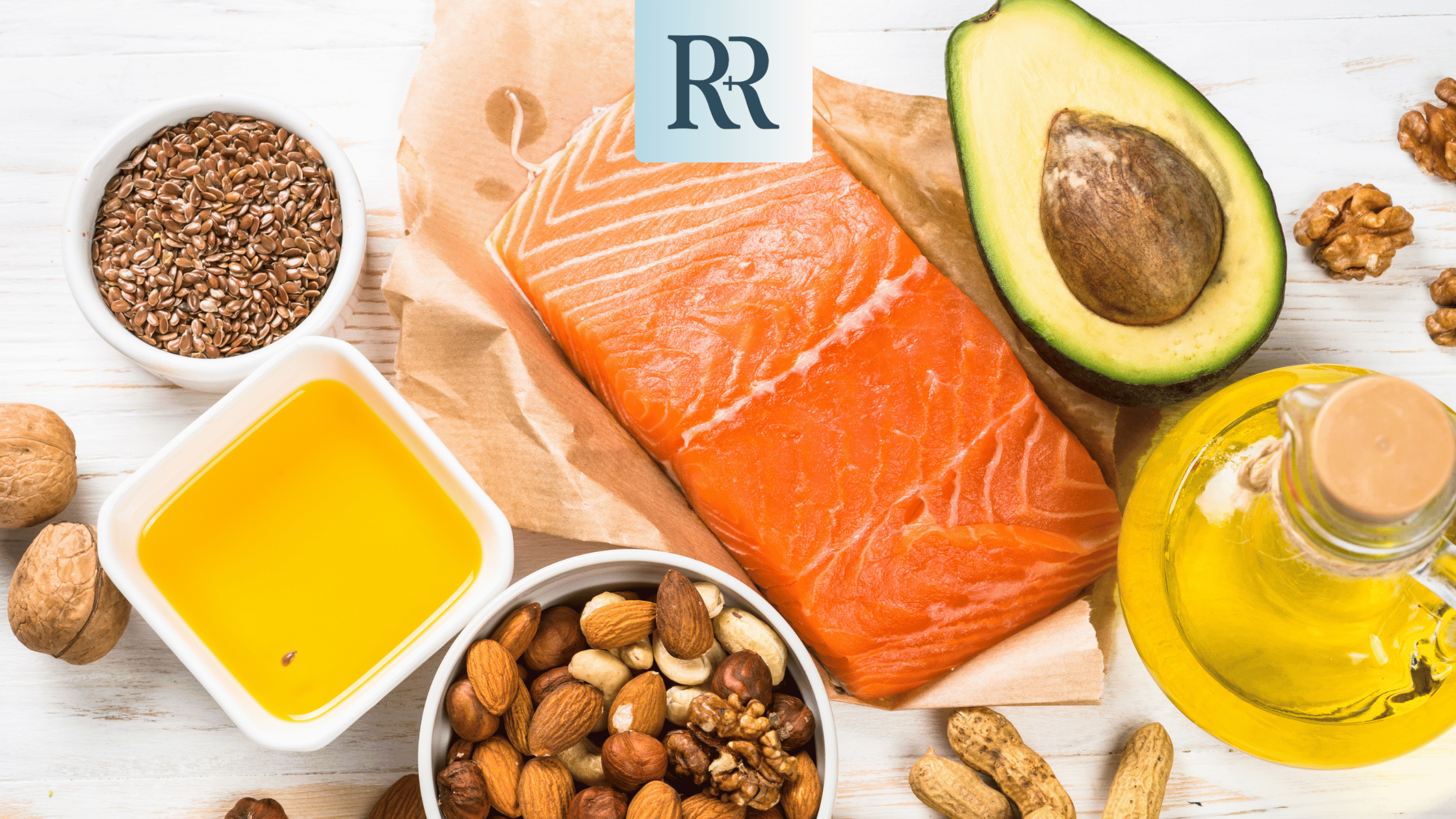
Because of this, I try to get parents thinking beyond "is my child eating enough," and toward "are they getting what their brain needs right now." A calorie is not just a calorie. A calorie is also the message it sends to the body about what to do with those calories. In practice, that usually means fatty fish like salmon or sardines, avocado, olive oil, nuts and nut butters, seeds, and eggs.
Vitamins A, D, E, and K are fat-soluble. Without fat present in a meal, the body can't fully absorb them, and although the vitamins don’t disappear, they can pass through mostly unused. In other words, some vitamins are virtually useless to the body without a fatty diet.
Vitamin A supports vision, immune function, and growth. Vitamin D supports bone health, immune health, and calcium metabolism. Vitamin E works as an antioxidant. Vitamin K plays a role in blood clotting and bone metabolism. All four depend on fat to actually do their job, which means how you combine foods matters just as much as the foods themselves.
Steamed vegetables with no oil, or fruit served completely fat-free, may be delivering less of their vitamin content than the same food with a drizzle of olive oil or a spoonful of nut butter alongside it. This is one of the more useful, and more overlooked, facts in pediatric nutrition.
The pattern I see most often is a parent trying hard to make the healthy choice reaches automatically for the lowest-fat version of everything on the shelf. For kids under 2, this can work against them.
Fat and cholesterol restriction should be avoided entirely before age 2. There's real research tying restricted fat intake in young children to slower growth. One commonly cited threshold is that fat intake below about 20% of calories can delay growth in toddlers. That's a very different message than the "less fat, always better" instinct most of us grew up with as adults.
On milk specifically, the American Academy of Pediatrics recommends whole milk for children between 12-24 months, largely because the fat content supports brain development during that window. Around age 2, most healthy-weight toddlers can transition to reduced-fat milk, though if your child is growing slowly, your pediatrician may recommend staying on whole milk longer. If you're not sure where your child falls, it's worth asking at your next visit.
After age 2, the conversation shifts from how much fat to what kind.
Plant-based milks aren't automatically nutritionally equivalent to whole dairy milk. Many popular options, including almond and cashew milk, are much lower in fat, protein, and calories—all nutrients that are especially important during periods of rapid growth.
That doesn't mean plant-based milk can't have a place in your child's diet, particularly when there is a dairy allergy or another reason to avoid dairy. But don't assume one milk is an even swap for another. If you're choosing a dairy alternative for a young child, talk with your pediatrician about which option best meets their nutritional needs and where they may need additional fat, protein, or nutrients elsewhere in their diet.
Not All Fats Are Created Equal
I try not to label foods "good" or "bad." Some food is fun and some food is fuel. I'd rather families focus on fuel in the context of their overall pattern of eating than police one ingredient. For everyday meals, the fat sources worth leaning on are:
None of this means maximizing fat at every meal. It means not restricting it out of habit, and choosing nutrient-dense sources most of the time.
Saturated fat is a type of dietary fat found naturally in foods like butter, cheese, whole-milk dairy, eggs, and meat. It’s also found in many highly processed foods, including donuts, pastries, fried foods, chips, and packaged snacks.
But the source matters. Saturated fat from a nutrient-dense whole food like butter (particularly from a grass-fed, pasture raised, happy cow) isn't the same nutritional package as saturated fat from a donut or a bag of chips. Cheese also provides protein, calcium, and other nutrients, while highly processed foods often pair saturated fat with refined carbohydrates, added sugar, and fewer nutrients.
So when we talk about limiting saturated fat, I don't want parents to become afraid of serving their child an egg, some cheese, or butter. Instead, focus on the bigger picture: prioritize whole, nutrient-dense foods, include plenty of unsaturated fats from foods like avocado, olive oil, nuts, seeds, and fish, and limit the highly processed foods that can quickly become a major source of saturated fat in a child's diet.
The takeaway: don't fear fat—pay attention to where it's coming from.
If you've got a picky eater, getting enough calories and nutrients into them can feel like a win some days. This is where fat can be especially helpful. Because fat is energy-dense, even a small addition can make foods your child already loves work a little harder.
Instead of trying to completely change what your child eats, start with familiar foods and add nutrient-dense sources of fat.
Dr. Rainey's Top 5 Picky-Eater Wins:
Often, the win isn't getting a picky eater to accept an entirely new food. It's finding simple ways to make the foods they already eat more nutrient-dense.
If you've seen me talk about my favorite supplements for kids, you know omega-3s are high on my list. But the key word here is supplement.
Food comes first. Fatty fish like salmon, sardines, anchovies, and mackerel are great sources of omega-3s, but realistically, many kids aren't eating enough of them regularly. If you know your child isn't getting much omega-3 through their diet—or they're a particularly selective eater—a supplement may be helpful.
That doesn't mean grabbing any bottle labeled "brain health" off the shelf. Your child's age, diet, health history, and the quality and dosage of the supplement all matter. If you're not sure your child is getting enough omega-3s, talk to us. We can help evaluate their diet and recommend a supplement when appropriate.
You don't need to track grams of fat at every meal. Eggs with avocado or Greek yogurt with chia seeds covers breakfast. A turkey and avocado wrap or hummus with vegetables works for lunch. Salmon with roasted vegetables, or tacos topped with avocado, covers dinner. For snacks, cheese, avocado toast, or fruit with nut butter all do the job.
None of this needs to be perfect. Consistent exposure to nutrient-dense food matters more than any single meal.
Nutrition is the first thing I look at when I'm evaluating a child's health, but it's never the only thing. If a child isn't growing as expected, has very limited food preferences, seems low on energy, or has digestive symptoms, I want the bigger picture. What their diet actually looks like day to day, how they're sleeping, whether there are GI issues or nutrient deficiencies, and what their growth curve looks like over time, not just at one visit.
Sometimes the fix is simple. Sometimes those symptoms are telling us to look further. Either way, that's the value of treating nutrition as one piece of a larger picture instead of the whole picture.
Fat isn't something to eliminate from a child's diet or feel guilty about serving. It fuels growth, helps build the brain, forms cell membranes, and unlocks vitamins the body couldn't otherwise use. During childhood, when so much of the body is still being built, that work matters more than it ever will again.
If you have questions about your child's nutrition, growth, picky eating, or overall development, come see us at Restore + Revive in Fort Worth. We are happy to take a closer look and help figure out what your child actually needs.
Contact us at (817) 720-6220.
.png)